
What Causes Acid Reflux? Acid reflux is something millions of people deal with every day, like that burning sensation that creeps up your chest after a meal, the bitter taste that shows up in your mouth, or the feeling that food is sitting in the wrong place. It can feel uncomfortable, painful, and is often misunderstood.
I’m Dr. Arjun Prakash, a Consultant Gastroenterologist. If you’ve been thinking about what is actually driving that burn and when it makes sense to see someone, here’s what I explain to my patients.
What’s Actually Happening in Your Body
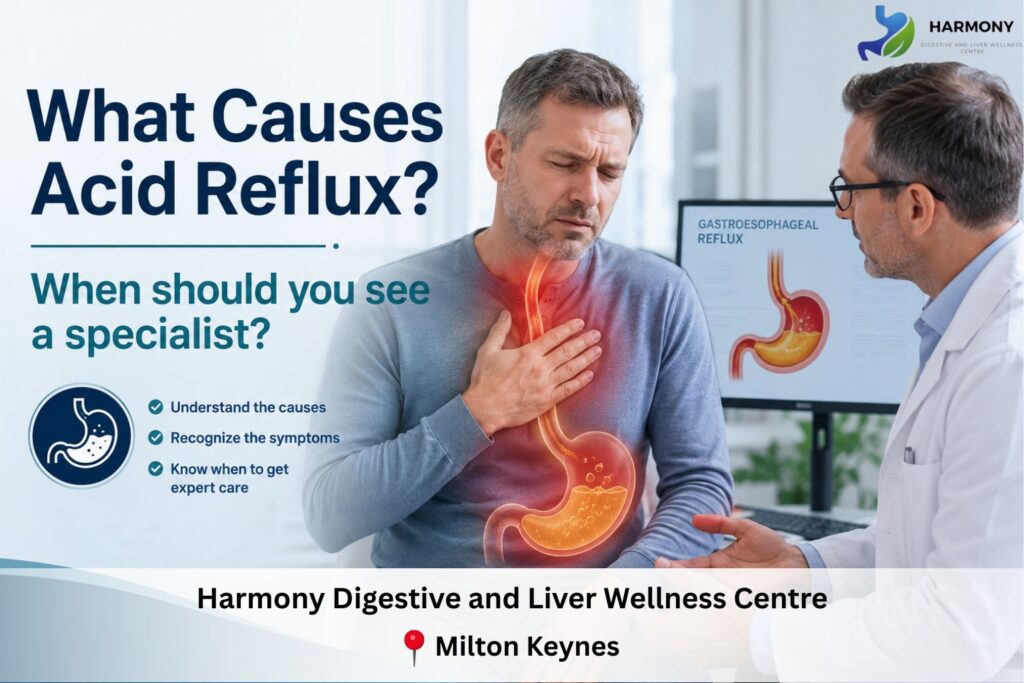
Your stomach produces acid to do its job – breaking down food. There’s a small valve between your stomach and your esophagus called the lower esophageal sphincter. Think of it as a one-way door. When it’s working right, acid stays where it belongs. When it doesn’t close properly, acid travels back up. That’s what causes acid reflux – and that burning you feel is your esophagus reacting to something it was never meant to handle.
Occasional reflux is one thing. When it’s happening twice a week or more, we call it GERD – and that’s when I want my patients to take it seriously.
What Causes Acid Reflux – In My Patients, Here’s What I See Most
- Food triggers: Spicy food, fried meals, chocolate, citrus, tomatoes, coffee, and alcohol. I’m not asking you to give all of it up forever – but I do ask patients to keep a simple food diary for two weeks. Patterns show up fast.
- How and when you eat: Large meals, eating too quickly, lying down within an hour of eating – these habits put real pressure on your stomach. The acid has nowhere to go but up.
- Body weight: Extra weight around the belly presses directly on the stomach. I’ve had patients whose reflux improved significantly with a modest change in weight – no medication needed.
- A weakened valve: Sometimes the LES just isn’t functioning well – it could be something you’re born with, or it develops over time. Certain medications and even stress can make it worse.
- Hiatal hernia: A portion of the stomach pushes up through the diaphragm. Many patients are surprised to hear they have one – it’s often found incidentally and explains a lot of their symptoms.
- Pregnancy: I always reassure my pregnant patients – reflux during pregnancy is incredibly common and very much expected, especially in the third trimester.
- Smoking and certain medications: NSAIDs like ibuprofen, some blood pressure drugs – these can aggravate the esophagus or loosen the valve. If reflux started alongside a new prescription, please mention it.
When Should You See a Specialist?
Please don’t wait if you’re experiencing any of these:
-
- Reflux more than twice a week, consistently
- Antacids that used to help but no longer do
- Pain or difficulty when swallowing
- Unexplained weight loss
- Nausea, vomiting, or blood in your stool
These aren’t meant to alarm you – but they are signs that your body is asking for more than an antacid. Left untreated, chronic reflux can damage the esophagus over time. Barrett’s esophagus is one complication I take seriously in my practice, and early evaluation makes a real difference in outcomes.
Final Thoughts
If you’ve been brushing off that burning feeling for months — or years, I should say — I want you to hear this clearly: it’s not just a problem you have to live with. Understanding What Causes Acid Reflux? is where it begins, but getting the right care is where things actually start to improve.
You don’t have to figure this out alone. Visit Harmony Gut and Liver for trusted resources, and don’t hesitate to reach out to a specialist. Your gut health affects everything – sleep, energy, mood, daily comfort. It’s worth taking seriously.
Book a consultation or screening today: Click Here.
To book a private liver or gut consultation or second opinion, Get in touch with us.
Had a great experience with us? We’d love to hear your thoughts! Click here to leave a Google review.