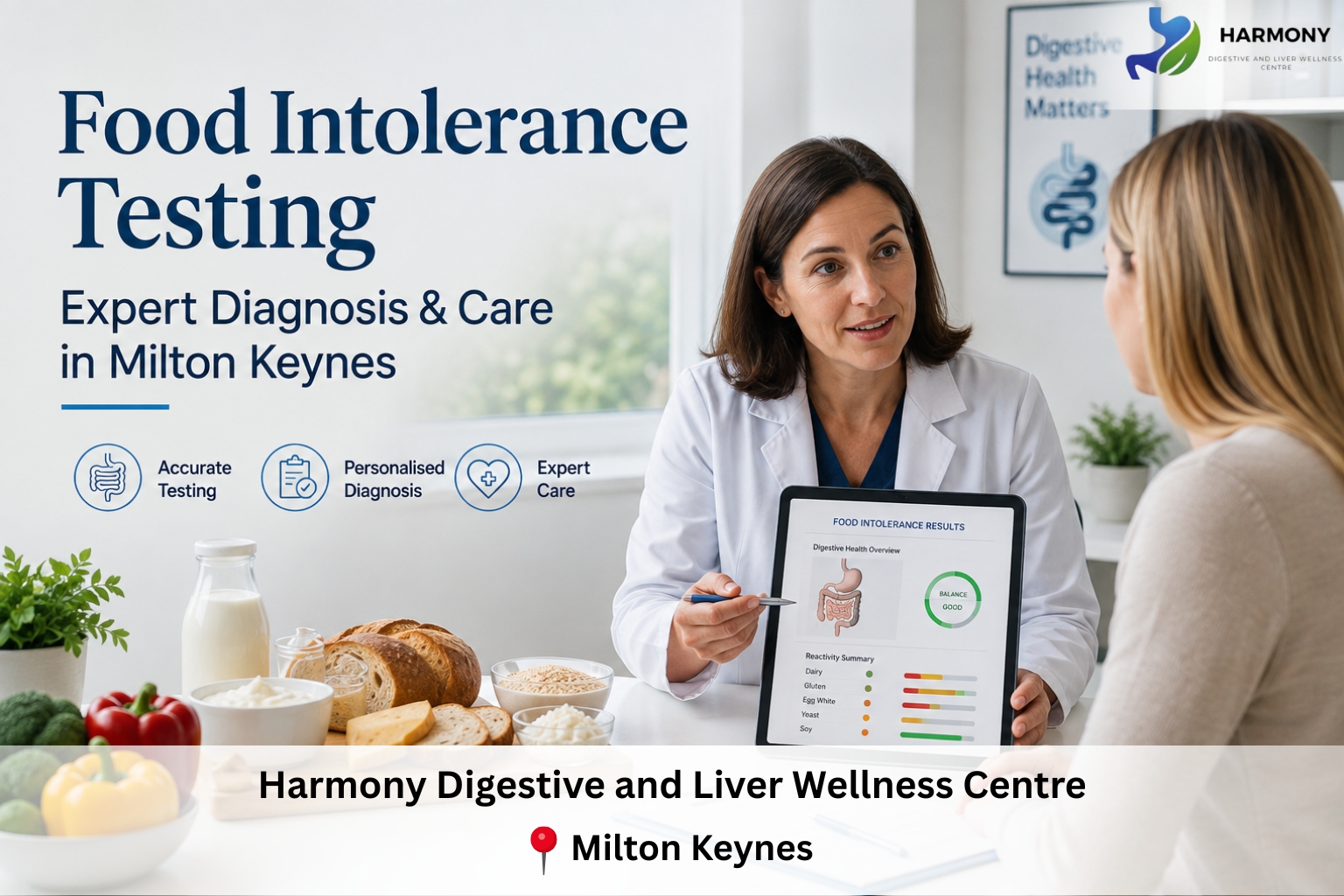


I’m Dr Arjun Prakash, Consultant Gastroenterologist in Milton Keynes. Most weeks I meet patients who’ve already tried to work things out themselves, usually with a home kit bought online or a list of foods to avoid found on some forum. So let’s talk properly about food intolerance testing and why the DIY version often falls short of a real answer.
Bloating, cramping, tiredness after meals, bowel habits that never quite settle. These symptoms push people toward a quick fix. I understand why; waiting weeks for an appointment isn’t appealing when you feel awful every day. But most home kits measure IgG antibodies, which only show your body has come across a food before. That’s not proof it’s causing your symptoms. It’s a small distinction, but clinically it matters a great deal
Why it’s rarely that simple
Digestive symptoms overlap constantly, and that’s exactly what makes self-diagnosis so unreliable. What feels like lactose intolerance could just as easily be:
- SIBO, bacteria building up somewhere they shouldn’t
- Coeliac disease rather than gluten sensitivity
- Ongoing gut inflammation from another cause entirely
- A functional issue linked to IBS
That’s why I never jump straight to a test. I ask questions first. When did it start? What does it follow? Is there anything relevant in the family history? That conversation on its own usually points somewhere useful before I’ve ordered a single thing.
How I approach it in clinic
Once I have a proper history, food intolerance testing might involve a combination of the following, depending on what the story suggests:
- Blood tests ruling out coeliac disease, anaemia or inflammation
- Breath testing when bloating and gas suggest SIBO or carbohydrate malabsorption (an H. pylori breath test can rule out infection as well)
- Microbiome analysis, useful when standard gut microbiome testing hasn’t given clear answers
- A carefully supervised elimination and reintroduction plan, done gradually and reviewed together
It takes longer than an online kit; I won’t pretend otherwise. But it actually tells you something worth trusting, rather than a printout with foods highlighted in red.
The usual suspects
Gluten gets blamed often, though genuine gluten intolerance is rarer than people assume. Coeliac disease or a broader sensitivity are more likely explanations in my experience. Dairy, high FODMAP foods and histamine-heavy meals come up a lot too. A confirmed diagnosis matters, especially for children or older patients, because unnecessary restriction can quietly create its own problems over time.
Diet still has a role
Once we know the real triggers, I’ll often bring in dietary changes along the lines of an IBS diet, something practical you can actually stick to long term, not a long list of banned foods stuck to the fridge. Cutting things out without evidence tends to backfire quietly. You end up short on nutrients, anxious around meals, and often no better off than when you started.
When to get checked
It’s worth booking a review if you notice discomfort within hours of eating, tiredness tied to specific meals, bowel changes with no obvious cause, or symptoms that persist even after you’ve already avoided the usual culprits. If that sounds familiar, speak to someone properly, whether that’s our team at Harmony or another gut health specialist near you.
Final Thoughts
I’d rather give a patient a clear answer after proper investigation than watch them avoid half their kitchen based on a kit result that was never that reliable to begin with. Good food intolerance testing isn’t one test taken in isolation; it’s clinical judgement paired with the right diagnostics, built around your actual history.
If your symptoms won’t settle, book a consultation with us. We’ll take a proper history, run the right tests, and build a plan based on evidence rather than guesswork. That, at the end of it, is what food intolerance testing should really give you.
Fancy stopping the guesswork? Book a consultation with the team at Harmony Digestive & Liver Wellness in Milton Keynes, and let’s sort your reflux out together.
Book your consultation with Harmony Digestive & Liver Wellness Centre today – expert gut and liver care, without the long wait.
Book a consultation or screening today: Click Here.
To book a private liver or gut consultation or second opinion, Get in touch with us.
Had a great experience with us? We’d love to hear your thoughts! Click here to leave a Google review.