
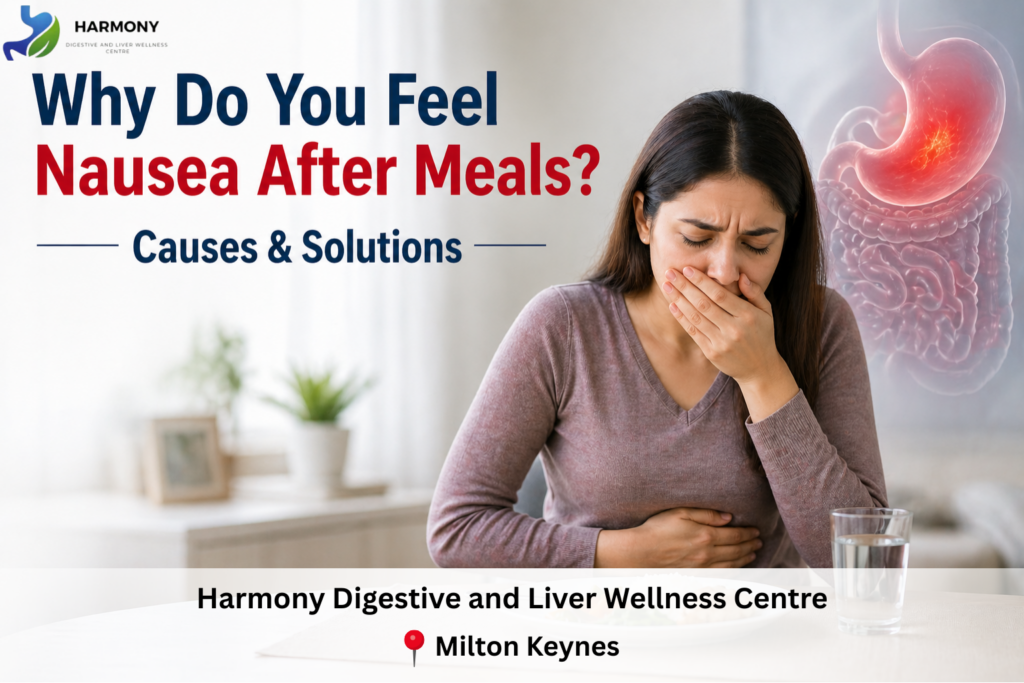
After eating a meal, most people expect to feel satisfied and relaxed. But sometimes, you may feel uncomfortable instead. You may feel like vomiting, feel heavy or lose interest in food. This is called nausea after meals. It can disturb your daily routine and make eating stressful.
Anyone can face this problem. It can happen occasionally or regularly. It is important to understand the reason behind it and take the right steps.
What is Nausea After Meals?
Nausea After Meals means feeling uneasy in the stomach after eating. You may feel fullness, discomfort or a strong urge to vomit.
Sometimes the feeling starts immediately after eating. Other times, it may begin after some time. The intensity can also vary from mild to severe.
Common Causes You Should Know
There are many different reasons behind nausea after meals. These are often related to eating habits.
- It could be due to eating too quickly without chewing properly
- Overeating or eating large portions
- Eating very oily, spicy or heavy food
- Drinking too much tea or coffee
- Lying down right after the meals
All these habits can disturb digestion and lead to discomfort.
Digestive Problems
In some cases, the cause is more than just eating habits. Digestive conditions can also lead to nausea after meals.
If you have problems like acid reflux, gastritis or food intolerance, these can affect how your stomach processes food. This can result in nausea and discomfort.
Sometimes, infections or stomach inflammation can also be responsible.
Role of Stress and Lifestyle
Your mental health also affects your digestion. Stress and anxiety can slow down digestion. This can cause symptoms like nausea after eating.
Irregular eating times and lack of sleep can also make the problem worse. A healthy routine plays an important role in digestion.
Solutions That Can Help
You can reduce nausea after meals by making these small changes in your daily habits.
- Chew your food slowly and properly
- Eat small and frequent meals
- Do not very eat spicy or fried meals
- Stay upright after eating
- Drink enough water during the day
Foods That May Trigger Nausea
Some foods are harder to digest and can trigger nausea.
Heavy, oily and spicy foods can irritate the stomach. Carbonated drinks and too much caffeine can also increase discomfort. It is important to choose light and balanced meals to make your stomach feel better.
When You Should Be Concerned?
If nausea after meals happens once in a while, it may not be serious. But if it happens regularly, you should not ignore it.
You should seek medical advice if:
- Nausea continues for many days
- You have severe stomach pain
- You feel weak or tired often
- You lose weight without trying
Expert Diagnosis and Care
Proper diagnosis is important for effective treatment. Tests may be needed to find the exact cause. Harmony Digestive and Liver Wellness Centre provides expert care for digestive problems.
They work on identifying the root cause and giving the right treatment. Their team makes sure of patient comfort and long-term relief.
Importance of Early Treatment
Starting treatment early can prevent complications. It helps manage symptoms better and improves your daily life.
You should not ignore the problem as it may lead to more serious digestive issues over time. Early care always gives better results.
Conclusion - Gut Health Specialist
Nausea After Meals can make eating uncomfortable but it is manageable. Simple lifestyle changes can help in many cases.
For proper care and accurate diagnosis, Harmony Digestive and Liver Wellness Centre is a trusted choice. With the right treatment and healthy habits, you can enjoy your meals again without discomfort.
Book a consultation or screening today: Click Here.
To book a private liver or gut consultation or second opinion, Get in touch with us.
Had a great experience with us? We’d love to hear your thoughts! Click here to leave a Google review.