
Something I see often in my clinic: patients who’ve been told they need a gastroscopy, who’ve then spent three days on the internet, and who arrive with one specific question: Do I have to be sedated?
It’s a reasonable thing to want clarity on. The choice of gastroscopy sedation affects your comfort, your recovery time, and sometimes the quality of what we can see. I’m Dr Prakash Gupta, a Consultant Gastroenterologist. Let me walk you through both options honestly.
What a Gastroscopy Involves
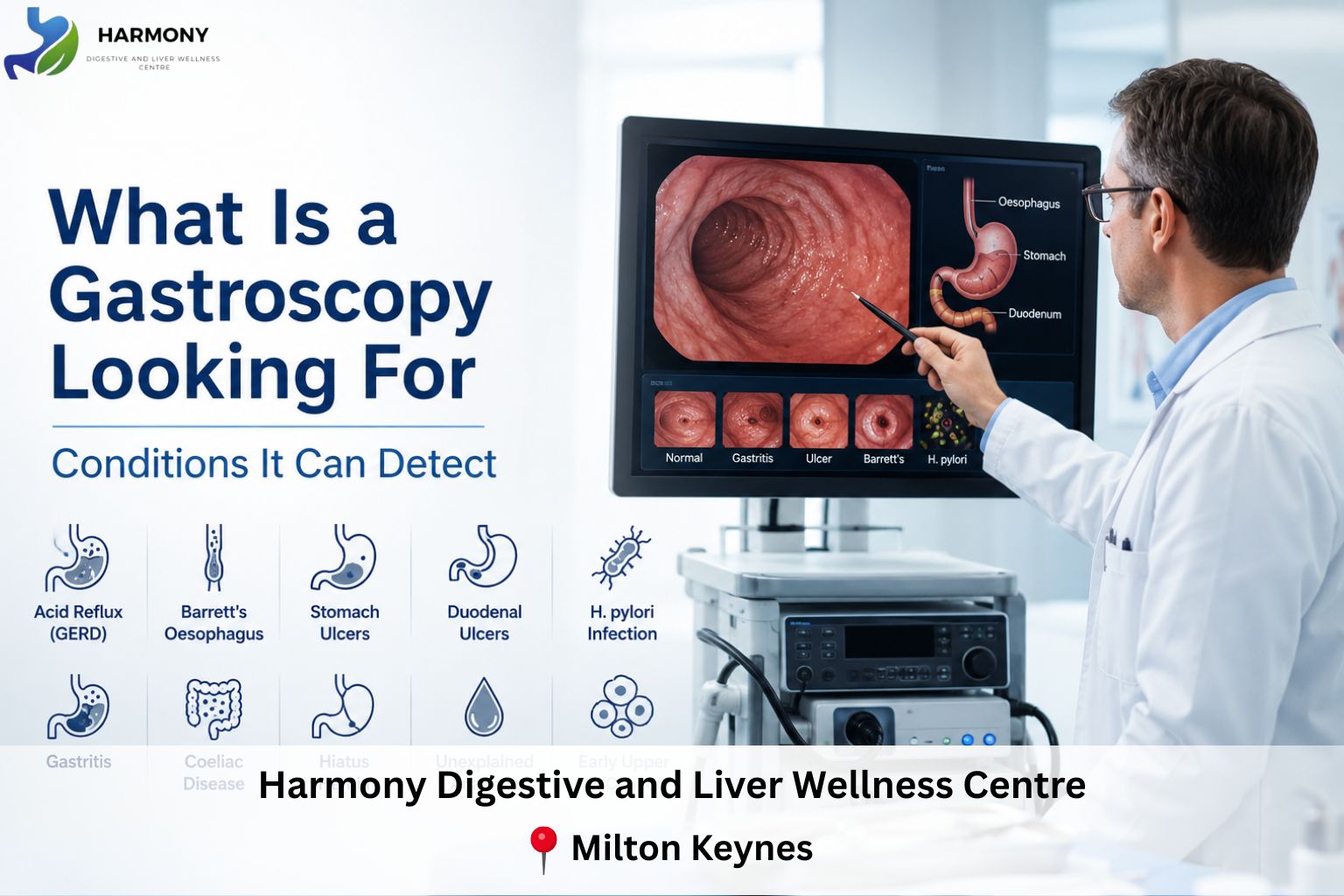
A gastroscopy passes a thin flexible camera through your mouth, down the oesophagus, and into the stomach and upper small intestine.
It’s the most direct way to investigate persistent reflux, unexplained nausea, upper abdominal pain, or concerns about ulcers and inflammation.
The procedure takes between five and fifteen minutes. The sedation question is entirely separate – it’s about how you experience those minutes, not about the diagnosis.
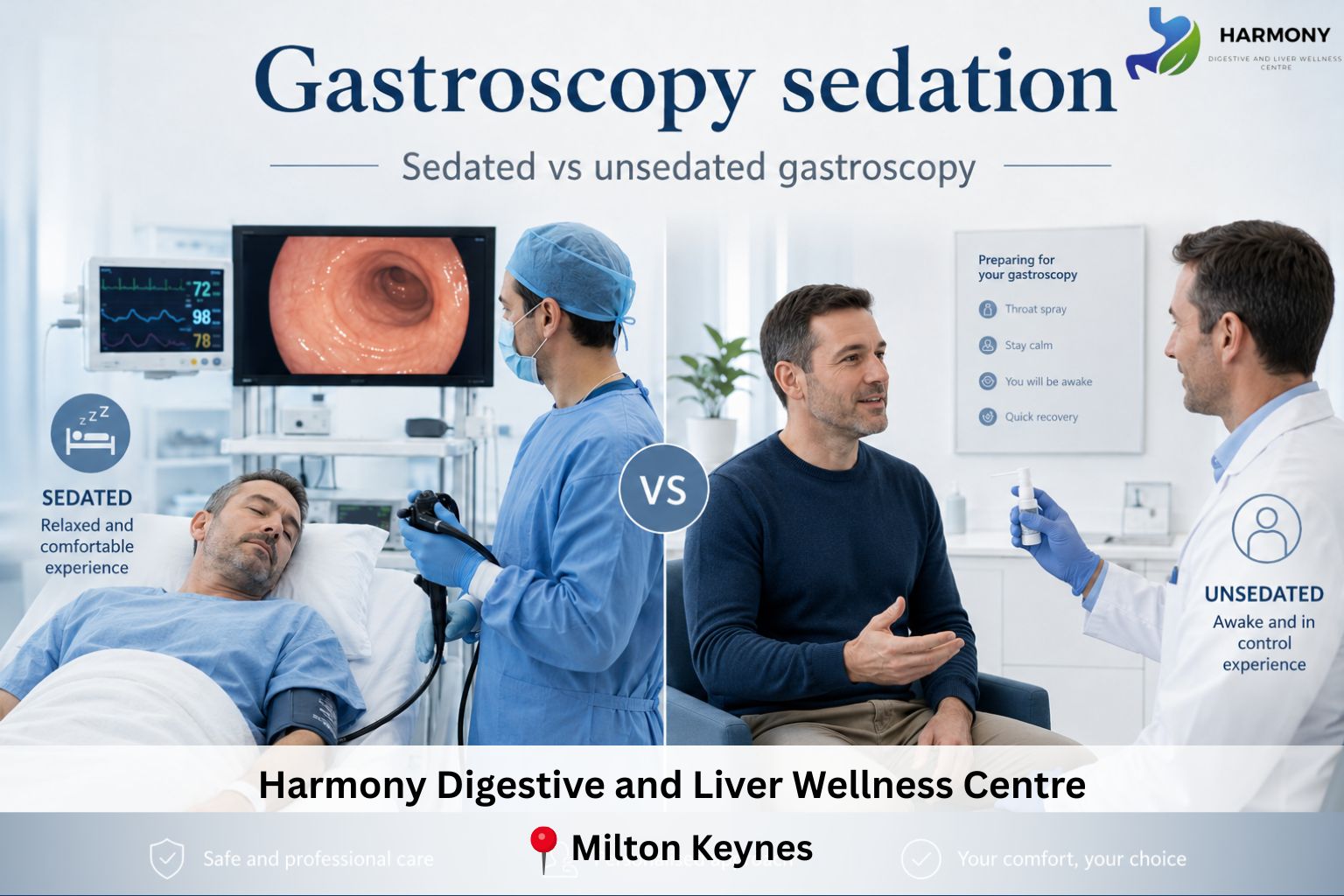
Sedated Gastroscopy
With sedation, you receive an intravenous medication – most commonly Fentanyl and Midazolam and in some cases, an anaesthetist-administered propofol – before we begin.
Within a minute or two, you’re deeply relaxed or asleep. Most patients remember nothing. They wake up in recovery, someone drives them home, and the procedure feels like it never happened.
This is the most common choice, and for good reason. No discomfort, no memory of gagging, no anxiety to push through. For patients who are nervous or have a strong gag reflex, sedation removes what would otherwise be a genuinely unpleasant experience.
The trade-off is real, though. You need someone to take you home – no exceptions. You’ll spend around an hour in recovery. Driving, operating machinery, or making important decisions that day is off the table.
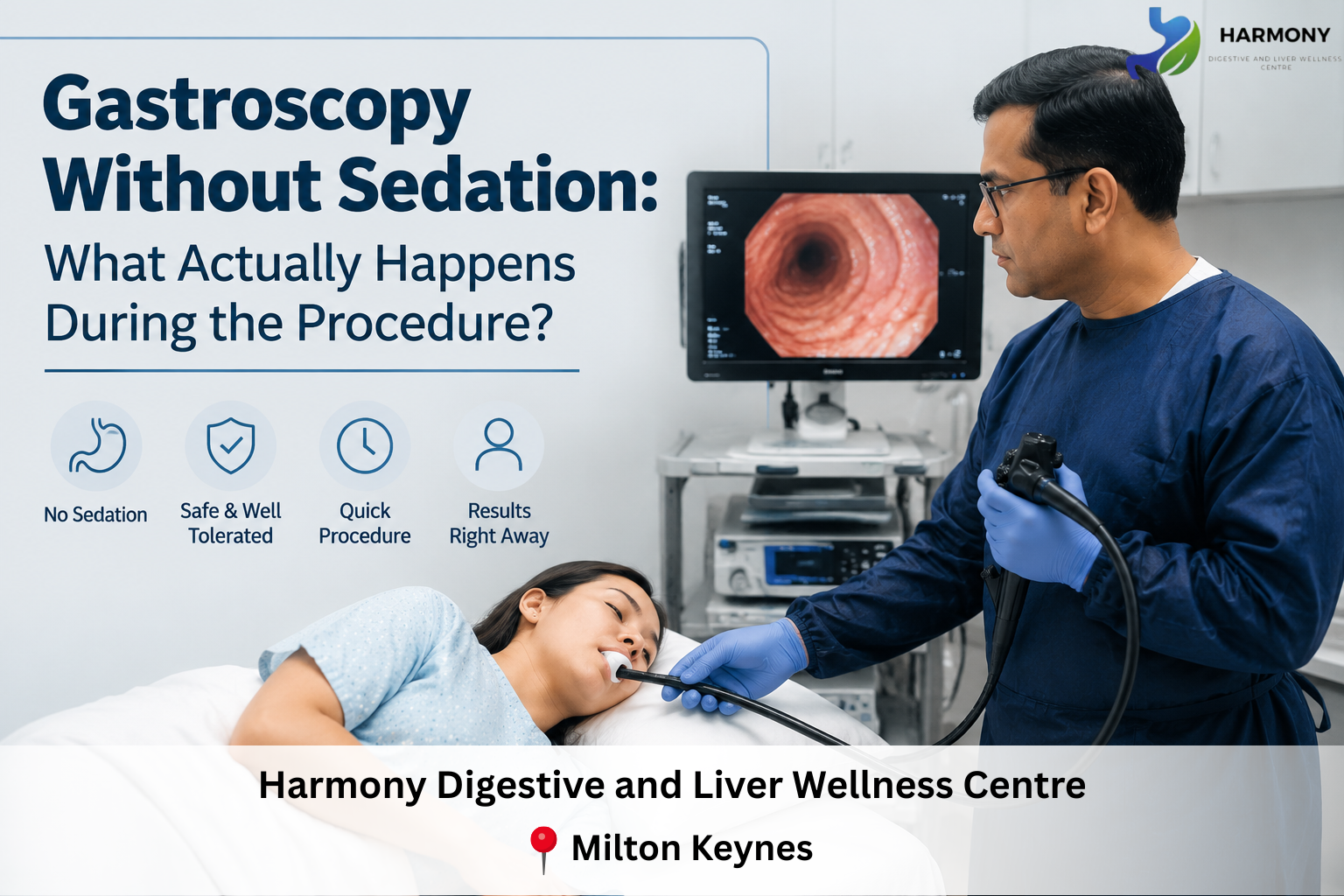
Unsedated Gastroscopy
Going unsedated means a local anaesthetic spray to the back of your throat, then staying fully conscious throughout.
The spray numbs the gag reflex enough that most people tolerate it. Because there’s no sedation to sleep off, you can drive yourself home and return to work the same day.
I won’t pretend it’s entirely comfortable. You’ll feel the tube. You may gag. It requires a degree of calm that some patients simply can’t muster – and that’s not a criticism. Anxiety is real.
But plenty of patients do fine. For those who prefer to stay in control, or who can’t bring a carer, it’s a legitimate option – not a fallback.
Side by Side: Sedated vs Unsedated
| Sedated | Unsedated | |
| Comfort during procedure | High – most feel nothing | Moderate – some gagging likely |
| Memory of scope | Usually none | Full |
| Recovery time | 1–2 hours | Minimal |
| Can drive after | No | Yes |
| Need a carer | Yes – mandatory | No |
| Suitable for anxious patients | Yes | Less ideal |
| Risk of sedation side effects | Small but present | None |
| Same-day return to work | Unlikely |
Yes |
Which One Is Right for You
There’s no universal answer. What I look at:
- How anxious are you?
- Do you have a strong gag reflex?
- Can you bring someone to drive you home?
- Are there medical reasons sedation carries extra risk for you specifically?
Where those answers point clearly one way, the decision is straightforward.
What I’d push back on is the assumption that sedation is always the more thorough option. In the right patient, an unsedated scope done well gives us everything we need.
The sedation choice matters – but what matters more is having the investigation done at all. If gut symptoms have been nagging at you, don’t wait for them to get louder.
At Harmony Gut and Liver, we offer gastroscopy with full sedation options, alongside a broader digestive assessment.
Book a consultation or screening today: Click Here.
To book a private liver or gut consultation or second opinion, Get in touch with us.
Had a great experience with us? We’d love to hear your thoughts! Click here to leave a Google review.