Skip to main content


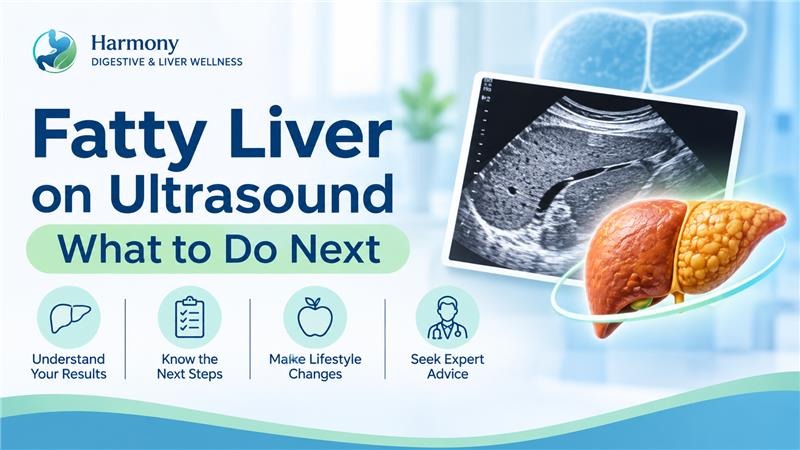
Fatty liver on ultrasound and what to do next
Quite often the ultrasound was done for something else, and “fatty liver” appears almost as an afterthought in the report. The blood tests might be normal. You may have been advised to lose some weight and repeat the tests later, but nobody has told you whether there is any scarring in the liver. I see this quite frequently. It is also a more important question now that we have treatments for some people with fatty liver disease who have already developed fibrosis.
What can an ordinary ultrasound tell us
An ultrasound gives us a picture of the liver and nearby structures. It can pick up gallstones, problems with the bile ducts and some liver lesions. It can suggest that there is fat in the liver. What it does poorly is tell us how much fibrosis, or scarring, there is. “Mild fatty liver” on the report describes the appearance of fat; it does not mean that any scarring must also be mild. Normal liver blood tests do not answer that question reliably either.
You may come across MASLD, the newer name for fatty liver linked with metabolic problems such as diabetes, weight around the middle, blood pressure and cholesterol. MASH is the term used when there is liver-cell damage and inflammation as well. Alcohol intake, medication and other liver diseases still need to be considered. I would be careful about giving somebody a diagnosis just from the wording of one scan report.
What is different about a liver stiffness scan
People often call anyliver stiffness testa FibroScan. That is the name of one machine. AtHarmonywe use transient elastography, which measures stiffness through the skin and gives a reading in kilopascals. The ordinary ultrasound is showing us what the liver looks like; this test helps us assess the possibility of fibrosis. It is quick, painless and can be repeated. You will be asked to fast before the appointment because eating shortly beforehand can affect the result.
The number still needs a doctor to interpret it. Liver inflammation, congestion and the quality of the measurement can alter a reading. We would look at it alongside your blood tests, diabetes or other risk factors, alcohol intake and previous reports. A reassuring result may mean no invasive investigation is needed. A high or unexpected result may lead to further blood tests, imaging or a closer follow-up plan. Depending on the device and protocol, there may also be an estimate of liver fat; stiffness is the measurement used to assess fibrosis risk.
Would you still need a liver biopsy
A biopsy can tell us things a stiffness scan cannot. It lets a pathologist see the inflammation and damage in liver tissue, and there are cases where that information is needed. There is also a needle procedure, observation afterwards and a small risk of complications. The sample comes from a tiny part of the liver.
We can assess many patients for advanced fibrosis without starting with a biopsy, and follow changes over time without doing repeated biopsies. A stiffness scan cannot confirm MASH under the microscope or give an exact stage of fibrosis in every case. If the results do not fit together, or a decision about treatment needs more certainty, biopsy may still be discussed.
Would I need another stiffness scan later
Quite possibly, if there is something useful to follow. If you have lost a substantial amount of weight, started treatment for diabetes or MASH, or had a raised stiffness reading to begin with, a later scan can be useful. The interval depends on the first result and the rest of your risk. A person with advanced fibrosis needs a very different follow-up from somebody with a low reading and no other concerning features.
I would also want the earlier report in front of me before comparing numbers. Whether you fasted, any recent illness, the quality of the readings and even which machine was used can make a difference. A small rise does not automatically mean new scarring. A lower reading is encouraging, though it does not by itself prove that the microscopic changes have reversed.
What about the new medicines
This has moved on quite quickly. In 2026, resmetirom was authorised in the UK for selected adults with MASH and moderate to advanced fibrosis, known as F2 or F3, who have not developed cirrhosis. It is a tablet that acts on the liver. Semaglutide injection, or Wegovy, has also been authorised for this group, with further trial evidence still being collected. Having fat on an ultrasound is a long way from knowing whether either treatment is suitable.
Many patients are already using GLP-1 medicines for weight or diabetes. Improving weight and diabetes often improves liver fat too. The semaglutide MASH trial found improvements in inflammation andfibrosis on liver biopsy. Tirzepatide has encouraging results from a smaller MASH trial, although the MASH-specific evidence and licensing are at a different stage. Someone may have a good reason to take one of these medicines for diabetes or obesity without meeting the criteria for a MASH treatment.
I am often asked whether a treatment can be accessed privately. A UK licence does not tell us whether a particular medicine is available to prescribe at that point, what it will cost, or whether it is right for you. First we need a proper assessment of the liver and the other health issues that may be driving the disease. We can then discuss the treatment options and what each would involve.
When should you come in
If the ultrasound finding has been left unexplained, particularly if you have diabetes, abnormal liver tests or several metabolic risk factors, bring the report and any recent blood results to an appointment. The same applies if you are taking a weight-loss injection and want to know whether your liver has improved. Previous scans are useful too. We can arrange transient elastography atHarmony in Milton Keynesif it will help, and discuss the results and the available treatments with enough time to do it properly.
An ultrasound report suggesting cirrhosis, fluid in the abdomen or a liver lesion needs a prompt review. New jaundice, vomiting blood, black stools or confusion needs urgent medical assessment rather than a routine booking.
About Dr Arjun Prakash
Dr Arjun Prakash is a Consultant Gastroenterologist and Advanced Endoscopist at Milton Keynes University Hospital. He sees patients with common bowel symptoms as well as those who need assessment for polyps, bowel cancer risk or colonoscopy.
This article is general information and does not replace an individual medical assessment.