Skip to main content


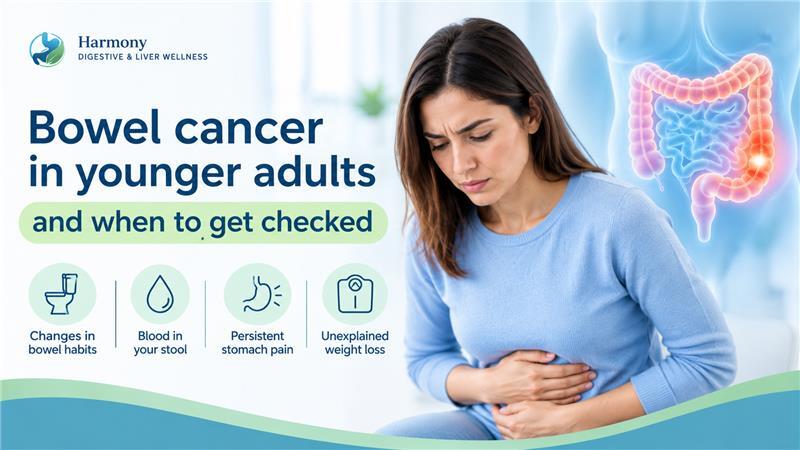
Bowel cancer in younger adults and when to get checked
Bowel cancer is being diagnosed in more people under 50. An international study published in 2025, using registry data up to 2017, found that rates in 25 to 49 year olds were rising in 27 of the 50 countries and territories examined. In the UK, rates in this age group have increased by more than 50% since the early 1990s. Around 6% of UK bowel cancers are now diagnosed before 50. Most cases are still in older people. When a patient in their thirties or forties has rectal bleeding or a persistent change in bowel habit, their age alone does not reassure me. If you have been wondering whether your symptoms need checking, you can book a consultation at Harmony. We can go through what has changed, examine you where appropriate, look at any tests already done and decide whether a colonoscopy or another investigation is needed.
Which symptoms should you have checked?
Blood after opening your bowels deserves a closer look if it keeps happening. A little bright red blood after a hard stool can come from a fissure or piles. Sometimes piles have been found on examination. I also see patients who were told they probably had piles without anyone examining them. If the bleeding continues despite treatment, please arrange a review. Tell us whether the blood is on the paper, in the pan or mixed with the stool, and how long this has been going on. Changes in bowel habit can be easy to explain away when life is busy. Perhaps you have started passing loose stools most mornings, are going several times a day when you used to go once, or feel that you have not emptied properly. Mention abdominal pain, unexplained weight loss or unusual tiredness too. Iron-deficiency anaemia on a blood test needs an explanation. Piles would not necessarily explain anaemia or a continuing bowel change. I see plenty of younger patients whose symptoms are caused by piles, a fissure or inflammation. If you have an IBS diagnosis and then develop bleeding or a marked change from your usual symptoms, please arrange another assessment. Also mention any treatment you have already tried and whether it helped.
What if your FIT test was negative?
FIT looks for traces of blood in the stool sample you send. It is useful, and a low result makes bowel cancer less likely, but some cancers are missed. A review of studies in symptomatic patients found that FIT picked up about 87% of bowel cancers at the commonly used referral threshold. That is why I would not base the decision about further investigation on the FIT result alone. If you are still bleeding, particularly if the blood is mixed with the stool, I would want to know how often it happens and examine you. A continuing change in bowel habit, iron-deficiency anaemia, unexplained weight loss or a significant family history would also affect the decision. FIT cannot tell us whether you have a polyp, inflammation or another bowel problem. Sometimes a flexible sigmoidoscopy or colonoscopy is appropriate even after a low result. Please bring the actual FIT result, the date it was done and any blood tests to the consultation. Some people have also had a negative bowel screening kit before their symptoms began. If you now have bleeding or a change in bowel habit, tell us when those symptoms started. The old screening result does not assess the new symptoms.
Should you have a colonoscopy before 50?
If you have symptoms, the question is which examination will answer them. We may start with an examination of the back passage. Some patients need a flexible sigmoidoscopy to look at the lower bowel; others need a full colonoscopy, particularly where bleeding remains unexplained, bowel habit has changed or there is anaemia. Colonoscopy allows us to take biopsies and remove polyps as well as examine the whole colon. If you feel well but are worried because bowel cancer runs in your family, we can go through your family history and advise when screening or surveillance would be appropriate. Please find out which relatives were affected and how old they were at diagnosis if you can. A family history may change the age at which colonoscopy is recommended. For someone under 50 without symptoms or an increased risk, I would discuss the likely benefit and downsides before arranging a screening colonoscopy.
Arrange an assessment if symptoms continue
If you have ongoing rectal bleeding, a persistent bowel change, unexplained iron-deficiency anaemia or a family history that worries you, you can book a consultation with me at Harmony in Milton Keynes. Bring your FIT result, blood tests and any previous endoscopy or scan reports. We can look at what has already been done and decide whether further investigation is appropriate. You do not need to decide for yourself whether you need a colonoscopy before coming in. If your GP has already referred you on an urgent suspected cancer pathway, please pursue that promptly. Black or dark red stools and bloody diarrhoea need urgent advice from a GP or NHS 111. Heavy bleeding, large clots or bleeding that will not stop needs A&E or 999. Severe abdominal pain with repeated vomiting also needs urgent assessment.
About Dr Arjun Prakash
Dr Arjun Prakash is a Consultant Gastroenterologist and Advanced Endoscopist at Milton Keynes University Hospital. He sees patients with common bowel symptoms as well as those who need assessment for polyps, bowel cancer risk or colonoscopy.
This article is general information and does not replace an individual medical assessment.