 Skip to main content

Digestive Symptoms Despite Normal Tests: What Could Be Causing Them?
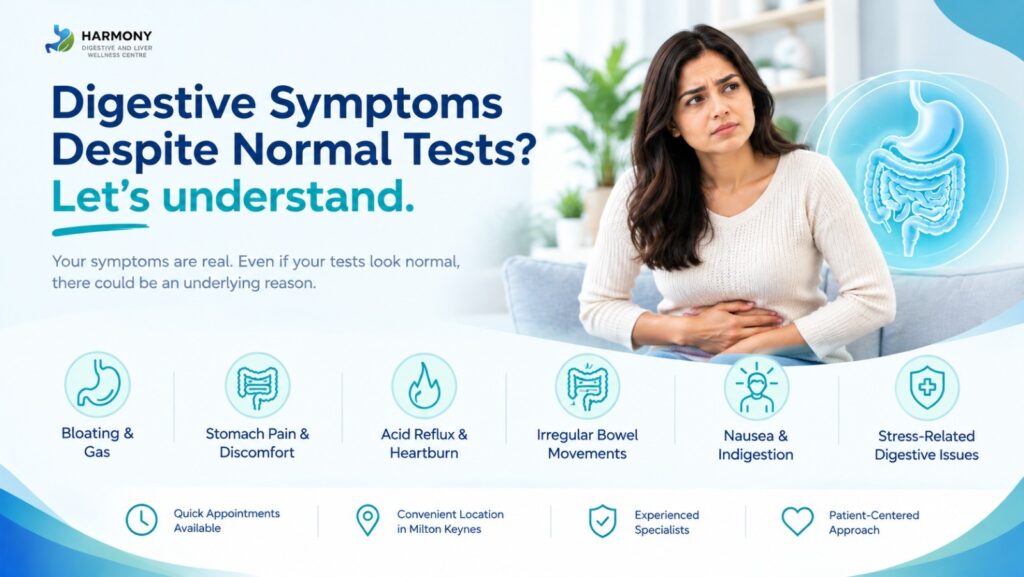
I’m Dr Arjun Prakash. I’m a consultant gastroenterologist, and I see patients here in Milton Keynes every week. Many patients come to see me with persistent digestive symptoms after undergoing several investigations. They may have had blood tests, stool tests, ultrasound or CT scans, a gastroscopy or a colonoscopy. The results have been reassuring, although symptoms such as abdominal pain, bloating, nausea, indigestion, constipation or diarrhoea continue. This is a common situation in gastroenterology. Tests such as scans and endoscopy are mainly designed to detect structural abnormalities, including inflammation, ulcers, tumours and changes in the lining of the digestive tract. They provide less information about digestive movement, sensitivity and the way the gut responds to food. The next step is to review the pattern of symptoms, the investigations already completed and any clinical features that may point towards a particular diagnosis. Why Can Digestive Symptoms Continue After Normal Investigations? The digestive system depends on coordinated muscular movement, nerve signalling, digestive enzymes, bile acids and communication between the gut and the brain. A disturbance in any of these areas can produce symptoms without creating an abnormality visible during routine endoscopy or scanning. Possible explanations include: Irritable bowel syndrome Functional dyspepsia Constipation or incomplete bowel emptying Gastro-oesophageal reflux or reflux hypersensitivity Food intolerance Bile acid diarrhoea Small intestinal bacterial overgrowth Gastroparesis or delayed stomach emptying Pelvic floor dysfunction Increased sensitivity within the digestive tract Several of these conditions can occur together. The history usually provides important clues about which areas require further assessment. Irritable Bowel Syndrome Irritable bowel syndrome, commonly known as IBS, can cause recurrent abdominal pain, bloating and changes in bowel habit. Some people mainly experience constipation, while others have diarrhoea or alternate between the two. In IBS, the bowel may become more sensitive to stretching caused by food, gas or stool. This is known as visceral hypersensitivity. Bowel movement may also become faster, slower or less coordinated. IBS is diagnosed from the clinical pattern and appropriate investigations. The extent of testing required varies between patients. Age, family history, duration of symptoms and warning features all influence the assessment. Persistent diarrhoea may sometimes require investigation for coeliac disease, gut inflammation, microscopic colitis or bile acid diarrhoea before a diagnosis of IBS is made. Functional Dyspepsia Functional dyspepsia commonly causes upper abdominal discomfort, early fullness, nausea, belching and indigestion. Some patients feel full after eating only a small meal. Others develop discomfort or bloating shortly after eating. Gastroscopy often shows a healthy stomach lining in patients with functional dyspepsia. The symptoms may be associated with increased stomach sensitivity, altered relaxation of the stomach during meals or changes in gastric emptying. Treatment is selected according to the dominant symptoms. Options may include acid suppression, adjustment of meal size, medication affecting gastric movement or treatment directed towards digestive sensitivity. Acid Reflux Following a Normal Gastroscopy A normal gastroscopy can occur in people with gastro-oesophageal reflux disease. Heartburn and regurgitation can arise without visible inflammation in the oesophagus. If you are unsure about testing procedures, it helps to understand how gastroscopy differs from a general endoscopy. Some patients have reflux hypersensitivity, where ordinary episodes of reflux produce prominent symptoms. Functional heartburn may produce similar symptoms through a different mechanism. Ambulatory reflux monitoring and oesophageal physiology testing can be considered when symptoms remain troublesome, particularly when treatment has been ineffective or the diagnosis remains uncertain. Bloating and Excessive Wind Persistent bloating is one of the most frequent reasons for referral to a gastroenterologist. It may be associated with constipation, dietary fermentation, changes in bowel movement or increased sensitivity to normal volumes of intestinal gas. The sensation of bloating does not always correspond to a large increase in gas. In some patients, coordination between the diaphragm and abdominal wall contributes to visible abdominal distension. Reviewing bowel habit, meal patterns, medication and dietary triggers can help identify the likely cause. Food Intolerance Lactose intolerance and sensitivity to fermentable carbohydrates can cause abdominal pain, bloating, wind and diarrhoea. The timing of symptoms after meals is often useful. A short food and symptom diary may help identify a consistent relationship. Dietary trials should be targeted and reviewed after an agreed period. Foods should be reintroduced methodically to determine which restrictions are genuinely required. Commercial IgG food intolerance blood tests are not recommended for diagnosing food intolerance. These tests frequently result in patients unnecessarily removing several foods from their diet. Small Intestinal Bacterial Overgrowth (SIBO) Small intestinal bacterial overgrowth, or SIBO, is commonly searched for by patients experiencing bloating, wind, abdominal discomfort and altered bowel habits. SIBO is more likely when there are conditions affecting the structure or movement of the small bowel. Previous gastrointestinal surgery, significant motility disorders and certain underlying diseases can increase the risk. Breath testing may be considered in selected patients. The results require careful interpretation because false-positive and false-negative results occur. Repeated antibiotic treatment should follow a clear diagnosis and assessment of any underlying risk factor. Bile Acid Diarrhoea Bile acid diarrhoea, also known as bile acid malabsorption, can cause frequent watery stools, urgency and occasional bowel incontinence. It may develop following gallbladder removal or disease affecting the end of the small bowel. Many patients have no obvious preceding cause. The symptoms can resemble diarrhoea-predominant IBS. Specific investigation or a carefully supervised treatment trial may be appropriate when the clinical history suggests bile acid diarrhoea. Constipation and Incomplete Emptying Constipation can occur even when someone opens their bowels every day. Hard stools, straining, incomplete emptying, repeated small bowel movements and the need to return to the toilet are all relevant symptoms. Constipation commonly contributes to abdominal pain and bloating. Some patients have slow movement through the colon. Others have difficulty coordinating the pelvic floor muscles during defaecation. The treatment depends on the underlying pattern. Increasing dietary fibre may help, although a rapid increase can aggravate bloating in some people. Laxatives, bowel retraining and specialist pelvic floor treatment may be considered where appropriate. Gastroparesis and Delayed Stomach Emptying Gastroparesis can cause nausea, vomiting, early fullness,
Gut Specialist UK | Advanced Digestive Health Services
Many people face stomach discomfort but ignore it. You may feel gas, bloating or pain after eating. Sometimes this happens often. One possible reason is a condition called small intestinal bacterial overgrowth. It is important to know the symptoms of small intestinal bacterial overgrowth to understand your body better. Your small intestine should have limited bacteria present in it. When too many bacteria grow there, digestion gets affected. This results in discomfort and other health issues. What is Small Intestinal Bacterial Overgrowth? Small intestinal bacterial overgrowth also called SIBO. It happens when bacteria increase in the small intestine. This bacteria starts to affect digestion. They break food in the wrong way which creates gas. This can also lead to many uncomfortable symptoms. It is a common but often ignored condition. Common Symptoms of SIBO There are many symptoms of small intestinal bacterial overgrowth. They may look normal at first. When you have bloating after meals Gas and discomfort Stomach pain or cramps Diarrhea or constipation Feeling full very quickly All these symptoms may come and go. But if they continue to happen, they should not be ignored. Other Signs of SIBO Some symptoms are less common but still important. Having bad breath Weakness or low energy Weight loss without any reason Nutrient deficiency These signs show that your body is not absorbing nutrients properly. Why Does It Happen? This condition can happen due to many different reasons. Slow digestion can make the bacteria stay longer in the intestine. Poor diet and stress also affect the working and health of your gut. Certain medical conditions can also increase the risk. When digestion is not smooth, bacteria can grow more than normal. How It Affects Your Daily Life The symptoms of small intestinal bacterial overgrowth can disturb your day to day life. It can make you feel uncomfortable after eating. You may need to avoid eating certain foods. You may feel tired the whole day without even doing any work. It can also affect your mood and energy levels. When to Take It Seriously If your symptoms stay for a long time, it is important to take action. Do not ignore regular bloating or stomach pain. These may be signs of a serious issue. Early care can help you avoid bigger problems later. Treatment of SIBO Doctors may suggest tests to confirm SIBO. These tests help to find the right cause of your symptoms. Treatment include medicines and diet changes. It helps to reduce the bacteria and improve digestion. Proper care helps you recover faster. Proper Treatment and Care It is important to get the correct treatment. Harmony Digestive and Liver Wellness Centre provides proper care for digestive problems. They work on finding the root cause of your problem. They focus on improving your gut health and providing you comfort. How to Support Gut Health Along with treatment, small lifestyle changes can help. Eat light and simple meals Avoid heavy and oily food Drink enough water Manage stress Eat on time These steps support better digestion. Conclusion – Gut Health Specialist Understanding the Symptoms of Small Intestinal Bacterial Overgrowth is important for your health. Early signs may look simple but should not be ignored. Harmony Digestive and Liver Wellness Centre, can help you manage this condition and improve your digestive health. A healthy gut helps you feel comfortable and active every day. Book a consultation or screening today: Click Here. To book a private liver or gut consultation or second opinion, Get in touch with us. Had a great experience with us? We’d love to hear your thoughts! Click here to leave a Google review.
Private Digestive Clinic Near Me in Milton Keynes
Many people face stomach discomfort but ignore it. You may feel gas, bloating or pain after eating. Sometimes this happens often. One possible reason is a condition called small intestinal bacterial overgrowth. It is important to know the symptoms of small intestinal bacterial overgrowth to understand your body better. Your small intestine should have limited bacteria present in it. When too many bacteria grow there, digestion gets affected. This results in discomfort and other health issues. What is Small Intestinal Bacterial Overgrowth? Small intestinal bacterial overgrowth also called SIBO. It happens when bacteria increase in the small intestine. This bacteria starts to affect digestion. They break food in the wrong way which creates gas. This can also lead to many uncomfortable symptoms. It is a common but often ignored condition. Common Symptoms of SIBO There are many symptoms of small intestinal bacterial overgrowth. They may look normal at first. When you have bloating after meals Gas and discomfort Stomach pain or cramps Diarrhea or constipation Feeling full very quickly All these symptoms may come and go. But if they continue to happen, they should not be ignored. Other Signs of SIBO Some symptoms are less common but still important. Having bad breath Weakness or low energy Weight loss without any reason Nutrient deficiency These signs show that your body is not absorbing nutrients properly. Why Does It Happen? This condition can happen due to many different reasons. Slow digestion can make the bacteria stay longer in the intestine. Poor diet and stress also affect the working and health of your gut. Certain medical conditions can also increase the risk. When digestion is not smooth, bacteria can grow more than normal. How It Affects Your Daily Life The symptoms of small intestinal bacterial overgrowth can disturb your day to day life. It can make you feel uncomfortable after eating. You may need to avoid eating certain foods. You may feel tired the whole day without even doing any work. It can also affect your mood and energy levels. When to Take It Seriously If your symptoms stay for a long time, it is important to take action. Do not ignore regular bloating or stomach pain. These may be signs of a serious issue. Early care can help you avoid bigger problems later. Treatment of SIBO Doctors may suggest tests to confirm SIBO. These tests help to find the right cause of your symptoms. Treatment include medicines and diet changes. It helps to reduce the bacteria and improve digestion. Proper care helps you recover faster. Proper Treatment and Care It is important to get the correct treatment. Harmony Digestive and Liver Wellness Centre provides proper care for digestive problems. They work on finding the root cause of your problem. They focus on improving your gut health and providing you comfort. How to Support Gut Health Along with treatment, small lifestyle changes can help. Eat light and simple meals Avoid heavy and oily food Drink enough water Manage stress Eat on time These steps support better digestion. Conclusion – Gut Health Specialist Understanding the Symptoms of Small Intestinal Bacterial Overgrowth is important for your health. Early signs may look simple but should not be ignored. Harmony Digestive and Liver Wellness Centre, can help you manage this condition and improve your digestive health. A healthy gut helps you feel comfortable and active every day. Book a consultation or screening today: Click Here. To book a private liver or gut consultation or second opinion, Get in touch with us. Had a great experience with us? We’d love to hear your thoughts! Click here to leave a Google review.
Food Intolerance Testing | Expert Diagnosis & Care in Milton Keynes
Many people face stomach discomfort but ignore it. You may feel gas, bloating or pain after eating. Sometimes this happens often. One possible reason is a condition called small intestinal bacterial overgrowth. It is important to know the symptoms of small intestinal bacterial overgrowth to understand your body better. Your small intestine should have limited bacteria present in it. When too many bacteria grow there, digestion gets affected. This results in discomfort and other health issues. What is Small Intestinal Bacterial Overgrowth? Small intestinal bacterial overgrowth also called SIBO. It happens when bacteria increase in the small intestine. This bacteria starts to affect digestion. They break food in the wrong way which creates gas. This can also lead to many uncomfortable symptoms. It is a common but often ignored condition. Common Symptoms of SIBO There are many symptoms of small intestinal bacterial overgrowth. They may look normal at first. When you have bloating after meals Gas and discomfort Stomach pain or cramps Diarrhea or constipation Feeling full very quickly All these symptoms may come and go. But if they continue to happen, they should not be ignored. Other Signs of SIBO Some symptoms are less common but still important. Having bad breath Weakness or low energy Weight loss without any reason Nutrient deficiency These signs show that your body is not absorbing nutrients properly. Why Does It Happen? This condition can happen due to many different reasons. Slow digestion can make the bacteria stay longer in the intestine. Poor diet and stress also affect the working and health of your gut. Certain medical conditions can also increase the risk. When digestion is not smooth, bacteria can grow more than normal. How It Affects Your Daily Life The symptoms of small intestinal bacterial overgrowth can disturb your day to day life. It can make you feel uncomfortable after eating. You may need to avoid eating certain foods. You may feel tired the whole day without even doing any work. It can also affect your mood and energy levels. When to Take It Seriously If your symptoms stay for a long time, it is important to take action. Do not ignore regular bloating or stomach pain. These may be signs of a serious issue. Early care can help you avoid bigger problems later. Treatment of SIBO Doctors may suggest tests to confirm SIBO. These tests help to find the right cause of your symptoms. Treatment include medicines and diet changes. It helps to reduce the bacteria and improve digestion. Proper care helps you recover faster. Proper Treatment and Care It is important to get the correct treatment. Harmony Digestive and Liver Wellness Centre provides proper care for digestive problems. They work on finding the root cause of your problem. They focus on improving your gut health and providing you comfort. How to Support Gut Health Along with treatment, small lifestyle changes can help. Eat light and simple meals Avoid heavy and oily food Drink enough water Manage stress Eat on time These steps support better digestion. Conclusion – Gut Health Specialist Understanding the Symptoms of Small Intestinal Bacterial Overgrowth is important for your health. Early signs may look simple but should not be ignored. Harmony Digestive and Liver Wellness Centre, can help you manage this condition and improve your digestive health. A healthy gut helps you feel comfortable and active every day. Book a consultation or screening today: Click Here. To book a private liver or gut consultation or second opinion, Get in touch with us. Had a great experience with us? We’d love to hear your thoughts! Click here to leave a Google review.
Liver Health Treatment Near Me – Expert Care for a Healthy Liver
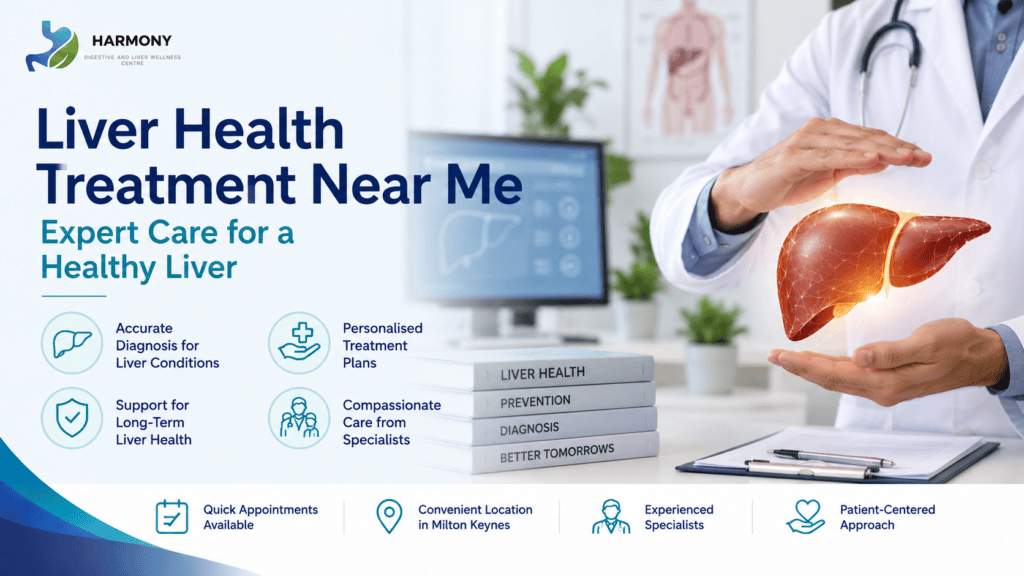
Many people face stomach discomfort but ignore it. You may feel gas, bloating or pain after eating. Sometimes this happens often. One possible reason is a condition called small intestinal bacterial overgrowth. It is important to know the symptoms of small intestinal bacterial overgrowth to understand your body better. Your small intestine should have limited bacteria present in it. When too many bacteria grow there, digestion gets affected. This results in discomfort and other health issues. What is Small Intestinal Bacterial Overgrowth? Small intestinal bacterial overgrowth also called SIBO. It happens when bacteria increase in the small intestine. This bacteria starts to affect digestion. They break food in the wrong way which creates gas. This can also lead to many uncomfortable symptoms. It is a common but often ignored condition. Common Symptoms of SIBO There are many symptoms of small intestinal bacterial overgrowth. They may look normal at first. When you have bloating after meals Gas and discomfort Stomach pain or cramps Diarrhea or constipation Feeling full very quickly All these symptoms may come and go. But if they continue to happen, they should not be ignored. Other Signs of SIBO Some symptoms are less common but still important. Having bad breath Weakness or low energy Weight loss without any reason Nutrient deficiency These signs show that your body is not absorbing nutrients properly. Why Does It Happen? This condition can happen due to many different reasons. Slow digestion can make the bacteria stay longer in the intestine. Poor diet and stress also affect the working and health of your gut. Certain medical conditions can also increase the risk. When digestion is not smooth, bacteria can grow more than normal. How It Affects Your Daily Life The symptoms of small intestinal bacterial overgrowth can disturb your day to day life. It can make you feel uncomfortable after eating. You may need to avoid eating certain foods. You may feel tired the whole day without even doing any work. It can also affect your mood and energy levels. When to Take It Seriously If your symptoms stay for a long time, it is important to take action. Do not ignore regular bloating or stomach pain. These may be signs of a serious issue. Early care can help you avoid bigger problems later. Treatment of SIBO Doctors may suggest tests to confirm SIBO. These tests help to find the right cause of your symptoms. Treatment include medicines and diet changes. It helps to reduce the bacteria and improve digestion. Proper care helps you recover faster. Proper Treatment and Care It is important to get the correct treatment. Harmony Digestive and Liver Wellness Centre provides proper care for digestive problems. They work on finding the root cause of your problem. They focus on improving your gut health and providing you comfort. How to Support Gut Health Along with treatment, small lifestyle changes can help. Eat light and simple meals Avoid heavy and oily food Drink enough water Manage stress Eat on time These steps support better digestion. Conclusion – Gut Health Specialist Understanding the Symptoms of Small Intestinal Bacterial Overgrowth is important for your health. Early signs may look simple but should not be ignored. Harmony Digestive and Liver Wellness Centre, can help you manage this condition and improve your digestive health. A healthy gut helps you feel comfortable and active every day. Book a consultation or screening today: Click Here. To book a private liver or gut consultation or second opinion, Get in touch with us. Had a great experience with us? We’d love to hear your thoughts! Click here to leave a Google review.
Acid Reflux Treatment UK – Effective Relief for GERD & Heartburn Symptoms
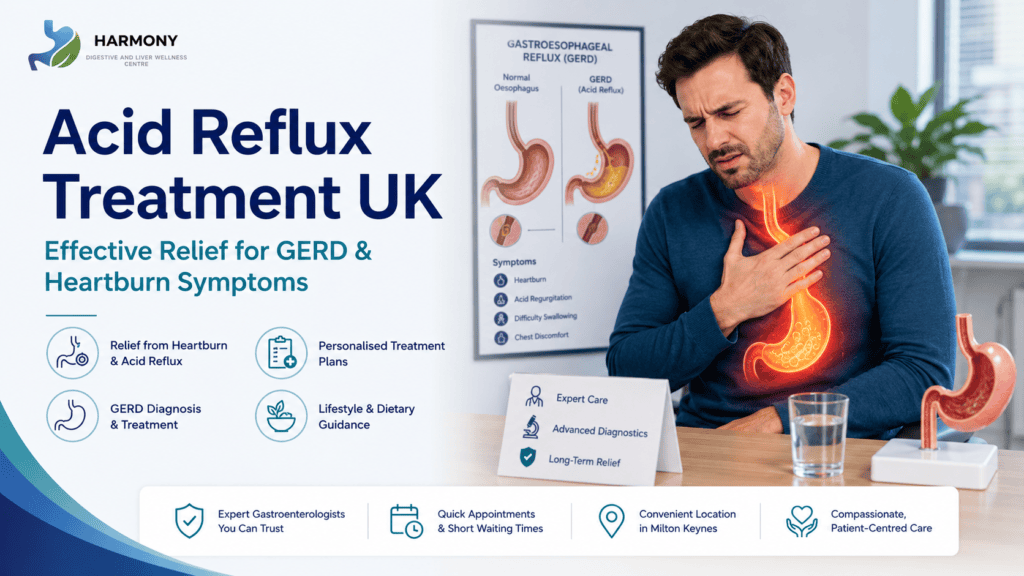
Many people face stomach discomfort but ignore it. You may feel gas, bloating or pain after eating. Sometimes this happens often. One possible reason is a condition called small intestinal bacterial overgrowth. It is important to know the symptoms of small intestinal bacterial overgrowth to understand your body better. Your small intestine should have limited bacteria present in it. When too many bacteria grow there, digestion gets affected. This results in discomfort and other health issues. What is Small Intestinal Bacterial Overgrowth? Small intestinal bacterial overgrowth also called SIBO. It happens when bacteria increase in the small intestine. This bacteria starts to affect digestion. They break food in the wrong way which creates gas. This can also lead to many uncomfortable symptoms. It is a common but often ignored condition. Common Symptoms of SIBO There are many symptoms of small intestinal bacterial overgrowth. They may look normal at first. When you have bloating after meals Gas and discomfort Stomach pain or cramps Diarrhea or constipation Feeling full very quickly All these symptoms may come and go. But if they continue to happen, they should not be ignored. Other Signs of SIBO Some symptoms are less common but still important. Having bad breath Weakness or low energy Weight loss without any reason Nutrient deficiency These signs show that your body is not absorbing nutrients properly. Why Does It Happen? This condition can happen due to many different reasons. Slow digestion can make the bacteria stay longer in the intestine. Poor diet and stress also affect the working and health of your gut. Certain medical conditions can also increase the risk. When digestion is not smooth, bacteria can grow more than normal. How It Affects Your Daily Life The symptoms of small intestinal bacterial overgrowth can disturb your day to day life. It can make you feel uncomfortable after eating. You may need to avoid eating certain foods. You may feel tired the whole day without even doing any work. It can also affect your mood and energy levels. When to Take It Seriously If your symptoms stay for a long time, it is important to take action. Do not ignore regular bloating or stomach pain. These may be signs of a serious issue. Early care can help you avoid bigger problems later. Treatment of SIBO Doctors may suggest tests to confirm SIBO. These tests help to find the right cause of your symptoms. Treatment include medicines and diet changes. It helps to reduce the bacteria and improve digestion. Proper care helps you recover faster. Proper Treatment and Care It is important to get the correct treatment. Harmony Digestive and Liver Wellness Centre provides proper care for digestive problems. They work on finding the root cause of your problem. They focus on improving your gut health and providing you comfort. How to Support Gut Health Along with treatment, small lifestyle changes can help. Eat light and simple meals Avoid heavy and oily food Drink enough water Manage stress Eat on time These steps support better digestion. Conclusion – Gut Health Specialist Understanding the Symptoms of Small Intestinal Bacterial Overgrowth is important for your health. Early signs may look simple but should not be ignored. Harmony Digestive and Liver Wellness Centre, can help you manage this condition and improve your digestive health. A healthy gut helps you feel comfortable and active every day. Book a consultation or screening today: Click Here. To book a private liver or gut consultation or second opinion, Get in touch with us. Had a great experience with us? We’d love to hear your thoughts! Click here to leave a Google review.
Stool Test UK – Accurate Digestive Health Testing & Diagnosis
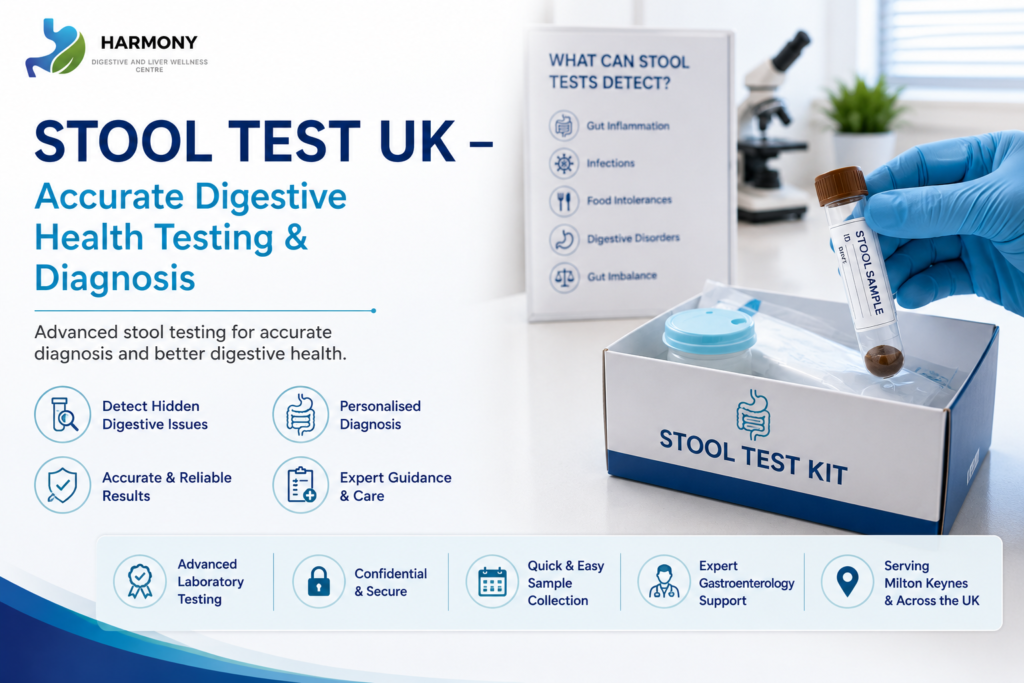
Many people face stomach discomfort but ignore it. You may feel gas, bloating or pain after eating. Sometimes this happens often. One possible reason is a condition called small intestinal bacterial overgrowth. It is important to know the symptoms of small intestinal bacterial overgrowth to understand your body better. Your small intestine should have limited bacteria present in it. When too many bacteria grow there, digestion gets affected. This results in discomfort and other health issues. What is Small Intestinal Bacterial Overgrowth? Small intestinal bacterial overgrowth also called SIBO. It happens when bacteria increase in the small intestine. This bacteria starts to affect digestion. They break food in the wrong way which creates gas. This can also lead to many uncomfortable symptoms. It is a common but often ignored condition. Common Symptoms of SIBO There are many symptoms of small intestinal bacterial overgrowth. They may look normal at first. When you have bloating after meals Gas and discomfort Stomach pain or cramps Diarrhea or constipation Feeling full very quickly All these symptoms may come and go. But if they continue to happen, they should not be ignored. Other Signs of SIBO Some symptoms are less common but still important. Having bad breath Weakness or low energy Weight loss without any reason Nutrient deficiency These signs show that your body is not absorbing nutrients properly. Why Does It Happen? This condition can happen due to many different reasons. Slow digestion can make the bacteria stay longer in the intestine. Poor diet and stress also affect the working and health of your gut. Certain medical conditions can also increase the risk. When digestion is not smooth, bacteria can grow more than normal. How It Affects Your Daily Life The symptoms of small intestinal bacterial overgrowth can disturb your day to day life. It can make you feel uncomfortable after eating. You may need to avoid eating certain foods. You may feel tired the whole day without even doing any work. It can also affect your mood and energy levels. When to Take It Seriously If your symptoms stay for a long time, it is important to take action. Do not ignore regular bloating or stomach pain. These may be signs of a serious issue. Early care can help you avoid bigger problems later. Treatment of SIBO Doctors may suggest tests to confirm SIBO. These tests help to find the right cause of your symptoms. Treatment include medicines and diet changes. It helps to reduce the bacteria and improve digestion. Proper care helps you recover faster. Proper Treatment and Care It is important to get the correct treatment. Harmony Digestive and Liver Wellness Centre provides proper care for digestive problems. They work on finding the root cause of your problem. They focus on improving your gut health and providing you comfort. How to Support Gut Health Along with treatment, small lifestyle changes can help. Eat light and simple meals Avoid heavy and oily food Drink enough water Manage stress Eat on time These steps support better digestion. Conclusion – Gut Health Specialist Understanding the Symptoms of Small Intestinal Bacterial Overgrowth is important for your health. Early signs may look simple but should not be ignored. Harmony Digestive and Liver Wellness Centre, can help you manage this condition and improve your digestive health. A healthy gut helps you feel comfortable and active every day. Book a consultation or screening today: Click Here. To book a private liver or gut consultation or second opinion, Get in touch with us. Had a great experience with us? We’d love to hear your thoughts! Click here to leave a Google review.
Food Intolerance Test UK – Identify Trigger Foods for Better Gut Health
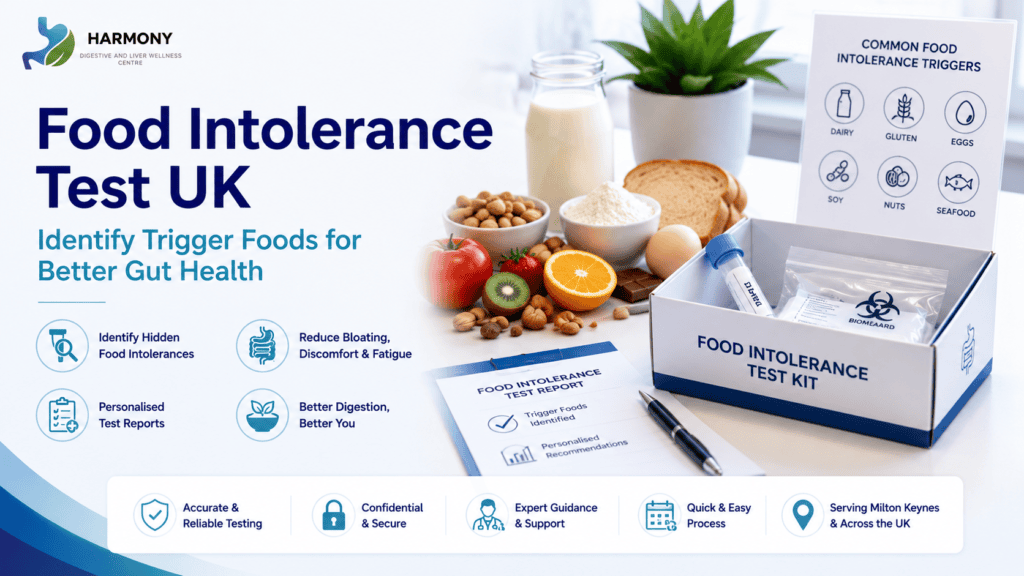
Many people face stomach discomfort but ignore it. You may feel gas, bloating or pain after eating. Sometimes this happens often. One possible reason is a condition called small intestinal bacterial overgrowth. It is important to know the symptoms of small intestinal bacterial overgrowth to understand your body better. Your small intestine should have limited bacteria present in it. When too many bacteria grow there, digestion gets affected. This results in discomfort and other health issues. What is Small Intestinal Bacterial Overgrowth? Small intestinal bacterial overgrowth also called SIBO. It happens when bacteria increase in the small intestine. This bacteria starts to affect digestion. They break food in the wrong way which creates gas. This can also lead to many uncomfortable symptoms. It is a common but often ignored condition. Common Symptoms of SIBO There are many symptoms of small intestinal bacterial overgrowth. They may look normal at first. When you have bloating after meals Gas and discomfort Stomach pain or cramps Diarrhea or constipation Feeling full very quickly All these symptoms may come and go. But if they continue to happen, they should not be ignored. Other Signs of SIBO Some symptoms are less common but still important. Having bad breath Weakness or low energy Weight loss without any reason Nutrient deficiency These signs show that your body is not absorbing nutrients properly. Why Does It Happen? This condition can happen due to many different reasons. Slow digestion can make the bacteria stay longer in the intestine. Poor diet and stress also affect the working and health of your gut. Certain medical conditions can also increase the risk. When digestion is not smooth, bacteria can grow more than normal. How It Affects Your Daily Life The symptoms of small intestinal bacterial overgrowth can disturb your day to day life. It can make you feel uncomfortable after eating. You may need to avoid eating certain foods. You may feel tired the whole day without even doing any work. It can also affect your mood and energy levels. When to Take It Seriously If your symptoms stay for a long time, it is important to take action. Do not ignore regular bloating or stomach pain. These may be signs of a serious issue. Early care can help you avoid bigger problems later. Treatment of SIBO Doctors may suggest tests to confirm SIBO. These tests help to find the right cause of your symptoms. Treatment include medicines and diet changes. It helps to reduce the bacteria and improve digestion. Proper care helps you recover faster. Proper Treatment and Care It is important to get the correct treatment. Harmony Digestive and Liver Wellness Centre provides proper care for digestive problems. They work on finding the root cause of your problem. They focus on improving your gut health and providing you comfort. How to Support Gut Health Along with treatment, small lifestyle changes can help. Eat light and simple meals Avoid heavy and oily food Drink enough water Manage stress Eat on time These steps support better digestion. Conclusion – Gut Health Specialist Understanding the Symptoms of Small Intestinal Bacterial Overgrowth is important for your health. Early signs may look simple but should not be ignored. Harmony Digestive and Liver Wellness Centre, can help you manage this condition and improve your digestive health. A healthy gut helps you feel comfortable and active every day. Book a consultation or screening today: Click Here. To book a private liver or gut consultation or second opinion, Get in touch with us. Had a great experience with us? We’d love to hear your thoughts! Click here to leave a Google review.
Private Gastroscopy Near Me – Quick Diagnosis for Stomach & Digestive Issues
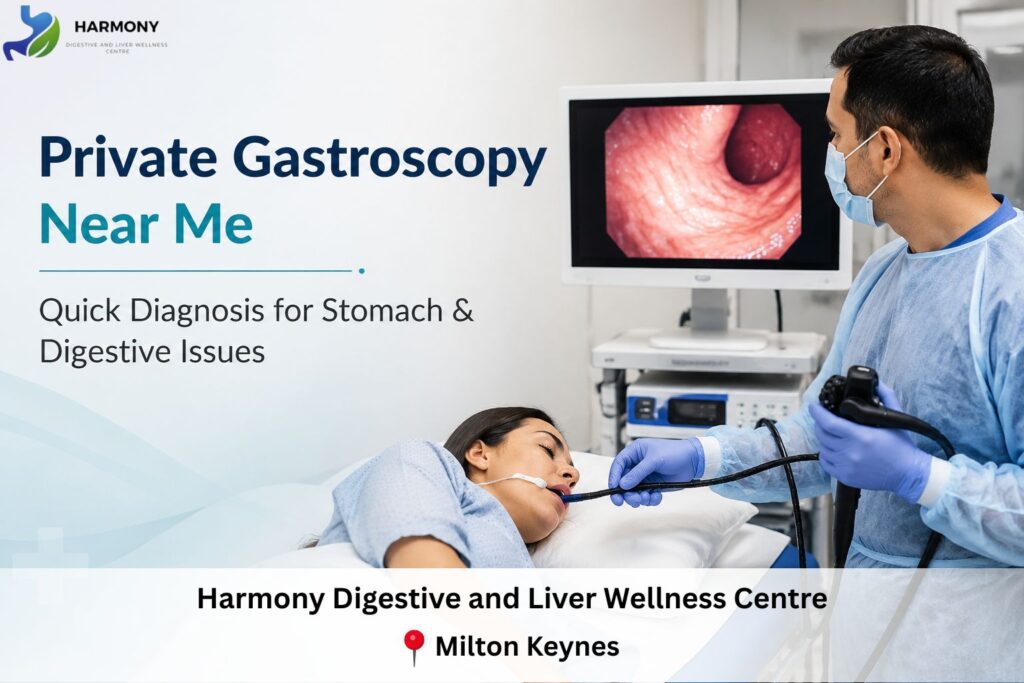
Many people face stomach discomfort but ignore it. You may feel gas, bloating or pain after eating. Sometimes this happens often. One possible reason is a condition called small intestinal bacterial overgrowth. It is important to know the symptoms of small intestinal bacterial overgrowth to understand your body better. Your small intestine should have limited bacteria present in it. When too many bacteria grow there, digestion gets affected. This results in discomfort and other health issues. What is Small Intestinal Bacterial Overgrowth? Small intestinal bacterial overgrowth also called SIBO. It happens when bacteria increase in the small intestine. This bacteria starts to affect digestion. They break food in the wrong way which creates gas. This can also lead to many uncomfortable symptoms. It is a common but often ignored condition. Common Symptoms of SIBO There are many symptoms of small intestinal bacterial overgrowth. They may look normal at first. When you have bloating after meals Gas and discomfort Stomach pain or cramps Diarrhea or constipation Feeling full very quickly All these symptoms may come and go. But if they continue to happen, they should not be ignored. Other Signs of SIBO Some symptoms are less common but still important. Having bad breath Weakness or low energy Weight loss without any reason Nutrient deficiency These signs show that your body is not absorbing nutrients properly. Why Does It Happen? This condition can happen due to many different reasons. Slow digestion can make the bacteria stay longer in the intestine. Poor diet and stress also affect the working and health of your gut. Certain medical conditions can also increase the risk. When digestion is not smooth, bacteria can grow more than normal. How It Affects Your Daily Life The symptoms of small intestinal bacterial overgrowth can disturb your day to day life. It can make you feel uncomfortable after eating. You may need to avoid eating certain foods. You may feel tired the whole day without even doing any work. It can also affect your mood and energy levels. When to Take It Seriously If your symptoms stay for a long time, it is important to take action. Do not ignore regular bloating or stomach pain. These may be signs of a serious issue. Early care can help you avoid bigger problems later. Treatment of SIBO Doctors may suggest tests to confirm SIBO. These tests help to find the right cause of your symptoms. Treatment include medicines and diet changes. It helps to reduce the bacteria and improve digestion. Proper care helps you recover faster. Proper Treatment and Care It is important to get the correct treatment. Harmony Digestive and Liver Wellness Centre provides proper care for digestive problems. They work on finding the root cause of your problem. They focus on improving your gut health and providing you comfort. How to Support Gut Health Along with treatment, small lifestyle changes can help. Eat light and simple meals Avoid heavy and oily food Drink enough water Manage stress Eat on time These steps support better digestion. Conclusion – Gut Health Specialist Understanding the Symptoms of Small Intestinal Bacterial Overgrowth is important for your health. Early signs may look simple but should not be ignored. Harmony Digestive and Liver Wellness Centre, can help you manage this condition and improve your digestive health. A healthy gut helps you feel comfortable and active every day. Book a consultation or screening today: Click Here. To book a private liver or gut consultation or second opinion, Get in touch with us. Had a great experience with us? We’d love to hear your thoughts! Click here to leave a Google review.
Private Gastroenterologist Near Me in Milton Keynes – Expert Gut & Liver Specialists

Many people face stomach discomfort but ignore it. You may feel gas, bloating or pain after eating. Sometimes this happens often. One possible reason is a condition called small intestinal bacterial overgrowth. It is important to know the symptoms of small intestinal bacterial overgrowth to understand your body better. Your small intestine should have limited bacteria present in it. When too many bacteria grow there, digestion gets affected. This results in discomfort and other health issues. What is Small Intestinal Bacterial Overgrowth? Small intestinal bacterial overgrowth also called SIBO. It happens when bacteria increase in the small intestine. This bacteria starts to affect digestion. They break food in the wrong way which creates gas. This can also lead to many uncomfortable symptoms. It is a common but often ignored condition. Common Symptoms of SIBO There are many symptoms of small intestinal bacterial overgrowth. They may look normal at first. When you have bloating after meals Gas and discomfort Stomach pain or cramps Diarrhea or constipation Feeling full very quickly All these symptoms may come and go. But if they continue to happen, they should not be ignored. Other Signs of SIBO Some symptoms are less common but still important. Having bad breath Weakness or low energy Weight loss without any reason Nutrient deficiency These signs show that your body is not absorbing nutrients properly. Why Does It Happen? This condition can happen due to many different reasons. Slow digestion can make the bacteria stay longer in the intestine. Poor diet and stress also affect the working and health of your gut. Certain medical conditions can also increase the risk. When digestion is not smooth, bacteria can grow more than normal. How It Affects Your Daily Life The symptoms of small intestinal bacterial overgrowth can disturb your day to day life. It can make you feel uncomfortable after eating. You may need to avoid eating certain foods. You may feel tired the whole day without even doing any work. It can also affect your mood and energy levels. When to Take It Seriously If your symptoms stay for a long time, it is important to take action. Do not ignore regular bloating or stomach pain. These may be signs of a serious issue. Early care can help you avoid bigger problems later. Treatment of SIBO Doctors may suggest tests to confirm SIBO. These tests help to find the right cause of your symptoms. Treatment include medicines and diet changes. It helps to reduce the bacteria and improve digestion. Proper care helps you recover faster. Proper Treatment and Care It is important to get the correct treatment. Harmony Digestive and Liver Wellness Centre provides proper care for digestive problems. They work on finding the root cause of your problem. They focus on improving your gut health and providing you comfort. How to Support Gut Health Along with treatment, small lifestyle changes can help. Eat light and simple meals Avoid heavy and oily food Drink enough water Manage stress Eat on time These steps support better digestion. Conclusion – Gut Health Specialist Understanding the Symptoms of Small Intestinal Bacterial Overgrowth is important for your health. Early signs may look simple but should not be ignored. Harmony Digestive and Liver Wellness Centre, can help you manage this condition and improve your digestive health. A healthy gut helps you feel comfortable and active every day. Book a consultation or screening today: Click Here. To book a private liver or gut consultation or second opinion, Get in touch with us. Had a great experience with us? We’d love to hear your thoughts! Click here to leave a Google review.