 Skip to main content

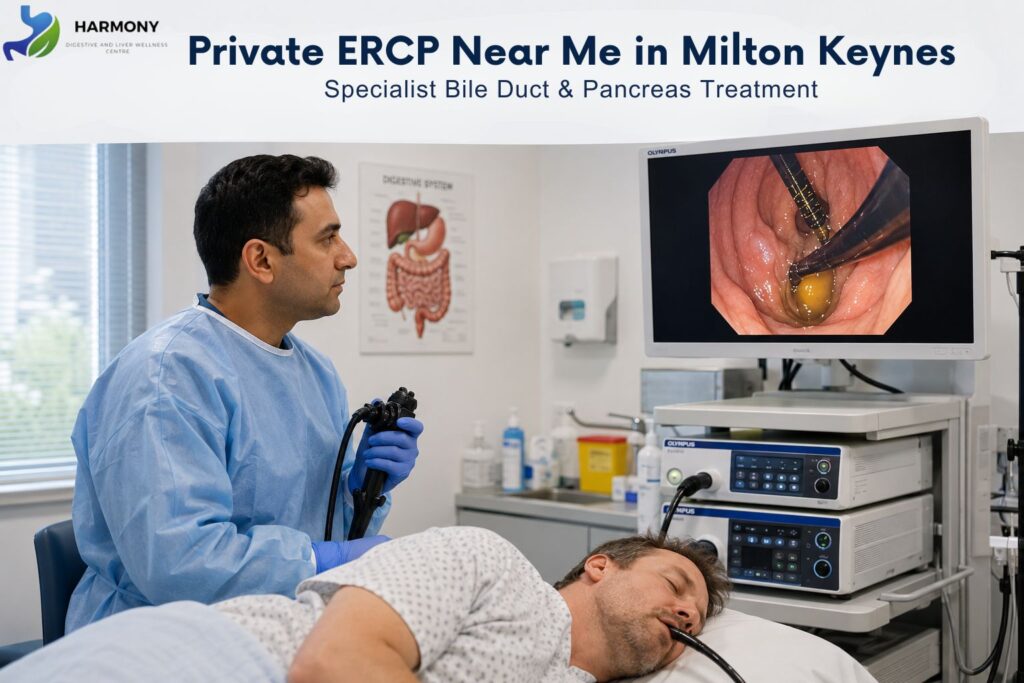
Private ERCP Near Me in Milton Keynes – Specialist Bile Duct & Pancreas Treatment
Many people face stomach discomfort but ignore it. You may feel gas, bloating or pain after eating. Sometimes this happens often. One possible reason is a condition called small intestinal bacterial overgrowth. It is important to know the symptoms of small intestinal bacterial overgrowth to understand your body better. Your small intestine should have limited bacteria present in it. When too many bacteria grow there, digestion gets affected. This results in discomfort and other health issues. What is Small Intestinal Bacterial Overgrowth? Small intestinal bacterial overgrowth also called SIBO. It happens when bacteria increase in the small intestine. This bacteria starts to affect digestion. They break food in the wrong way which creates gas. This can also lead to many uncomfortable symptoms. It is a common but often ignored condition. Common Symptoms of SIBO There are many symptoms of small intestinal bacterial overgrowth. They may look normal at first. When you have bloating after meals Gas and discomfort Stomach pain or cramps Diarrhea or constipation Feeling full very quickly All these symptoms may come and go. But if they continue to happen, they should not be ignored. Other Signs of SIBO Some symptoms are less common but still important. Having bad breath Weakness or low energy Weight loss without any reason Nutrient deficiency These signs show that your body is not absorbing nutrients properly. Why Does It Happen? This condition can happen due to many different reasons. Slow digestion can make the bacteria stay longer in the intestine. Poor diet and stress also affect the working and health of your gut. Certain medical conditions can also increase the risk. When digestion is not smooth, bacteria can grow more than normal. How It Affects Your Daily Life The symptoms of small intestinal bacterial overgrowth can disturb your day to day life. It can make you feel uncomfortable after eating. You may need to avoid eating certain foods. You may feel tired the whole day without even doing any work. It can also affect your mood and energy levels. When to Take It Seriously If your symptoms stay for a long time, it is important to take action. Do not ignore regular bloating or stomach pain. These may be signs of a serious issue. Early care can help you avoid bigger problems later. Treatment of SIBO Doctors may suggest tests to confirm SIBO. These tests help to find the right cause of your symptoms. Treatment include medicines and diet changes. It helps to reduce the bacteria and improve digestion. Proper care helps you recover faster. Proper Treatment and Care It is important to get the correct treatment. Harmony Digestive and Liver Wellness Centre provides proper care for digestive problems. They work on finding the root cause of your problem. They focus on improving your gut health and providing you comfort. How to Support Gut Health Along with treatment, small lifestyle changes can help. Eat light and simple meals Avoid heavy and oily food Drink enough water Manage stress Eat on time These steps support better digestion. Conclusion – Gut Health Specialist Understanding the Symptoms of Small Intestinal Bacterial Overgrowth is important for your health. Early signs may look simple but should not be ignored. Harmony Digestive and Liver Wellness Centre, can help you manage this condition and improve your digestive health. A healthy gut helps you feel comfortable and active every day. Book a consultation or screening today: Click Here. To book a private liver or gut consultation or second opinion, Get in touch with us. Had a great experience with us? We’d love to hear your thoughts! Click here to leave a Google review.
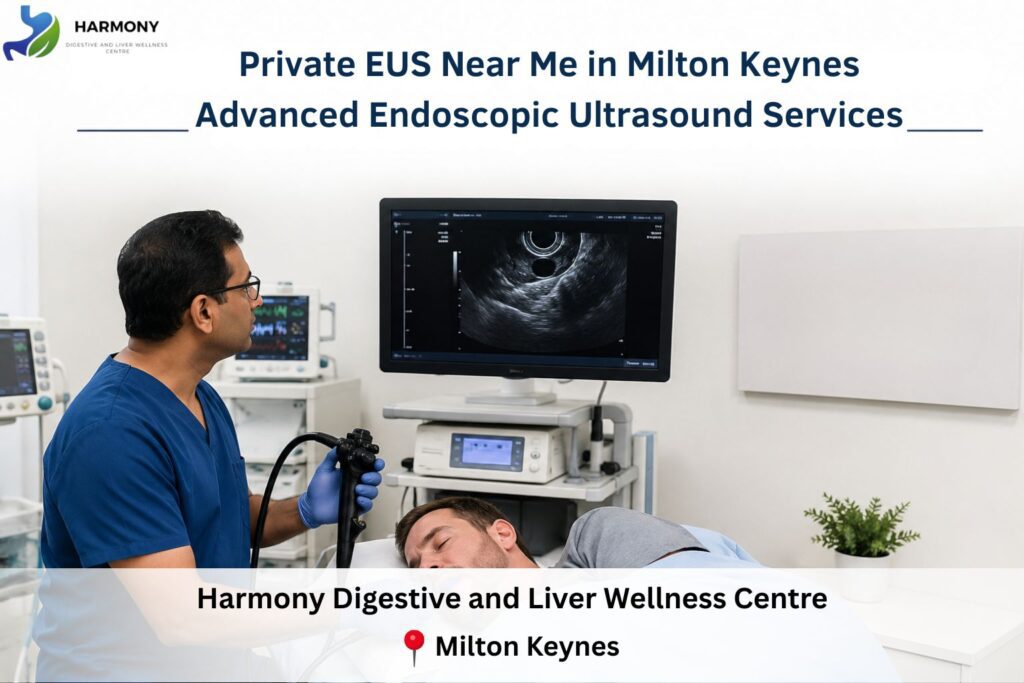
Private EUS Near Me in Milton Keynes – Advanced Endoscopic Ultrasound Services
Many people face stomach discomfort but ignore it. You may feel gas, bloating or pain after eating. Sometimes this happens often. One possible reason is a condition called small intestinal bacterial overgrowth. It is important to know the symptoms of small intestinal bacterial overgrowth to understand your body better. Your small intestine should have limited bacteria present in it. When too many bacteria grow there, digestion gets affected. This results in discomfort and other health issues. What is Small Intestinal Bacterial Overgrowth? Small intestinal bacterial overgrowth also called SIBO. It happens when bacteria increase in the small intestine. This bacteria starts to affect digestion. They break food in the wrong way which creates gas. This can also lead to many uncomfortable symptoms. It is a common but often ignored condition. Common Symptoms of SIBO There are many symptoms of small intestinal bacterial overgrowth. They may look normal at first. When you have bloating after meals Gas and discomfort Stomach pain or cramps Diarrhea or constipation Feeling full very quickly All these symptoms may come and go. But if they continue to happen, they should not be ignored. Other Signs of SIBO Some symptoms are less common but still important. Having bad breath Weakness or low energy Weight loss without any reason Nutrient deficiency These signs show that your body is not absorbing nutrients properly. Why Does It Happen? This condition can happen due to many different reasons. Slow digestion can make the bacteria stay longer in the intestine. Poor diet and stress also affect the working and health of your gut. Certain medical conditions can also increase the risk. When digestion is not smooth, bacteria can grow more than normal. How It Affects Your Daily Life The symptoms of small intestinal bacterial overgrowth can disturb your day to day life. It can make you feel uncomfortable after eating. You may need to avoid eating certain foods. You may feel tired the whole day without even doing any work. It can also affect your mood and energy levels. When to Take It Seriously If your symptoms stay for a long time, it is important to take action. Do not ignore regular bloating or stomach pain. These may be signs of a serious issue. Early care can help you avoid bigger problems later. Treatment of SIBO Doctors may suggest tests to confirm SIBO. These tests help to find the right cause of your symptoms. Treatment include medicines and diet changes. It helps to reduce the bacteria and improve digestion. Proper care helps you recover faster. Proper Treatment and Care It is important to get the correct treatment. Harmony Digestive and Liver Wellness Centre provides proper care for digestive problems. They work on finding the root cause of your problem. They focus on improving your gut health and providing you comfort. How to Support Gut Health Along with treatment, small lifestyle changes can help. Eat light and simple meals Avoid heavy and oily food Drink enough water Manage stress Eat on time These steps support better digestion. Conclusion – Gut Health Specialist Understanding the Symptoms of Small Intestinal Bacterial Overgrowth is important for your health. Early signs may look simple but should not be ignored. Harmony Digestive and Liver Wellness Centre, can help you manage this condition and improve your digestive health. A healthy gut helps you feel comfortable and active every day. Book a consultation or screening today: Click Here. To book a private liver or gut consultation or second opinion, Get in touch with us. Had a great experience with us? We’d love to hear your thoughts! Click here to leave a Google review.
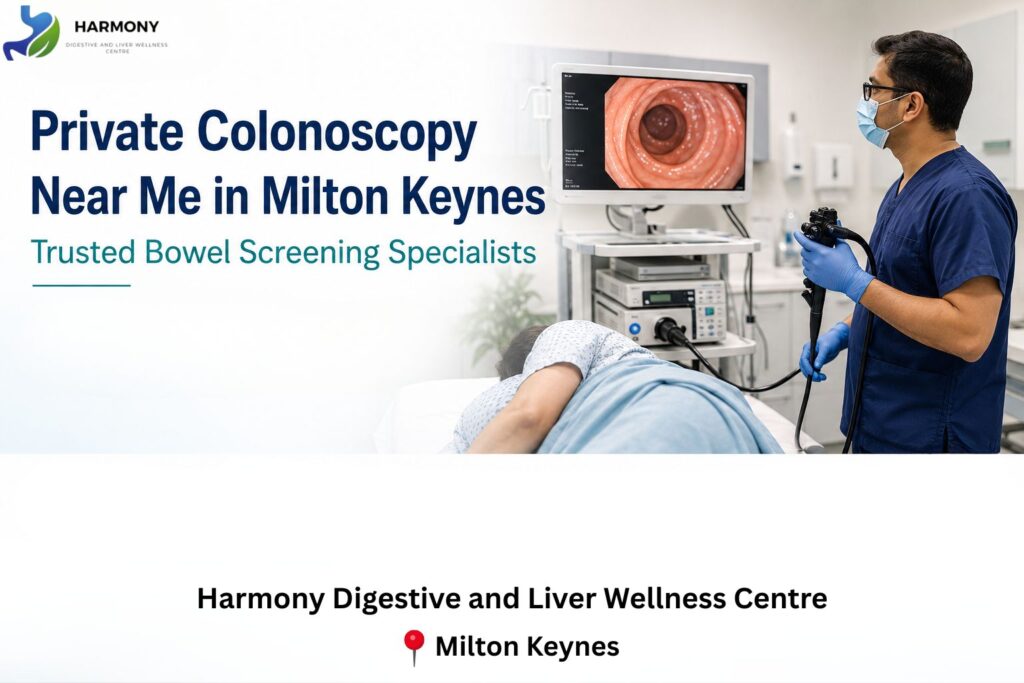
Private Colonoscopy Near Me in Milton Keynes – Trusted Bowel Screening Specialists
Many people face stomach discomfort but ignore it. You may feel gas, bloating or pain after eating. Sometimes this happens often. One possible reason is a condition called small intestinal bacterial overgrowth. It is important to know the symptoms of small intestinal bacterial overgrowth to understand your body better. Your small intestine should have limited bacteria present in it. When too many bacteria grow there, digestion gets affected. This results in discomfort and other health issues. What is Small Intestinal Bacterial Overgrowth? Small intestinal bacterial overgrowth also called SIBO. It happens when bacteria increase in the small intestine. This bacteria starts to affect digestion. They break food in the wrong way which creates gas. This can also lead to many uncomfortable symptoms. It is a common but often ignored condition. Common Symptoms of SIBO There are many symptoms of small intestinal bacterial overgrowth. They may look normal at first. When you have bloating after meals Gas and discomfort Stomach pain or cramps Diarrhea or constipation Feeling full very quickly All these symptoms may come and go. But if they continue to happen, they should not be ignored. Other Signs of SIBO Some symptoms are less common but still important. Having bad breath Weakness or low energy Weight loss without any reason Nutrient deficiency These signs show that your body is not absorbing nutrients properly. Why Does It Happen? This condition can happen due to many different reasons. Slow digestion can make the bacteria stay longer in the intestine. Poor diet and stress also affect the working and health of your gut. Certain medical conditions can also increase the risk. When digestion is not smooth, bacteria can grow more than normal. How It Affects Your Daily Life The symptoms of small intestinal bacterial overgrowth can disturb your day to day life. It can make you feel uncomfortable after eating. You may need to avoid eating certain foods. You may feel tired the whole day without even doing any work. It can also affect your mood and energy levels. When to Take It Seriously If your symptoms stay for a long time, it is important to take action. Do not ignore regular bloating or stomach pain. These may be signs of a serious issue. Early care can help you avoid bigger problems later. Treatment of SIBO Doctors may suggest tests to confirm SIBO. These tests help to find the right cause of your symptoms. Treatment include medicines and diet changes. It helps to reduce the bacteria and improve digestion. Proper care helps you recover faster. Proper Treatment and Care It is important to get the correct treatment. Harmony Digestive and Liver Wellness Centre provides proper care for digestive problems. They work on finding the root cause of your problem. They focus on improving your gut health and providing you comfort. How to Support Gut Health Along with treatment, small lifestyle changes can help. Eat light and simple meals Avoid heavy and oily food Drink enough water Manage stress Eat on time These steps support better digestion. Conclusion – Gut Health Specialist Understanding the Symptoms of Small Intestinal Bacterial Overgrowth is important for your health. Early signs may look simple but should not be ignored. Harmony Digestive and Liver Wellness Centre, can help you manage this condition and improve your digestive health. A healthy gut helps you feel comfortable and active every day. Book a consultation or screening today: Click Here. To book a private liver or gut consultation or second opinion, Get in touch with us. Had a great experience with us? We’d love to hear your thoughts! Click here to leave a Google review.
Private Endoscopy Near Me in Milton Keynes – Fast & Expert Digestive Care

Many people face stomach discomfort but ignore it. You may feel gas, bloating or pain after eating. Sometimes this happens often. One possible reason is a condition called small intestinal bacterial overgrowth. It is important to know the symptoms of small intestinal bacterial overgrowth to understand your body better. Your small intestine should have limited bacteria present in it. When too many bacteria grow there, digestion gets affected. This results in discomfort and other health issues. What is Small Intestinal Bacterial Overgrowth? Small intestinal bacterial overgrowth also called SIBO. It happens when bacteria increase in the small intestine. This bacteria starts to affect digestion. They break food in the wrong way which creates gas. This can also lead to many uncomfortable symptoms. It is a common but often ignored condition. Common Symptoms of SIBO There are many symptoms of small intestinal bacterial overgrowth. They may look normal at first. When you have bloating after meals Gas and discomfort Stomach pain or cramps Diarrhea or constipation Feeling full very quickly All these symptoms may come and go. But if they continue to happen, they should not be ignored. Other Signs of SIBO Some symptoms are less common but still important. Having bad breath Weakness or low energy Weight loss without any reason Nutrient deficiency These signs show that your body is not absorbing nutrients properly. Why Does It Happen? This condition can happen due to many different reasons. Slow digestion can make the bacteria stay longer in the intestine. Poor diet and stress also affect the working and health of your gut. Certain medical conditions can also increase the risk. When digestion is not smooth, bacteria can grow more than normal. How It Affects Your Daily Life The symptoms of small intestinal bacterial overgrowth can disturb your day to day life. It can make you feel uncomfortable after eating. You may need to avoid eating certain foods. You may feel tired the whole day without even doing any work. It can also affect your mood and energy levels. When to Take It Seriously If your symptoms stay for a long time, it is important to take action. Do not ignore regular bloating or stomach pain. These may be signs of a serious issue. Early care can help you avoid bigger problems later. Treatment of SIBO Doctors may suggest tests to confirm SIBO. These tests help to find the right cause of your symptoms. Treatment include medicines and diet changes. It helps to reduce the bacteria and improve digestion. Proper care helps you recover faster. Proper Treatment and Care It is important to get the correct treatment. Harmony Digestive and Liver Wellness Centre provides proper care for digestive problems. They work on finding the root cause of your problem. They focus on improving your gut health and providing you comfort. How to Support Gut Health Along with treatment, small lifestyle changes can help. Eat light and simple meals Avoid heavy and oily food Drink enough water Manage stress Eat on time These steps support better digestion. Conclusion – Gut Health Specialist Understanding the Symptoms of Small Intestinal Bacterial Overgrowth is important for your health. Early signs may look simple but should not be ignored. Harmony Digestive and Liver Wellness Centre, can help you manage this condition and improve your digestive health. A healthy gut helps you feel comfortable and active every day. Book a consultation or screening today: Click Here. To book a private liver or gut consultation or second opinion, Get in touch with us. Had a great experience with us? We’d love to hear your thoughts! Click here to leave a Google review.
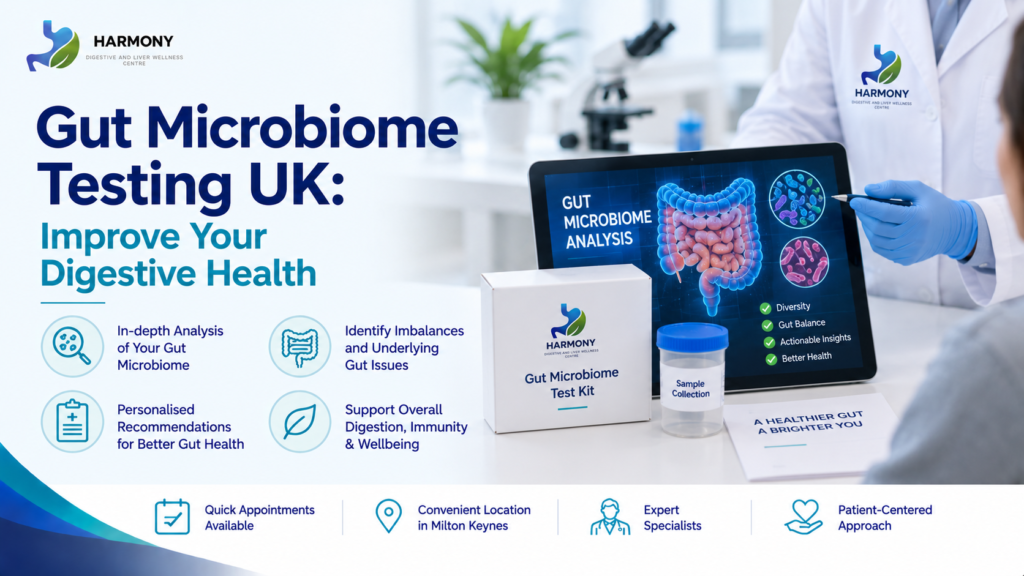
Gut Microbiome Testing UK: Improve Your Digestive Health
Many people face stomach discomfort but ignore it. You may feel gas, bloating or pain after eating. Sometimes this happens often. One possible reason is a condition called small intestinal bacterial overgrowth. It is important to know the symptoms of small intestinal bacterial overgrowth to understand your body better. Your small intestine should have limited bacteria present in it. When too many bacteria grow there, digestion gets affected. This results in discomfort and other health issues. What is Small Intestinal Bacterial Overgrowth? Small intestinal bacterial overgrowth also called SIBO. It happens when bacteria increase in the small intestine. This bacteria starts to affect digestion. They break food in the wrong way which creates gas. This can also lead to many uncomfortable symptoms. It is a common but often ignored condition. Common Symptoms of SIBO There are many symptoms of small intestinal bacterial overgrowth. They may look normal at first. When you have bloating after meals Gas and discomfort Stomach pain or cramps Diarrhea or constipation Feeling full very quickly All these symptoms may come and go. But if they continue to happen, they should not be ignored. Other Signs of SIBO Some symptoms are less common but still important. Having bad breath Weakness or low energy Weight loss without any reason Nutrient deficiency These signs show that your body is not absorbing nutrients properly. Why Does It Happen? This condition can happen due to many different reasons. Slow digestion can make the bacteria stay longer in the intestine. Poor diet and stress also affect the working and health of your gut. Certain medical conditions can also increase the risk. When digestion is not smooth, bacteria can grow more than normal. How It Affects Your Daily Life The symptoms of small intestinal bacterial overgrowth can disturb your day to day life. It can make you feel uncomfortable after eating. You may need to avoid eating certain foods. You may feel tired the whole day without even doing any work. It can also affect your mood and energy levels. When to Take It Seriously If your symptoms stay for a long time, it is important to take action. Do not ignore regular bloating or stomach pain. These may be signs of a serious issue. Early care can help you avoid bigger problems later. Treatment of SIBO Doctors may suggest tests to confirm SIBO. These tests help to find the right cause of your symptoms. Treatment include medicines and diet changes. It helps to reduce the bacteria and improve digestion. Proper care helps you recover faster. Proper Treatment and Care It is important to get the correct treatment. Harmony Digestive and Liver Wellness Centre provides proper care for digestive problems. They work on finding the root cause of your problem. They focus on improving your gut health and providing you comfort. How to Support Gut Health Along with treatment, small lifestyle changes can help. Eat light and simple meals Avoid heavy and oily food Drink enough water Manage stress Eat on time These steps support better digestion. Conclusion – Gut Health Specialist Understanding the Symptoms of Small Intestinal Bacterial Overgrowth is important for your health. Early signs may look simple but should not be ignored. Harmony Digestive and Liver Wellness Centre, can help you manage this condition and improve your digestive health. A healthy gut helps you feel comfortable and active every day. Book a consultation or screening today: Click Here. To book a private liver or gut consultation or second opinion, Get in touch with us. Had a great experience with us? We’d love to hear your thoughts! Click here to leave a Google review.
Gastroscopy without sedation: What happens during an unsedated gastroscopy?
Many people face stomach discomfort but ignore it. You may feel gas, bloating or pain after eating. Sometimes this happens often. One possible reason is a condition called small intestinal bacterial overgrowth. It is important to know the symptoms of small intestinal bacterial overgrowth to understand your body better. Your small intestine should have limited bacteria present in it. When too many bacteria grow there, digestion gets affected. This results in discomfort and other health issues. What is Small Intestinal Bacterial Overgrowth? Small intestinal bacterial overgrowth also called SIBO. It happens when bacteria increase in the small intestine. This bacteria starts to affect digestion. They break food in the wrong way which creates gas. This can also lead to many uncomfortable symptoms. It is a common but often ignored condition. Common Symptoms of SIBO There are many symptoms of small intestinal bacterial overgrowth. They may look normal at first. When you have bloating after meals Gas and discomfort Stomach pain or cramps Diarrhea or constipation Feeling full very quickly All these symptoms may come and go. But if they continue to happen, they should not be ignored. Other Signs of SIBO Some symptoms are less common but still important. Having bad breath Weakness or low energy Weight loss without any reason Nutrient deficiency These signs show that your body is not absorbing nutrients properly. Why Does It Happen? This condition can happen due to many different reasons. Slow digestion can make the bacteria stay longer in the intestine. Poor diet and stress also affect the working and health of your gut. Certain medical conditions can also increase the risk. When digestion is not smooth, bacteria can grow more than normal. How It Affects Your Daily Life The symptoms of small intestinal bacterial overgrowth can disturb your day to day life. It can make you feel uncomfortable after eating. You may need to avoid eating certain foods. You may feel tired the whole day without even doing any work. It can also affect your mood and energy levels. When to Take It Seriously If your symptoms stay for a long time, it is important to take action. Do not ignore regular bloating or stomach pain. These may be signs of a serious issue. Early care can help you avoid bigger problems later. Treatment of SIBO Doctors may suggest tests to confirm SIBO. These tests help to find the right cause of your symptoms. Treatment include medicines and diet changes. It helps to reduce the bacteria and improve digestion. Proper care helps you recover faster. Proper Treatment and Care It is important to get the correct treatment. Harmony Digestive and Liver Wellness Centre provides proper care for digestive problems. They work on finding the root cause of your problem. They focus on improving your gut health and providing you comfort. How to Support Gut Health Along with treatment, small lifestyle changes can help. Eat light and simple meals Avoid heavy and oily food Drink enough water Manage stress Eat on time These steps support better digestion. Conclusion – Gut Health Specialist Understanding the Symptoms of Small Intestinal Bacterial Overgrowth is important for your health. Early signs may look simple but should not be ignored. Harmony Digestive and Liver Wellness Centre, can help you manage this condition and improve your digestive health. A healthy gut helps you feel comfortable and active every day. Book a consultation or screening today: Click Here. To book a private liver or gut consultation or second opinion, Get in touch with us. Had a great experience with us? We’d love to hear your thoughts! Click here to leave a Google review.
Gastroscopy sedation: Sedated vs unsedated gastroscopy
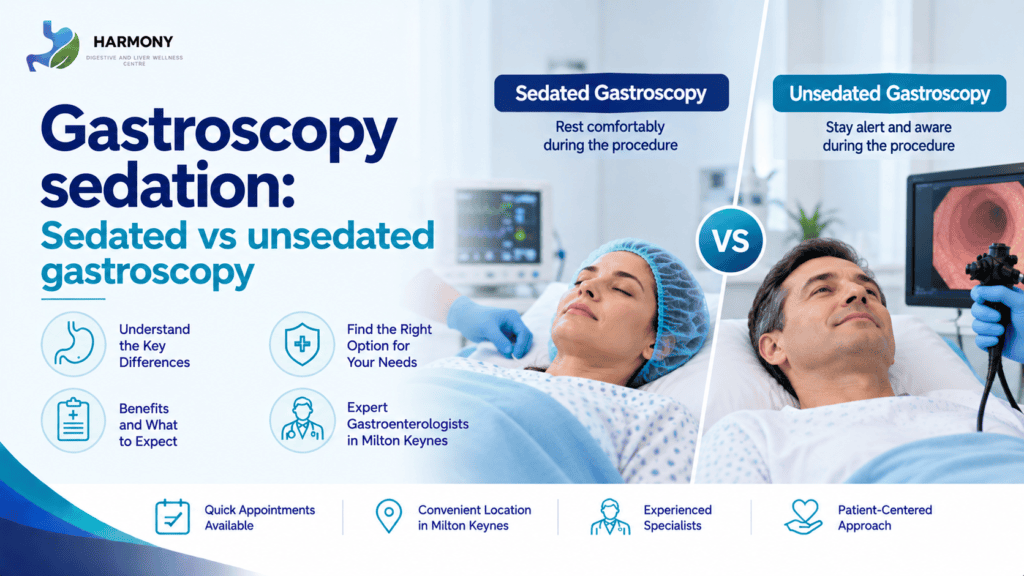
Something I see often in my clinic: patients who’ve been told they need a gastroscopy, who’ve then spent three days on the internet, and who arrive with one specific question: Do I have to be sedated? It’s a reasonable thing to want clarity on. The choice of gastroscopy sedation affects your comfort, your recovery time, and sometimes the quality of what we can see. I’m Dr Prakash Gupta, a Consultant Gastroenterologist. Let me walk you through both options honestly. What a Gastroscopy Involves A gastroscopy passes a thin flexible camera through your mouth, down the oesophagus, and into the stomach and upper small intestine. It’s the most direct way to investigate persistent reflux, unexplained nausea, upper abdominal pain, or concerns about ulcers and inflammation. The procedure takes between five and fifteen minutes. The sedation question is entirely separate – it’s about how you experience those minutes, not about the diagnosis. Sedated Gastroscopy With sedation, you receive an intravenous medication – most commonly Fentanyl and Midazolam and in some cases, an anaesthetist-administered propofol – before we begin. Within a minute or two, you’re deeply relaxed or asleep. Most patients remember nothing. They wake up in recovery, someone drives them home, and the procedure feels like it never happened. This is the most common choice, and for good reason. No discomfort, no memory of gagging, no anxiety to push through. For patients who are nervous or have a strong gag reflex, sedation removes what would otherwise be a genuinely unpleasant experience. The trade-off is real, though. You need someone to take you home – no exceptions. You’ll spend around an hour in recovery. Driving, operating machinery, or making important decisions that day is off the table. Unsedated Gastroscopy Going unsedated means a local anaesthetic spray to the back of your throat, then staying fully conscious throughout. The spray numbs the gag reflex enough that most people tolerate it. Because there’s no sedation to sleep off, you can drive yourself home and return to work the same day. I won’t pretend it’s entirely comfortable. You’ll feel the tube. You may gag. It requires a degree of calm that some patients simply can’t muster – and that’s not a criticism. Anxiety is real. But plenty of patients do fine. For those who prefer to stay in control, or who can’t bring a carer, it’s a legitimate option – not a fallback. Side by Side: Sedated vs Unsedated Sedated Unsedated Comfort during procedure High – most feel nothing Moderate – some gagging likely Memory of scope Usually none Full Recovery time 1–2 hours Minimal Can drive after No Yes Need a carer Yes – mandatory No Suitable for anxious patients Yes Less ideal Risk of sedation side effects Small but present None Same-day return to work Unlikely Yes Which One Is Right for You There’s no universal answer. What I look at: How anxious are you? Do you have a strong gag reflex? Can you bring someone to drive you home? Are there medical reasons sedation carries extra risk for you specifically? Where those answers point clearly one way, the decision is straightforward. What I’d push back on is the assumption that sedation is always the more thorough option. In the right patient, an unsedated scope done well gives us everything we need. The sedation choice matters – but what matters more is having the investigation done at all. If gut symptoms have been nagging at you, don’t wait for them to get louder. At Harmony Gut and Liver, we offer gastroscopy with full sedation options, alongside a broader digestive assessment. Book a consultation or screening today: Click Here. To book a private liver or gut consultation or second opinion, Get in touch with us. Had a great experience with us? We’d love to hear your thoughts! Click here to leave a Google review.
What Is a Gastroscopy Looking For? Conditions It Can Detect
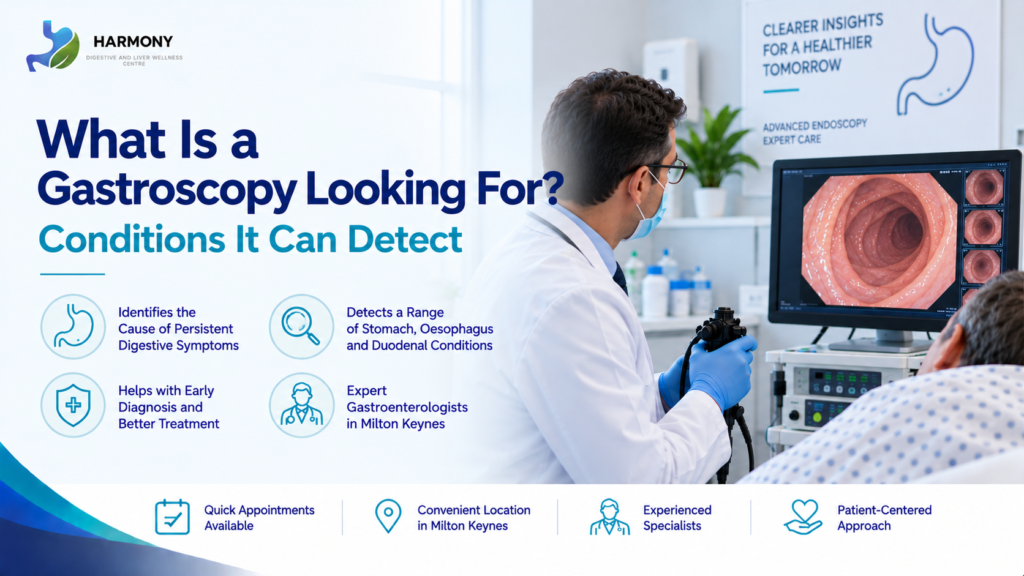
Some symptoms just won’t let you ignore them. A burning feeling after most meals. Trouble swallowing food you’ve eaten your whole life. Nausea that shows up without warning. You get blood tests done, and everything comes back normal. And yet something still feels off. This is when many people start asking, “What Is a Gastroscopy Looking For?” because it can help doctors examine the upper digestive tract more closely. I’m Dr Prakash Gupta, Consultant Gastroenterologist. I hear this from patients regularly. Normal tests, real symptoms, no answers. And in many of those cases, what finally gave us the answer was a gastroscopy – a direct look at what’s actually going on inside.” What Is a Gastroscopy Looking For? A gastroscopy – sometimes called an upper endoscopy or OGD – passes a thin, flexible camera through the mouth to examine the oesophagus, stomach, and duodenum (the first section of the small intestine). It takes around 10 to 15 minutes. So, what is a gastroscopy looking for? The answer is: things blood tests and scans simply cannot show. The lining of your gut, changes in tissue, signs of infection, early damage – all of it visible in real time. Conditions It Can Detect Acid Reflux and GORD: Heartburn is the most common reason patients come to me for an upper GI review. A gastroscopy tells us whether your oesophagus lining has actually been damaged – and how badly. Symptoms alone can’t give us that. Barrett’s Oesophagus: With long-term acid exposure, the oesophagus lining can change in ways that raise the risk of cancer if left unmonitored. Most people with Barrett’s feel completely normal. That’s precisely why it gets missed. Stomach and Duodenal Ulcers: Ulcers can bleed quietly for a long time before causing obvious pain. A gastroscopy finds them, lets us take biopsies, and in some cases treats bleeding on the spot. If your stomach pain wakes you at night, book a consultation – don’t keep waiting. H. pylori Infection: Pylori bacterial infection sits behind many cases of gastritis, ulcers, and – over years – an elevated risk of stomach cancer. We test for it directly by taking small tissue samples during the procedure. Gastritis: Inflammation of the stomach lining rarely shows on blood tests. But it shows clearly on gastroscopy. If you’ve been told your results are normal while symptoms carry on, this is often the finding people have been waiting for. Coeliac Disease: Small biopsies taken from the duodenum can confirm coeliac disease – a condition that goes undiagnosed in far too many people for far too long. Years of bloating, tiredness, and gut trouble, all with a treatable cause sitting quietly underneath. Oesophageal and Stomach Cancer: Early upper GI cancers frequently produce no symptoms, or symptoms that get attributed to something else. Found early, outcomes are considerably better. Unexplained weight loss, food sticking when you swallow, or persistent vomiting – these need investigation. Hiatus Hernia: When part of the stomach pushes through the diaphragm, it can drive reflux symptoms that just don’t respond to standard medication. Gastroscopy confirms it clearly and changes the treatment approach. Unexplained Anaemia: A slowly falling blood count with no obvious cause often points to silent bleeding somewhere in the upper GI tract. Gastroscopy finds the source. The Right Test for the Right Answer By the time most patients reach Harmony Digestive and Liver Wellness, they’ve already been through the standard tests. Normal results, still symptomatic, no real explanation. What Is a Gastroscopy Looking For? A gastroscopy doesn’t replace those tests – it goes further. It shows us the actual lining of your gut. That’s information blood work simply can’t give. You’re not being overly cautious by wanting a proper answer. You’re being sensible. If your gut is telling you something, it’s worth listening to. Book your gastroscopy assessment today. Book a consultation or screening today: Click Here. To book a private liver or gut consultation or second opinion, Get in touch with us. Had a great experience with us? We’d love to hear your thoughts! Click here to leave a Google review.
What Causes Acid Reflux? When should you see a specialist?
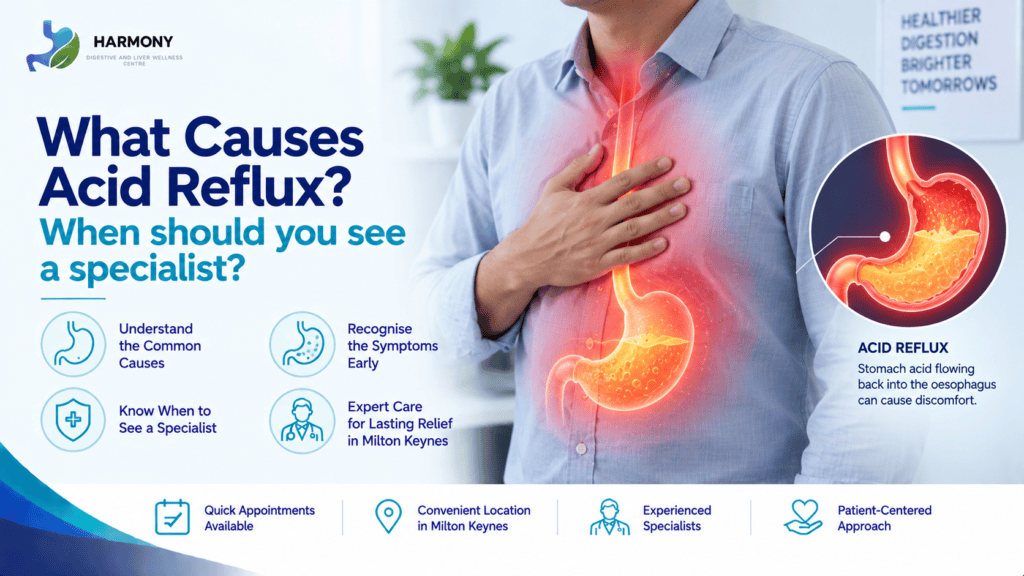
What Causes Acid Reflux? Acid reflux is something millions of people deal with every day, like that burning sensation that creeps up your chest after a meal, the bitter taste that shows up in your mouth, or the feeling that food is sitting in the wrong place. It can feel uncomfortable, painful, and is often misunderstood. I’m Dr. Arjun Prakash, a Consultant Gastroenterologist. If you’ve been thinking about what is actually driving that burn and when it makes sense to see someone, here’s what I explain to my patients. What’s Actually Happening in Your Body Your stomach produces acid to do its job – breaking down food. There’s a small valve between your stomach and your esophagus called the lower esophageal sphincter. Think of it as a one-way door. When it’s working right, acid stays where it belongs. When it doesn’t close properly, acid travels back up. That’s what causes acid reflux – and that burning you feel is your esophagus reacting to something it was never meant to handle. Occasional reflux is one thing. When it’s happening twice a week or more, we call it GERD – and that’s when I want my patients to take it seriously. What Causes Acid Reflux – In My Patients, Here’s What I See Most Food triggers: Spicy food, fried meals, chocolate, citrus, tomatoes, coffee, and alcohol. I’m not asking you to give all of it up forever – but I do ask patients to keep a simple food diary for two weeks. Patterns show up fast. How and when you eat: Large meals, eating too quickly, lying down within an hour of eating – these habits put real pressure on your stomach. The acid has nowhere to go but up. Body weight: Extra weight around the belly presses directly on the stomach. I’ve had patients whose reflux improved significantly with a modest change in weight – no medication needed. A weakened valve: Sometimes the LES just isn’t functioning well – it could be something you’re born with, or it develops over time. Certain medications and even stress can make it worse. Hiatal hernia: A portion of the stomach pushes up through the diaphragm. Many patients are surprised to hear they have one – it’s often found incidentally and explains a lot of their symptoms. Pregnancy: I always reassure my pregnant patients – reflux during pregnancy is incredibly common and very much expected, especially in the third trimester. Smoking and certain medications: NSAIDs like ibuprofen, some blood pressure drugs – these can aggravate the esophagus or loosen the valve. If reflux started alongside a new prescription, please mention it. When Should You See a Specialist? Please don’t wait if you’re experiencing any of these: Reflux more than twice a week, consistently Antacids that used to help but no longer do Pain or difficulty when swallowing Unexplained weight loss Nausea, vomiting, or blood in your stool These aren’t meant to alarm you – but they are signs that your body is asking for more than an antacid. Left untreated, chronic reflux can damage the esophagus over time. Barrett’s esophagus is one complication I take seriously in my practice, and early evaluation makes a real difference in outcomes. Final Thoughts If you’ve been brushing off that burning feeling for months — or years, I should say — I want you to hear this clearly: it’s not just a problem you have to live with. Understanding What Causes Acid Reflux? is where it begins, but getting the right care is where things actually start to improve. You don’t have to figure this out alone. Visit Harmony Gut and Liver for trusted resources, and don’t hesitate to reach out to a specialist. Your gut health affects everything – sleep, energy, mood, daily comfort. It’s worth taking seriously. Book a consultation or screening today: Click Here. To book a private liver or gut consultation or second opinion, Get in touch with us. Had a great experience with us? We’d love to hear your thoughts! Click here to leave a Google review.
H. Pylori Treatment: Causes, Symptoms & Relief Explained
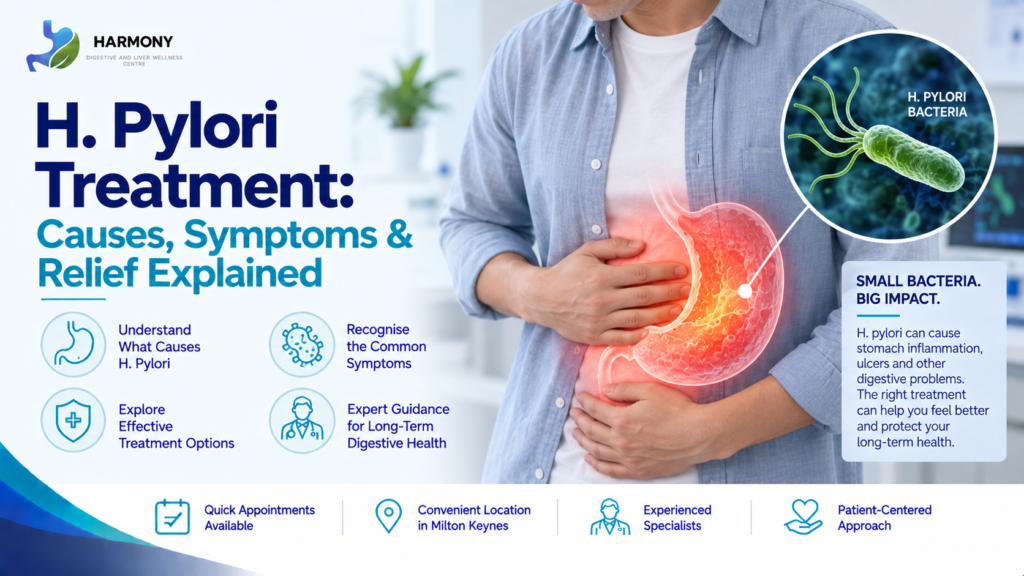
By Dr. Prakash Gupta, Consultant Gastroenterologist You may not realize it, but if you’ve been suffering from persistent abdominal discomfort, bloating, or frequent ulcers, the problem could be in your stomach – Helicobacter pylori, or H. pylori. This is a bacterial infection that affects almost half the world’s people, and many people are infected but don’t realize it. To obtain lasting relief from H. pylori symptoms, it is very important to understand the treatment method, causes, and symptoms of H. pylori. What Is H. Pylori? pylori is a spiral-shaped bacterium that lives in the lining of the stomach. Enables them to survive in the very acidic environment by secreting an enzyme called urease, which neutralizes stomach acid near it. This, over time, results in damage to the protective mucus layer, which results in inflammation and ulcers. Can H. Pylori be passed on? The infection is spread via: Consumption of contaminated drinking water or food or water not treated for chemical disinfection or drinking water not treated for chemicals. Infection transferred from person to person (such as by sharing food, sharing drinks, kissing, close contact with someone who has the infection) Exposure is greatly increased by living in poor sanitation – overcrowding or poor hygiene. The infection is all-ages, but is more likely to occur in children in developing countries. Common Symptoms to Watch For Many H. pylori-infected individuals don’t experience any symptoms. When they do occur, the symptoms are usually: Stomach pain that burns or gnaws, and may be worse when you are hungry Passing gas (or wind) multiple times after eating food Nausea which may be accompanied by vomiting Loss of interest in eating or loss of weight without an obvious cause Black or bloody stools (an indication of bleeding – see a doctor right away) A persistent feeling of fullness even after small meals If the abdominal pain is severe and worsening, immediately seek medical care. If left untreated, H. pylori may cause peptic ulcers and, in a few cases, stomach cancer. How is it diagnosed? There are a number of ways to confirm an H. pylori infection: Urea breath test– a solution is swallowed; CO₂ is detectable if H. pylori is present and the compound is broken down by it Stool antigen test– tests for bacterial protein in stool. Blood antibody test– identifies antibodies, but does not confirm the presence of an active infection. Biopsy or endoscopy–used if there are other symptoms or ulcers that require further examination Pylori Treatment Options Standard H. pylori treatment is called triple therapy or quadruple therapy when H. pylori is resistant to the therapy. Both are medications that contain antibiotics and stomach acid-digesting drugs. Triple Therapy (7–14 days): Two antibiotics (usually clarithromycin + amoxicillin or metronidazole) A proton pump inhibitor (PPI) such as omeprazole to help the stomach heal and so stop the acid from hurting the esophagus. Quadruple Therapy (resistance suspected): Two antibiotics A PPI Taking bismuth subsalicylate to help prevent irritation of the stomach lining. It’s important to take the entire course of antibiotics. Early eradication helps prevent the development of resistance to antibiotics and will make the infection much harder to eradicate the second time. Natural Support During Treatment In addition to prescribed drugs, some lifestyle changes can help with recovery: Probiotics (particularly Lactobacillus species) support the restoration of an imbalance in gut flora caused by antibiotics. Please don’t use alcohol, spicy foods, or NSAIDs during the treatment; these irritate the lining of the stomach. Eat moderately-sized meals several times a day to decrease acid load. In studies, green tea and broccoli sprouts have exhibited some antibacterial activity, but cannot replace medications. After Treatment: Verification of eradication A breath test or stool test follows up H. pylori treatment, 4 weeks later to see if it has been eradicated. Re-testing is important because re-infection can occur, particularly when there is no change in the hygiene practices. Final Thoughts pylori is ubiquitous, but highly treatable. When symptoms first appear, most patients can enjoy full relief of symptoms and avoid further complications by following the proper treatment plan for H. pylori infections. If you’ve ever experienced stomach pain that won’t go away, be sure to get tested – it may be the difference between life and death. At Harmony Digestive and Liver Wellness, we offer complete H. pylori investigation and treatment under one roof — testing, diagnosis, and a clear plan. Book a consultation or screening today: Click Here. To book a private liver or gut consultation or second opinion, Get in touch with us. Had a great experience with us? We’d love to hear your thoughts! Click here to leave a Google review.