
By Dr. Prakash Gupta, Consultant Gastroenterologist
You may not realize it, but if you’ve been suffering from persistent abdominal discomfort, bloating, or frequent ulcers, the problem could be in your stomach – Helicobacter pylori, or H. pylori. This is a bacterial infection that affects almost half the world’s people, and many people are infected but don’t realize it. To obtain lasting relief from H. pylori symptoms, it is very important to understand the treatment method, causes, and symptoms of H. pylori.
What Is H. Pylori?
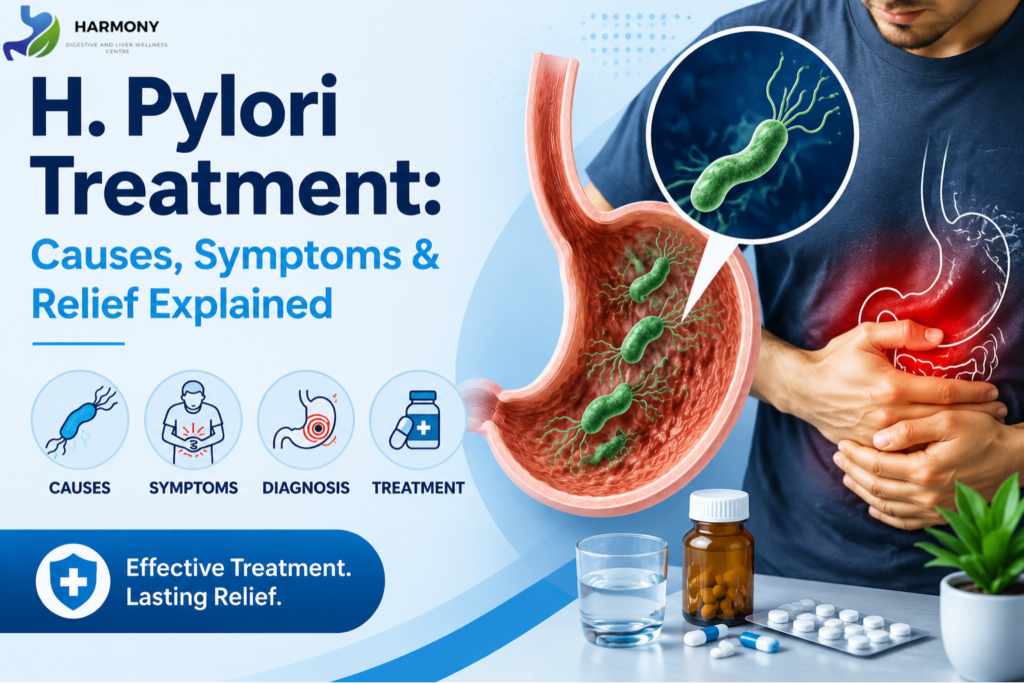
pylori is a spiral-shaped bacterium that lives in the lining of the stomach. Enables them to survive in the very acidic environment by secreting an enzyme called urease, which neutralizes stomach acid near it. This, over time, results in damage to the protective mucus layer, which results in inflammation and ulcers.
Can H. Pylori be passed on?
The infection is spread via:
- Consumption of contaminated drinking water or food or water not treated for chemical disinfection or drinking water not treated for chemicals.
- Infection transferred from person to person (such as by sharing food, sharing drinks, kissing, close contact with someone who has the infection)
- Exposure is greatly increased by living in poor sanitation – overcrowding or poor hygiene.
- The infection is all-ages, but is more likely to occur in children in developing countries.
Common Symptoms to Watch For
Many H. pylori-infected individuals don’t experience any symptoms. When they do occur, the symptoms are usually:
- Stomach pain that burns or gnaws, and may be worse when you are hungry
- Passing gas (or wind) multiple times after eating food
- Nausea which may be accompanied by vomiting
- Loss of interest in eating or loss of weight without an obvious cause
- Black or bloody stools (an indication of bleeding – see a doctor right away)
- A persistent feeling of fullness even after small meals
If the abdominal pain is severe and worsening, immediately seek medical care. If left untreated, H. pylori may cause peptic ulcers and, in a few cases, stomach cancer.
How is it diagnosed?
There are a number of ways to confirm an H. pylori infection:
- Urea breath test– a solution is swallowed; CO₂ is detectable if H. pylori is present and the compound is broken down by it
- Stool antigen test– tests for bacterial protein in stool.
- Blood antibody test– identifies antibodies, but does not confirm the presence of an active infection.
- Biopsy or endoscopy–used if there are other symptoms or ulcers that require further examination
Pylori Treatment Options
Standard H. pylori treatment is called triple therapy or quadruple therapy when H. pylori is resistant to the therapy. Both are medications that contain antibiotics and stomach acid-digesting drugs.
Triple Therapy (7–14 days):
- Two antibiotics (usually clarithromycin + amoxicillin or metronidazole)
- A proton pump inhibitor (PPI) such as omeprazole to help the stomach heal and so stop the acid from hurting the esophagus.
Quadruple Therapy (resistance suspected):
- Two antibiotics
- A PPI
- Taking bismuth subsalicylate to help prevent irritation of the stomach lining.
It’s important to take the entire course of antibiotics. Early eradication helps prevent the development of resistance to antibiotics and will make the infection much harder to eradicate the second time.
Natural Support During Treatment
In addition to prescribed drugs, some lifestyle changes can help with recovery:
- Probiotics (particularly Lactobacillus species) support the restoration of an imbalance in gut flora caused by antibiotics.
- Please don’t use alcohol, spicy foods, or NSAIDs during the treatment; these irritate the lining of the stomach.
- Eat moderately-sized meals several times a day to decrease acid load.
- In studies, green tea and broccoli sprouts have exhibited some antibacterial activity, but cannot replace medications.
After Treatment: Verification of eradication
A breath test or stool test follows up H. pylori treatment, 4 weeks later to see if it has been eradicated. Re-testing is important because re-infection can occur, particularly when there is no change in the hygiene practices.
Final Thoughts
pylori is ubiquitous, but highly treatable. When symptoms first appear, most patients can enjoy full relief of symptoms and avoid further complications by following the proper treatment plan for H. pylori infections.
If you’ve ever experienced stomach pain that won’t go away, be sure to get tested – it may be the difference between life and death.
At Harmony Digestive and Liver Wellness, we offer complete H. pylori investigation and treatment under one roof — testing, diagnosis, and a clear plan.
Book a consultation or screening today: Click Here.
To book a private liver or gut consultation or second opinion, Get in touch with us.
Had a great experience with us? We’d love to hear your thoughts! Click here to leave a Google review.