 Skip to main content

How to Improve Gut Health: Tips for a Happier Digestive System
Your gut affects your immune system, mood, and overall well-being. A balanced gut microbiome is important for a happier, healthier body. Learning how to improve gut health is an important step towards long-term wellness. Here, the experts at the Harmony Liver and Digestive Wellness Centre share practical strategies to achieve a thriving digestive system. The Pillars of Gut Health Improvement Improving your gut health depends on feeding the beneficial bacteria and limiting factors that harm them. 1. Focus on Fibre: Feed Your Gut Bugs Beneficial gut bacteria need fibre, especially the soluble kind found in plant foods. Increasing your fibre intake is one of the easiest ways to improve gut health. Eat Prebiotics Daily: Prebiotics are special fibres that act as food for your gut bacteria. Sources to Include: Onions, garlic, leeks, green bananas, asparagus, and oats. Diversify Your Vegetables: Add colour and variety to your plate to feed different types of gut microbes. Choose Whole Grains: Opt for whole-wheat, quinoa, brown rice, or barley to keep digestion smooth. 2. Incorporate Probiotics: Introduce Good Bacteria Probiotics help maintain the correct balance, which is essential for how to improve gut health. Consume Fermented Foods: Make fermented foods a regular part of your diet. Examples: Plain live yoghurt, kefir, sauerkraut, kimchi, and kombucha are rich in probiotics. If they’re new for you, begin slowly and build up over time. Consider a Supplement: When diet changes do not work, supplements can help restore balance. Seek guidance from specialists at the Harmony Liver and Digestive Wellness Centre to get the right supplements. 3. Manage Your Lifestyle Factors Lifestyle Counts Too: Eating well isn’t enough; your lifestyle choices play a big role in how you improve gut health. Reduce Stress: High stress harms digestion and affects your microbiome. Include calming activities like yoga, journaling, or nature walks. Get Proper Rest: Just like your mind, your gut needs downtime. Lack of rest can disturb digestion and slow metabolism. Maintain a regular sleep schedule for 7–9 hours. Move Your Body: Regular physical activity promotes healthy gut motility. Even a daily brisk walk makes a difference in how to improve gut health. Limit Sugars and Processed Fats: These foods feed harmful bacteria.. Cut back on sweets, fried items, and packaged snacks. Simple Steps to Start Today Simple lifestyle habits can make a big difference when learning how to improve gut health: Keep yourself hydrated: Water supports gut movement and tissue health. Chew every bite well: It makes digestion smoother and easier. Eat Slowly and Mindfully: Give your body time to register fullness and secretion digestive enzymes. Use Antibiotics Wisely: Only take antibiotics when necessary, as they can kill both good and bad bacteria. Understanding how to improve gut health is the first step to feeling better every day. For expert help that goes beyond general tips, reach out to the specialists at the Harmony Liver and Digestive Wellness Centre. With tailor-made diet plans and medical support, you can start improving your digestive health the right way. Book a consultation or screening today: Click Here. To book a private liver consultation or second opinion, Get in touch with us. Had a great experience with us? We’d love to hear your thoughts! Click here to leave a Google review.
Fatty Liver Disease Diet: Best Foods to Eat and Avoid
If your liver starts storing too much fat, that condition is known as fatty liver disease. This can come from poor food choices, extra body weight, or alcohol use. But there’s hope with the help of a well-planned fatty liver disease diet can help the liver heal and stay strong. At Harmony Digestive and Liver Wellness Centre, we help people choose foods that keep their liver happy and healthy. Why Diet Matters for Fatty Liver A balanced fatty liver disease diet can help lower the fat in your liver and let it heal on its own. Eating clean, fresh foods and staying away from fried or processed items gives your liver the care it needs to stay healthy. Best Foods to Eat Fresh Fruits & Veggies – Rich in fibre and antioxidants that clean the liver and reduce swelling, know role of fiber. Try leafy greens, broccoli, beetroot, and oranges. Whole Grains – Foods like brown rice, oats, and barley give slow, steady energy and help stop fat from collecting in the liver. Healthy Fats – Use olive oil, eat avocados, and add nuts or seeds for liver protection. Lean Proteins – Eggs, chicken, tofu, and lentils help the body repair and boost strength. Green Tea & Coffee – In small amounts, these drinks may improve liver enzyme balance. Including these items in your fatty liver disease diet makes it easier to protect your liver every day. Foods to Avoid To help your liver heal, it’s best to stay away from foods that make it work harder. These include: Alcohol – It is one of the biggest causes of liver damage and slows recovery. Even small drinks can make the condition worse. Even a small amount can make fatty liver disease worse. Know how liver disease and drugs are connected. Sugary Treats and Drinks – Cakes, sweets, and soft drinks add extra sugar that turns into fat inside the liver. Fried & Fast Foods – Things like burgers, fries, and packaged snacks are full of bad fats that can tire your liver and cause inflammation. Refined Carbs – Foods made from white flour, like bread, pasta, and cakes, cause sudden sugar spikes that increase fat storage in the liver. Salty Snacks – Crisps, sauces, and pickled foods have lots of salt, which can make your body hold water and put more strain on your liver. Keeping these foods out of your diet helps your fatty liver disease diet work faster and more effectively. Professional Guidance for Long-Term Liver Health Each person’s body responds differently to dietary changes. At Harmony Digestive and Liver Wellness Centre, specialists guide patients with personalised nutrition and lifestyle plans to control fat levels and improve liver health. With regular check-ups and consistent effort you can reverse early stages of fatty liver disease. Small Steps, Big Changes Keeping your liver healthy is not difficult. Following a balanced fatty liver disease diet, exercising regularly, and hydrating yourself can make a big difference. These simple habits help your liver recover and perform better every day. At Harmony Digestive and Liver Wellness Centre, you’ll find expert doctors who create customised diet plans, offer advanced liver care, and help you take control of your health with confidence. Book a consultation or screening today: Click Here. To book a private liver consultation or second opinion, Get in touch with us. Had a great experience with us? We’d love to hear your thoughts! Click here to leave a Google review.
How a Healthy Diet for Liver Supports Detox and Repair
The liver is your body’s built-in filter and energy maker. It turns food into fuel, removes toxins, and helps to keep your digestion balanced. But when you eat too many unhealthy foods or drink often, the liver loses its rhythm. Over time, this pressure slows it down. A healthy diet for liver function gives it the fuel it needs to recover, stay active, and protect your health for years to come. Why the Liver Needs the Right Nutrition The liver manages hundreds of chemical tasks daily. The liver helps your body by removing waste, saving energy, and making bile that helps digest fatty meals.When you keep giving it sugary drinks, junk food, or alcohol, it starts struggling to keep up. This extra load makes the liver store fat, swell up, and sometimes form scars, which can stop it from working properly. A healthy diet for liver keeps these risks in check. With simple, consistent changes, you can improve liver function and overall energy levels. Foods That Help Detox and Heal Fresh Produce: Beetroot, spinach, and citrus fruits boost detox and shield the liver from damage. Whole Grains: Oats, brown rice, and quinoa keep blood sugar steady and support liver health. Lean Proteins: Eggs, fish, tofu, and lentils help to repair tissues and support enzyme production, which are both important for healthy liver function. Healthy Fats: Avocados, olive oil, and nuts provide good fats that lower inflammation and protect against fatty liver disease. Plenty of Water: Staying well-hydrated helps the liver remove the waste and maintain smooth bile flow. Including these foods daily forms the base of a healthy diet for liver maintenance and recovery. What to Limit or Avoid Not all foods are friendly to your liver. Alcohol causes serious harm and makes the liver inflamed. Sugary foods turn into fat and increase the risk of fatty liver. Fried foods and fast food are full of bad fats that block the liver’s natural cleansing. Salty foods cause water build-up in the body. If you switch to lighter meals—like fruit after dinner or grilled vegetables—you’ll follow a healthy diet for liver recovery and balance. The Role of Professional Guidance You can eat well and still feel tired or notice swelling in your stomach if your liver isn’t functioning properly. Some people also find their blood tests showing changes even when they think they’re eating right. That’s the moment to seek expert guidance. At Harmony Digestive and Liver Wellness Centre, our doctors look at every patient’s health in detail and create a plan that fits their specific needs. They create food and treatment plans that strengthen the liver, decrease swelling, and stop further damage before it happens. A Healthier Future Starts on Your Plate Your liver works every day to keep you healthy, so providing the right fuel is important. A healthy diet for liver is about making better choices that help your body cleanse and recover naturally. Small, steady changes can go a long way in protecting this vital organ for life. Harmony Digestive and Liver Wellness Centre provides expert liver care, nutrition guidance, and personalised treatments to help you protect your liver health. Book a consultation or screening today: Click Here. To book a private liver consultation or second opinion, Get in touch with us. Had a great experience with us? We’d love to hear your thoughts! Click here to leave a Google review.
Jaundice from Alcohol: Symptoms, Causes and Treatment
Sometimes, when a person drinks heavily, they may notice that their skin or eyes have turned yellow. This is one of the most common signs of having jaundice from alcohol and liver damage, which should never be ignored. It indicates that the liver is unable to process bilirubin, which is a yellow pigment formed when red blood cells break down and this leads to its build-up in the body. At Harmony Digestive and Liver Wellness Centre, we see many patients who are not aware that their drinking habits have begun to affect their liver. Understanding what causes jaundice from alcohol, its symptoms, and available treatments can help you take control before it can cause serious complications. What Is Jaundice from Alcohol? Jaundice from alcohol occurs when long-term alcohol consumption damages liver cells. The damage in the liver cells reduces their ability to filter toxins and process bilirubin. The result is a yellowing of the skin, eyes, and even the tongue. This condition may develop gradually with ongoing swelling in the liver or appear suddenly in cases of acute alcoholic hepatitis. Alcohol-related liver damage typically progresses through the following three stages: Fatty liver (steatosis) – an early stage, which is usually reversible. Alcoholic hepatitis – liver swelling leading to jaundice. Cirrhosis – permanent scarring and reduced liver function. Recognising and addressing the signs of jaundice from alcohol on time is important to preventing irreversible damage. Common Symptoms and Warning Signs The symptoms of jaundice from alcohol aren’t just about yellow skin. Many people also notice other signs like the ones listed below. Fatigue and weakness. Nausea or vomiting. Loss of appetite. Abdominal pain or swelling. Dark urine and pale stools. Itchy skin. Easy bruising or bleeding. These signs show that the liver is under pressure and not working as it should. Even mild jaundice should be checked by a doctor to understand how much damage has occurred. Diagnosis and Treatment Diagnosing jaundice from alcohol requires several steps, including blood tests, imaging, and sometimes liver scans. At Harmony Digestive and Liver Wellness Centre, we use the following tests to check your liver health: Liver function tests to assess enzyme levels and bilirubin. Ultrasound or FibroScan to check for fatty liver, swelling, or scarring. Blood screening for other liver conditions such as viral hepatitis. Treatment depends on how severe the damage is but always begins by completely stopping the consumption of alcohol. In many early cases, stopping alcohol allows the liver to recover within weeks or months. Nutritional support, hydration, and medicines to reduce inflammation may also be prescribed. Long-Term Outlook The good news is that jaundice from alcohol can improve with timely intervention. Early diagnosis and stopping the consumption of alcohol can allow the liver to heal and restore normal function. However, continued drinking may lead to cirrhosis or even liver failure. The team at Harmony Digestive and Liver Wellness Centre offers detailed liver assessments, tailored treatments, and steady support for those with alcohol-related liver problems. Early medical care often leads to faster healing and better long-term health. Book a consultation or screening today: Click Here. To book a private liver consultation or second opinion, Get in touch with us. Had a great experience with us? We’d love to hear your thoughts! Click here to leave a Google review.
Can Cirrhosis Be Cured? Treatment and Recovery Explained
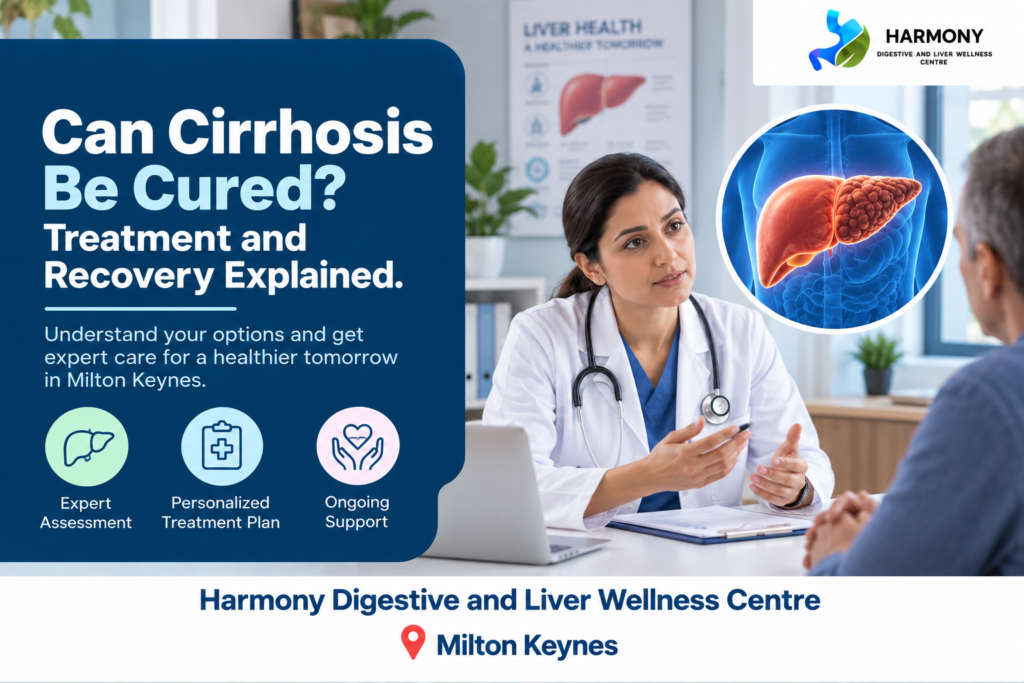
When someone is diagnosed with cirrhosis, one of the biggest concerns is, “Can cirrhosis be cured?” The truth is that cirrhosis only happens when there is serious liver scarring but there are still ways to slow its progress and protect your health. Thanks to modern therapies, good habits, and expert care, individuals with cirrhosis can continue to enjoy life to the fullest. At Harmony Digestive and Liver Wellness Centre, we are committed to helping you understand your diagnosis and support your journey toward better liver care. What Is Cirrhosis? Cirrhosis shows the advanced stage of liver damage, where normal liver tissue gets replaced with scar tissue. The scar tissue replaces healthy cells, blocking blood flow and interferes with the functioning of the liver Many people think, “Can cirrhosis be cured?” The answer depends on what caused it and how severe the condition is. Early or “compensated” cirrhosis can often be stabilised and improved with proper management, while advanced cases may require more intensive treatment. Common Causes of Cirrhosis Cirrhosis doesn’t happen overnight. It is actually the result of chronic liver inflammation. The following are the most common causes of cirrhosis: Long-term alcohol use. Non-alcoholic fatty liver disease (NAFLD). Chronic hepatitis B or C infection. Autoimmune hepatitis. Genetic or metabolic liver disorders. Identifying and treating the cause is the first step in addressing the question, “Can cirrhosis be cured?” Can Cirrhosis Be Cured? While scar tissue itself cannot be completely removed, early-stage cirrhosis can often be halted and in some cases partially reversed if the cause is treated on-time. For example: Stopping alcohol use allows the liver to regenerate damaged cells. Managing fatty liver disease with the help of diet and exercise can prevent further scarring. Treating viral hepatitis with antiviral medicines can reduce the existing swelling. If you’re asking, “Can cirrhosis be cured?” early action and ongoing guidance from a liver expert are crucial, ensuring personalised treatment and consistent monitoring. Managing Cirrhosis and Improving Liver Health Even when cirrhosis is advanced, it is possible to maintain a good quality of life with medical support. At Harmony Digestive and Liver Wellness Centre, our specialists help patients to manage cirrhosis with the help of: Regular liver function checks. Nutritional guidance and weight management. Testing for varices and liver cancer. Medicines to reduce fluid build-up and swelling. Advanced imaging and FibroScan assessments. With regular follow-up, complications can be prevented and the progress of the disease will slow down significantly. Conclusion So, can cirrhosis be cured? Not entirely but it can be managed. Although complete reversal is rare, with the right treatment and healthy habits, patients can stop the disease from worsening and support some degree of liver recovery over time. At Harmony Digestive and Liver Wellness Centre, we provide expert-led liver assessments, personalised treatment plans, and long-term support to help patients manage cirrhosis with confidence. If you’ve been diagnosed with cirrhosis or are concerned about your liver health, early action could make all the difference. Book a consultation or screening today: Click Here. To book a private liver consultation or second opinion, Get in touch with us. Had a great experience with us? We’d love to hear your thoughts! Click here to leave a Google review.
Why am I still having diarrhoea? Chronic diarrhoea treatment.
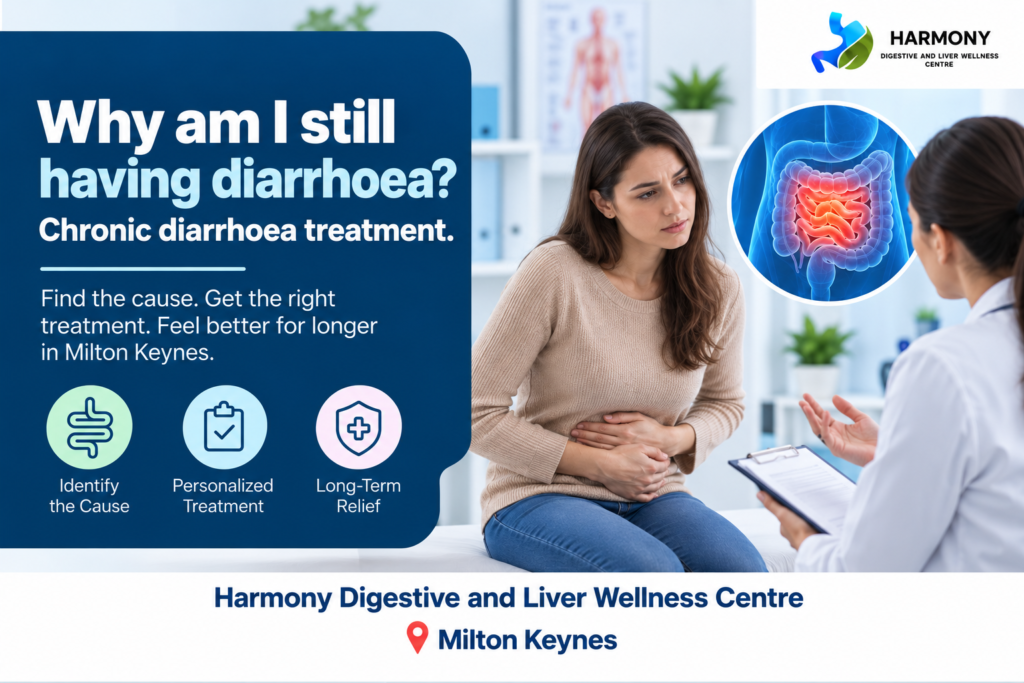
People often seek diarrhoea treatment at Harmony Digestive and Liver Wellness Centre in Milton Keynes with two heavy thoughts. The first is, “Is this something serious like inflammatory bowel disease?” The second is, “Will anyone take me seriously, or will they say it’s in my head?” Consultant Gastroenterologist Dr Arjun Prakash starts by answering both: your diarrhoea is real; it matters; and there’s a clear way to find out what’s going on. When to Take Persistent Diarrhoea Seriously If loose stools have been hanging around for more than six weeks, happening three or more times a day when that isn’t normal for you, or if urgency and accidents are creeping into daily life, it’s time to assess properly. If there’s blood, weight loss, or new mucus—it’s simply a reason to explore proper diarrhoea treatment The Common Diagnosis: IBS Explained Differently Most people Dr Prakash sees with ongoing diarrhoea turn out to have IBS. He knows that label can sting. He explains it differently: IBS is a gut–brain nerve axis disorder. The nerves of the bowel become extra sensitive and the bowel can speed up. It’s physical and common—and treatable. He talks about IBS after checking for treatable medical causes, so you don’t feel dismissed while you’re still worried. Your First Appointment: What to Expect The first appointment is a conversation. What does a good day look like? What does a bad day look like? Any travel, tummy bugs, new medicines, night-time symptoms, or food that seems to trigger things? Small details can big decisions. One woman came in hoping for something gentle for abdominal cramps. During the chat she mentioned a previous history of polyps and the pattern didn’t fit typical diarrhoea predominant IBS. Dr Prakash suggested a colonoscopy. It found a tight narrowing in the transverse colon. Only fluid could slip past, so it felt like diarrhoea. Acting on that one clue changed everything. Not everyone needs a colonoscopy—but some people absolutely do, and careful history can guide us in the right direction for effective diarrhoea treatment. Exploring Other Causes of Chronic Diarrhoea He also evaluates for some elusive reasons for diarrhoea. Bile acid malabsorption can follow a tummy bug or gallbladder surgery—or appear without a clear trigger—and produces urgent, watery stools that often get labelled as IBS. It’s very treatable, once recognised. Pancreatic enzyme deficiency is another: when there aren’t enough digestive enzymes, stools can turn pale or greasy, weight can drift down, and people feel bloated and drained; a simple stool test can catch it. Then there is microscopic colitis, where symptoms can wake you at night and certain medicines are known to nudge it along. In one of his cases, those two details—night-time symptoms plus an offending drug—led to the correct diagnosis and, more importantly, to a simple treatment that worked. Diagnostic Tests: What They Show and Why They Matter Testing is explained in plain language. A faecal calprotectin looks for bowel inflammation and helps separate inflammatory conditions (like Crohn’s or Ulcerative colitis) from IBS. Routine bloods check for anaemia, thyroid issues general inflammation and a coeliac screen. Stool tests for infection are used when the story points that way—after travel, for example. If there’s a question about the pancreas, a faecal elastase can help. Colonoscopy is suggested when it’s likely to change what happens next: red flags, abnormal results, or a new change in pattern. If you’re younger, your stool inflammatory markers are normal, your coeliac screen is negative and a recent colonoscopy was normal, repeating it rarely adds value. It isn’t about doing everything; it’s about doing the right for you, including the right diarrhoea treatment. Treatment and Management Options No one needs to “wait it out” without help. While investigations are running, symptom relief usually starts straight away so the next few weeks feel liveable. People are often nervous about fibre because they worry it will make diarrhoea worse; used in the right way, soluble fibre can actually help firm things up in IBS-D. Loperamide has its place, but it shouldn’t be the whole plan. Diet matters, but endless elimination diets tend to shrink life more than symptoms. A targeted, time-limited low-FODMAP approach with careful re-introduction can work very well when guided by a good dietitian. Cost matters; Dr Prakash is upfront about when dietetic input is likely to be worth it so you don’t spend blindly. The Role of the Gut Microbiome The microbiome sits in the background of many of these conversations. It helps to think of it as a garden. After infections, stress or antibiotics, that garden can drift out of balance. Prebiotic fibres are the food that help the right plants grow, but they work best when you start low and go slow to avoid gas and cramping. Probiotics can help some people with IBS-D, though results depend on the strain and on the person. Try one for a few weeks (not the off-the shelf ones) and judge it by how you actually feel. When to See a Gastroenterologist in Milton Keynes for Diarrhoea Treatment If your symptoms are short-lived, clearly linked to a bug or a one-off dietary misstep, and you otherwise feel well, simple self-care is reasonable: fluids, rest, and time. But if diarrhoea has crept past six weeks, if there’s blood, weight loss or night-time symptoms, or if life is being planned around the nearest toilet, that’s the moment to see a gastroenterologist in Milton Keynes for Diarrhoea Treatment. Harmony offers stool, blood and breath testing, evidence-based IBS care, and endoscopy when needed. For practicalities, Dr Arjun Prakash and his team are recognised by major insurers including Bupa and AXA, among others, which can make authorisation simpler; self-pay is available as well. Patients come from across Milton Keynes, Bletchley, Newport Pagnell, Buckingham, Bedford, and Northampton and from other areas within Buckinghamshire, Bedfordshire, Northamptonshire. Book a Consultation If you’re still dealing with diarrhoea and want a thorough, well-led plan you can book with Dr Arjun Prakash at Harmony Digestive and Liver Wellness Centre, Milton Keynes. The
Private Celiac Testing in Milton Keynes: Fast and Accurate Diagnosis
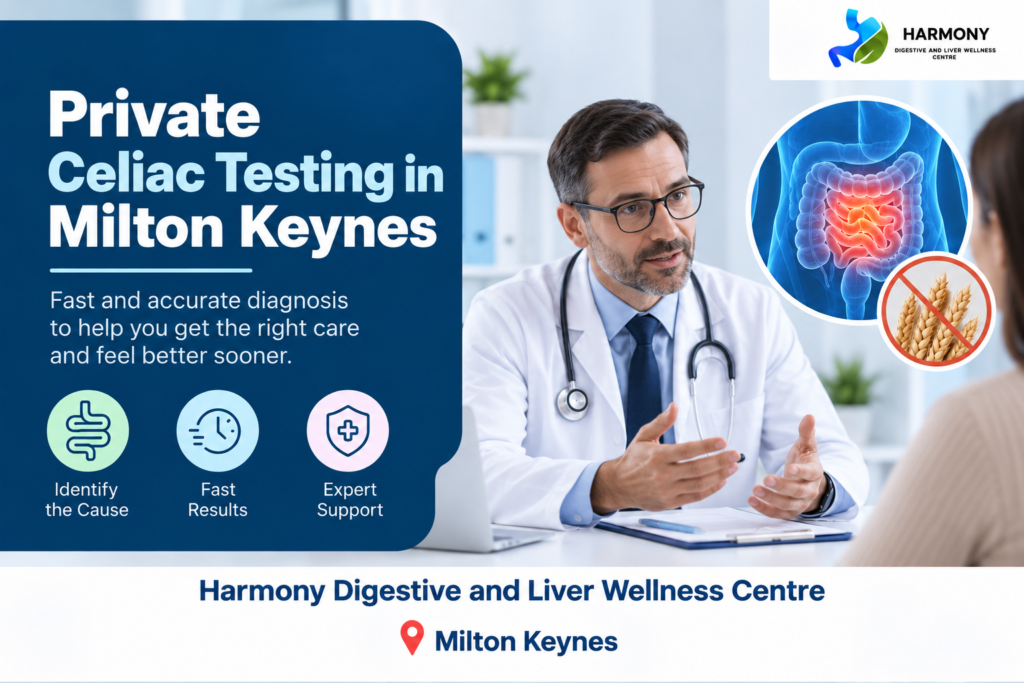
People often ignore problems like stomach discomfort, fatigue, or bloating, assuming they’ll get better with time. But for many people these could be early signs of celiac disease, a common autoimmune disorder that is usually not noticed. If you suspect gluten intolerance or have long-lasting digestive symptoms, taking consultation from a specialist can help you find answers quickly and accurately. At Harmony Digestive and Liver Wellness Centre in Milton Keynes, we offer specialist-led private celiac testing to identify the presence of celiac disease. This will help you to take control of your digestive health with confidence. Understanding Celiac Disease Celiac disease is an autoimmune condition in which the body reacts abnormally to gluten. Gluten is basically a protein found in wheat, barley, and rye. When this reaction occurs, it damages the small intestine’s lining and affects how nutrients are absorbed. In the long run, this can cause tiredness, anaemia, bone loss, and other issues as well. Since the symptoms of celiac disease are similar to those of other digestive problems, getting an accurate diagnosis through private celiac testing is important to avoid complications and long-term health issues as well. Common Symptoms to Watch For Celiac disease has different symptoms in different individuals. Some experience severe digestive discomfort, while some may have symptoms that seem unrelated to the gut. The symptoms of celiac disease are: Bloating, gas, and stomach pain. Continuous diarrhoea or constipation. Unexplained weight loss. Fatigue or brain fog. Iron or vitamin deficiencies. Itchy skin rash (dermatitis herpetiformis). When these symptoms don’t improve, private celiac testing can be an important step in discovering whether gluten sensitivity is to blame. What Happens During Private Celiac Testing At Harmony Digestive and Liver Wellness Centre, private celiac testing involves: Blood tests – To check for antibodies linked to celiac disease. Endoscopy with biopsy – If antibodies are present, a small tissue sample may be taken from the intestine to check for the presence of the disease. Both tests are safe, accurate, and performed under the care of experienced gastroenterology specialists. Our promise is to give you fast results, clear explanations, and customized advice as per your test results. Benefits of Private Testing Choosing private celiac testing in Milton Keynes has several advantages: Quicker access – no long waiting lists. Thorough analysis – detailed testing and professional interpretation of your results. Individual support – personalised guidance to help you switch to a gluten-free diet. Trusted expertise – results interpreted by experts. With early diagnosis and the right dietary changes, most people with celiac disease can live healthy, symptom-free lives. Final Thoughts If you’ve been thinking if gluten is behind your digestive symptoms, private celiac testing provides a clear way to find out. Early testing and expert guidance can help you make informed choices for your long-term wellbeing. At Harmony Digestive and Liver Wellness Centre in Milton Keynes, our specialists provide complete diagnostic services for celiac disease and other digestive conditions. Don’t let uncertainty affect your health. Get tested and take the first step towards feeling better. Book a consultation or screening today: Click Here To book a private liver consultation or second opinion, Get in touch with us Had a great experience with us? We’d love to hear your thoughts! Click here to leave a Google review
Understanding the Signs of Bowel Cancer and When to Act
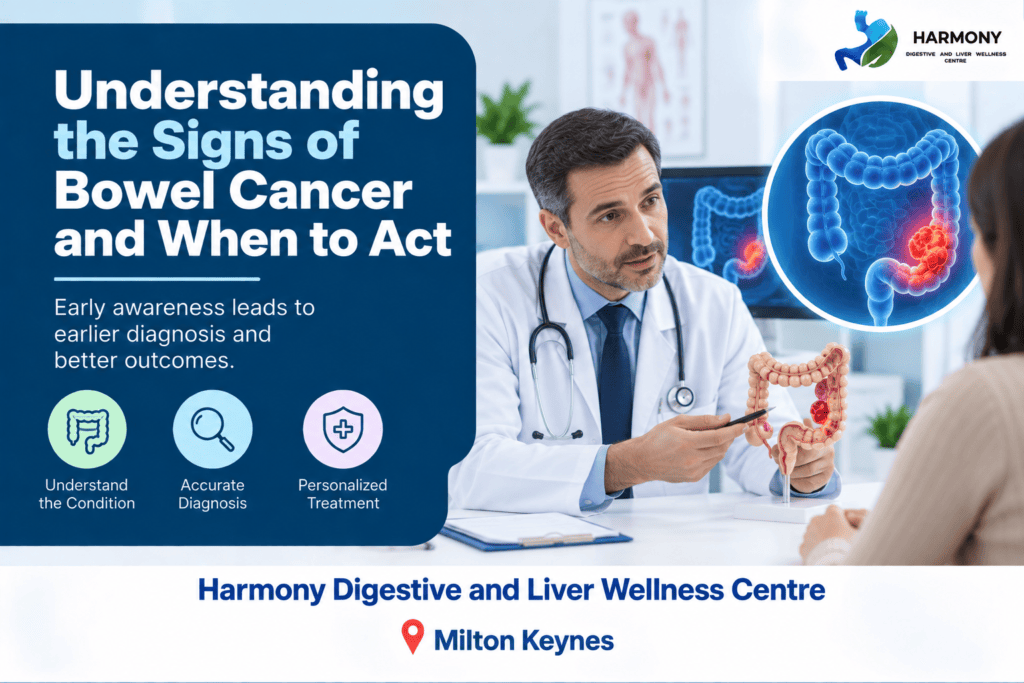
Hearing the word cancer can feel scary, especially when it affects your digestive system. Yet, bowel cancer (also known as colorectal cancer) is one of the most treatable forms of cancer when caught early. Recognising the signs of bowel cancer can make all the difference between early detection and late diagnosis. At Harmony Digestive and Liver Wellness Centre, we regularly see patients who ignore mild symptoms, assuming they are caused by diet or stress. This guide aims to explain the major signs of bowel cancer, what they mean, and when to seek medical attention. What is Bowel Cancer? Bowel cancer develops in the large intestine (colon) or rectum. It generally begins from small growths called polyps. All types of polyps are not cancerous, but some can turn into cancer over time. Early detection and removal can prevent cancer from developing altogether. Recognising the early signs of bowel cancer is crucial because many of them can appear similar to common digestive issues like IBS or piles. Early Warning Signs You Shouldn’t Ignore Bowel cancer can often be silent in its early stages, but some symptoms should never be dismissed. Common signs of bowel cancer include: Blood in your stools or bleeding from the rectum Persistent change in bowel habits (e.g., diarrhoea or constipation lasting more than a few weeks) Unexplained weight loss Ongoing fatigue despite adequate rest A feeling that your bowel doesn’t empty completely Abdominal pain or bloating, particularly after eating These symptoms don’t always mean cancer, but they do definitely need further investigation, especially if they persist. Why Early Detection Matters Many people delay seeing a doctor because of embarrassment or fear. However, identifying the signs of bowel cancer early can lead to far more effective treatment options. In the early stages, bowel cancer can often be treated successfully with minimally invasive surgery or localised therapies. Screening and early checks save lives. Even if your symptoms turn out to be harmless, ruling out serious conditions provides peace of mind. Diagnostic Tests and Next Steps If you notice any of the signs of bowel cancer, the following tests may be recommended by your doctor: Colonoscopy – an exam of the colon to check for growths or swelling. Faecal immunochemical test (FIT) – detects traces of blood in the stool. CT or MRI scans – to check the extent of any abnormalities. At Harmony Digestive and Liver Wellness Centre, we provide private colonoscopy and advanced diagnostic imaging in a comfortable, discreet setting, to make sure that you get rapid results and clear explanations. Final Thoughts Knowing the signs of bowel cancer and acting timely can quite literally save your life. Don’t ignore any ongoing digestive symptoms or rely on self-diagnosis. At Harmony Digestive and Liver Wellness Centre, our specialists offer complete assessments, private bowel screening, and guidance on digestive health. Early action leads to better results. So if you have noticed any changes in your bowel habits or unexplained symptoms, it is best to get checked without delay. Book a consultation or screening today: Click Here To book a private liver consultation or second opinion, Get in touch with us Had a great experience with us? We’d love to hear your thoughts! Click here to leave a Google review
Private Liver Scan Near Me: Quick and Reliable Results
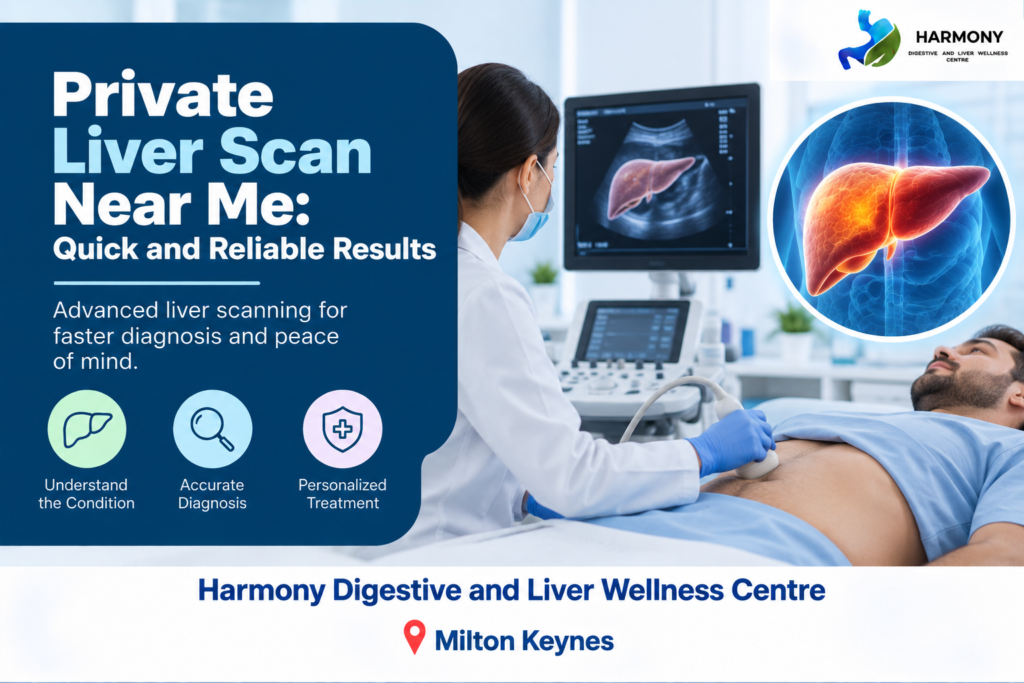
The liver is one of the most important organs of the body. It detoxifies blood, helps in digestion, and stores important nutrients. But many liver conditions start and progress silently. You will generally not see any clear symptoms until the later stages. This is why timely screening is very important. If you are living in and around Milton Keynes, and looking for a private liver scan near me, Harmony Digestive and Liver Wellness Centre can help. The answers that you get from your scan can make a huge difference to your health. At Harmony, we provide fast, accurate, and discreet liver assessments, helping you take charge of your health with confidence. Why a Liver Scan is Important Liver disease can start due to a number of reasons, such as alcohol use, obesity, viral infections such as hepatitis, or long-term use of certain medicines. Many of these conditions are reversible if detected early. By choosing a private liver scan near me, patients gain access to quicker appointments and immediate results. This helps to start the treatment at the earliest and make any lifestyle changes if necessary and prevents any serious complications that may arise in the future. Common Reasons for a Liver Scan People search for a private liver scan near me when they notice the following symptoms: Unending fatigue. Yellowing of the skin or eyes (jaundice). Unexplained weight loss. Abdominal swelling or discomfort. Dark urine or pale stools. Sometimes, people with no symptoms are also referred for a scan because of abnormal blood test results or a family history of liver disease. What a Private Liver Scan Involves A private liver scan near me provides detailed liver images using ultrasound technology. The scan is non-invasive, completely painless, and finished in less than 30 minutes. The scan can detect: Fatty liver changes. Fibrosis and early signs of scarring. Liver tumours or cysts. Blockages in bile ducts. At Harmony Digestive and Liver Wellness Centre, patients benefit from modern equipment and same-day reporting, for peace of mind and on time beginning of the treatment if needed. Benefits of Choosing a Private Liver Scan Going for a private liver scan near me has the following advantages: Faster access – no long waiting times. Reliable results – the results are generally given on the same day for peace of mind. Specialist review – results interpreted by experts in digestive and liver health. Personalised advice – a treatment plan with the next steps, if needed. Thus, a private scan reduces stress and helps in timely intervention to improve long-term results. Final Thoughts Your liver works silently and performs all the important functions that sustain your health. Delaying a check-up can sometimes lead to bigger problems. By booking a private liver scan near me, you are making an important choice for your health. At Harmony Digestive and Liver Wellness Centre, we offer quick and accurate tests and scans done by experts. In cases where liver health is concerned, early detection of the problem means better results. Book a consultation or screening today: Click Here. To book a private liver consultation or second opinion, Get in touch with us. Had a great experience with us? We’d love to hear your thoughts! Click here to leave a Google review.
Gut Health Specialist in Milton Keynes
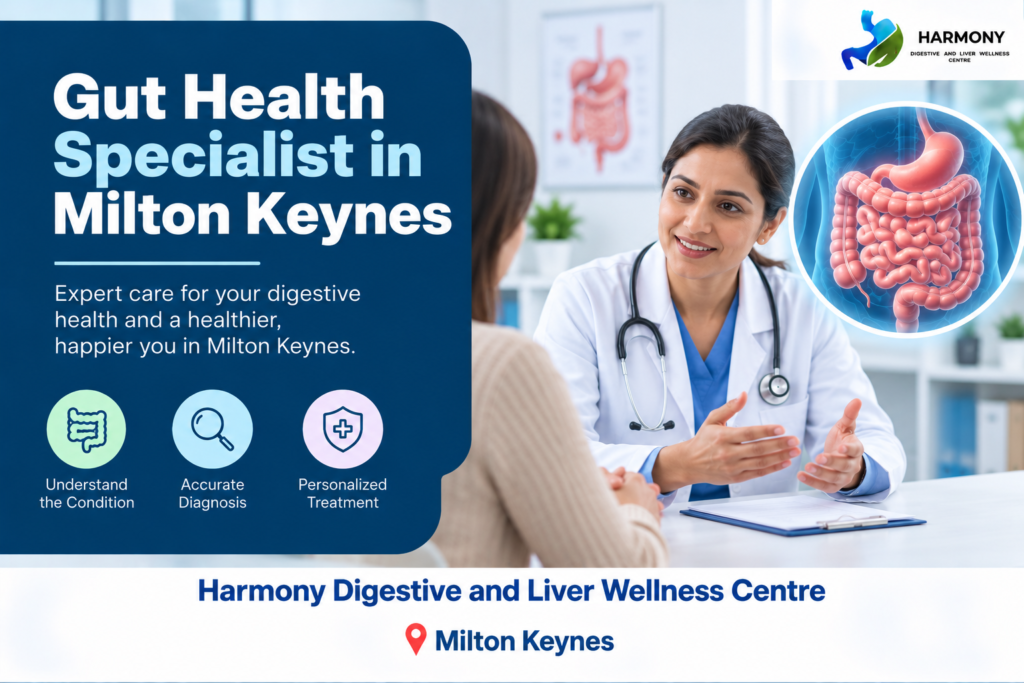
A lot of people put up with digestive issues quietly. Many problems related to the gut such as bloating, irregular bowel movements, or stomach discomfort may not feel serious. But when they keep returning and keep on disturbing your energy levels, mood, and overall quality of life. If you are living in or around Milton Keynes and have found yourself asking why your gut feels unsettled, it may be time to consult a gut health specialist in Milton Keynes. At Harmony Digestive and Liver Wellness Centre, we provide personalised care for a wide range of digestive concerns. A gut health specialist can help you understand what’s really going on inside your digestive system and help you with practical, effective solutions. Why Gut Health Matters Your gut does not just digest food. It plays a very important role in absorbing nutrients, building immunity, and even mental well-being. Poor gut health has been linked to fatigue, skin issues, mood disorders, and long-term illnesses such as diabetes and heart problems. By consulting with a gut health specialist in Milton Keynes, you can understand the root causes of ongoing digestive issues rather than just treating the symptoms. Common Digestive Concerns Some of the most frequent problems people bring to a gut health specialist are the following: Bloating and excessive gas Constipation or diarrhoea Acid reflux and heartburn Irritable Bowel Syndrome (IBS) Food intolerances Unexplained abdominal pain Changes in bowel habits While these problems are common, they should not be ignored. A gut health specialist can help you figure out the difference between a small problem with your lifestyle and a serious illness that needs medical attention. What to Expect from a Gut Health Specialist A consultation with a gut health specialist begins with a detailed discussion. The doctor will discuss about your medical history, lifestyle, and diet, along with a physical examination if needed. Depending on your symptoms, the following tests may be recommended: Blood and stool tests. Endoscopy or colonoscopy. Imaging scans. Breath tests for bacterial overgrowth or food intolerances. These tests allow your gut health specialist to create a treatment plan according to your diagnosis, age, and lifestyle needs. Treatment and Support Treatment will depend on the cause of your digestive issues. It could be making simple changes in your diet, medicines, probiotics, or therapies that help to bring back the natural balance of gut bacteria. In some cases, more advanced treatments may also be needed. A gut health specialist aims to provide long-term relief, helping you to get a better digestion, more energy, and greater overall health. Final Thoughts Your overall health depends on your gut health and persistent digestive issues should not be ignored and termed as “normal”. By consulting a gut health specialist, you can take control of your digestive health with expert advice and a treatment plan made to suit your needs for recovery. At Harmony Digestive and Liver Wellness Centre, we are here to help you move towards better gut health. Book a consultation or screening today: Click Here. To book a private liver consultation or second opinion, Get in touch with us. Had a great experience with us? We’d love to hear your thoughts! Click here to leave a Google review.