Most people don’t go looking for the word hepatology. It usually shows up on a lab report, or in a doctor’s sentence that starts with, “Your liver tests are a bit off.” That’s when the obvious question hits: what is hepatology, and why do I need a specialist for my liver anyway?
Here’s the short version before we get into the details: hepatology is about the liver, and when the liver is unhappy, guessing isn’t enough.
So, what is hepatology—really?
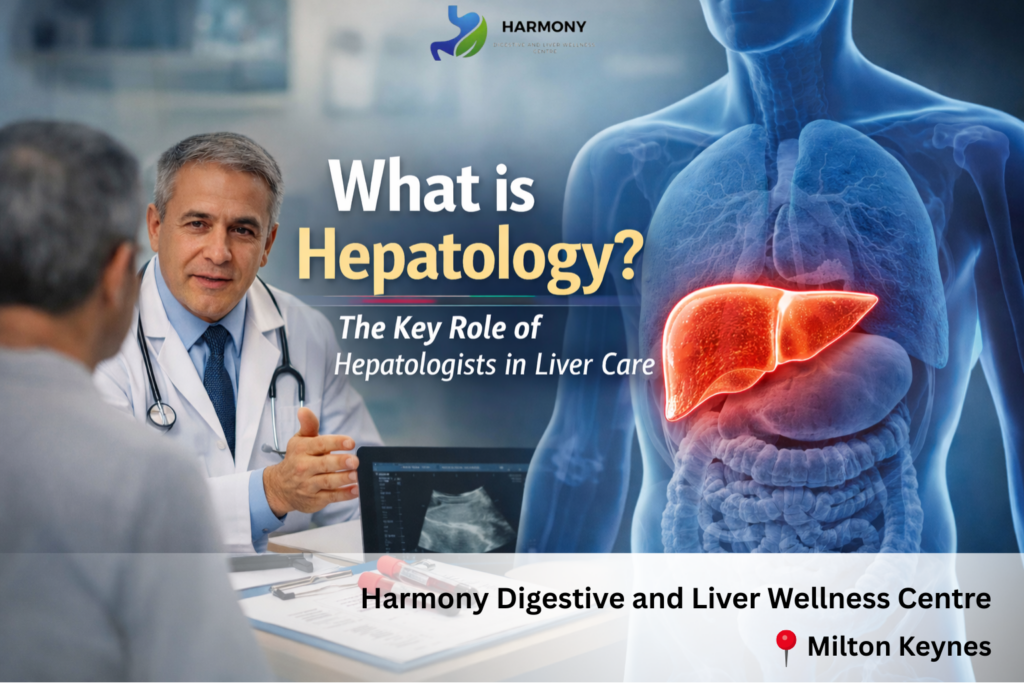
If you strip it down, hepatology is the medical field focused on the liver and the systems tightly connected to it, like the gallbladder and bile ducts. The liver does a lot more than most people realise—processing toxins, handling fats and sugars, helping with digestion, even playing a role in immunity. When it starts misfiring, symptoms can be subtle or completely misleading.
Gastroenterologists look after the whole digestive tract. Hepatologists zoom in on the liver. That narrower focus matters, especially when problems drag on or don’t fit neatly into a textbook pattern.
What kind of problems land someone in hepatology?
Once you understand what is hepatology, the patient list makes sense.
Hepatologists regularly see people with:
- Fatty liver disease, both alcohol-related and non-alcoholic
- Viral hepatitis (A, B, or C)
- Alcohol-related liver damage
- Liver fibrosis and cirrhosis
- Autoimmune and genetic liver conditions
- Persistently abnormal liver enzymes
- Complications like jaundice, fluid build-up, or unexplained itching
Many of these don’t start dramatically. In fact, early liver disease often feels like nothing at all. That’s why timing matters. Seeing the right specialist early can change the entire direction of the disease.
How hepatologists actually check the liver
People often assume liver care means invasive tests right away. Not true. A big part of answering what is hepatology lies in how methodical the assessment is.
A hepatologist usually starts with a deep dive into your history—medications, alcohol intake, weight changes, diet, family history. Blood tests follow, but they’re interpreted in context, not in isolation. Imaging like ultrasound or FibroScan helps assess fat and scarring without needles or surgery. If needed, further tests look for viral, autoimmune, or metabolic causes.
The goal isn’t to test everything. It’s to test what makes sense.
Why hepatology is often long-term care
Liver conditions don’t always come with a neat finish line. Some improve. Some stabilise. Others need monitoring for years. That’s where hepatologists stay involved.
They help slow or reverse early damage, prevent progression, manage complications safely, and guide lifestyle changes that actually protect the liver instead of just sounding good on paper. Regular follow-ups aren’t about fear—they’re about staying ahead of problems.
When should you consider seeing a hepatologist?
You don’t need to wait for severe symptoms. Hepatology input is worth considering if you have ongoing abnormal liver tests, fatty liver or fibrosis, jaundice, unexplained fatigue, viral hepatitis, heavy alcohol use in the past, or a family history of liver disease.
Catching liver issues early is one of the few times medicine genuinely gets to be preventative.
Final word
So, what is hepatology? It’s specialised care for one of the hardest-working organs in your body. At Harmony Digestive and Liver Wellness Centre with the right expertise, many liver conditions can be controlled, improved, and sometimes reversed. The liver is quiet when it’s struggling. Hepatology exists to listen before it’s too late.
Book a consultation or screening today: Click Here.
To book a private liver or gut consultation or second opinion, Get in touch with us.
Had a great experience with us? We’d love to hear your thoughts! Click here to leave a Google review.