
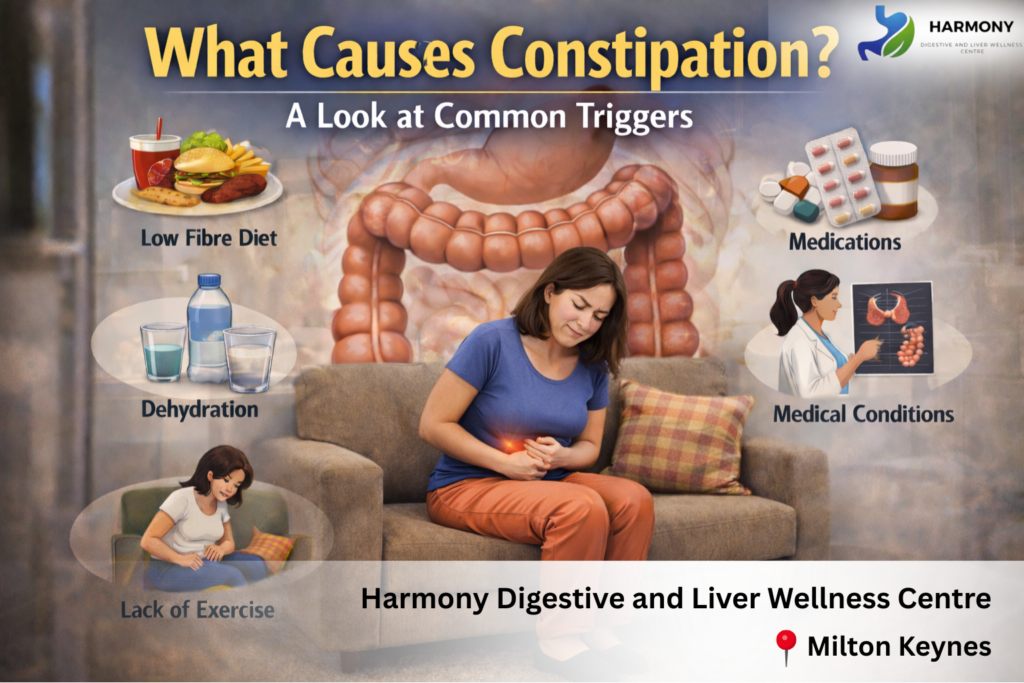
Many people deal with constipation at some point. For some it’s temporary, but for others it becomes a regular problem with bloating and discomfort. This often leads to the question: what causes constipation?
At Harmony Digestive and Liver Wellness Centre, we regularly meet patients looking for answers. This blog clearly explains the causes of constipation and what may be behind the change.
What is constipation?
Constipation generally means going to the toilet less than three times a week, passing hard or dry stools, or feeling like you still haven’t fully emptied your bowels. Understanding what causes constipation starts with recognising that digestion depends on diet, hydration, gut movement, and lifestyle habits working together.
When any of these factors change, bowel movements can slow down.
Low fibre intake
When asking what causes constipation, low fibre intake is often a key reason. Fibre supports smooth digestion and stops stools from hardening. Eating fewer fruits, vegetables, and whole grains can slow things down. A sudden shift to processed or low-fibre foods may quickly affect bowel regularity.
Not drinking enough fluids
Water plays a key role in digestion. When fluid intake drops, the body absorbs more water from stool, making it dry and hard. Dehydration is a frequent but overlooked reason what causes constipation, especially in older adults and people who drink a lot of tea or coffee without balancing it with water.
Lack of physical activity
The body’s digestion works better with regular movement. A sedentary routine can slow bowel function and increase the chances of constipation. Spending long periods sitting, resting in bed, or moving less due to illness or surgery is a common reason behind what causes constipation.
Ignoring the urge to go
Delaying bowel movements can train the body to ignore natural signals. As this continues, bowel movements may become less regular and stools harder to pass. Busy days, travel, or difficulty finding a restroom can make this problem worse.
Medications and supplements
Several medications affect bowel function. Painkillers, iron tablets, antidepressants, blood pressure medicines, and some antacids can slow digestion. When patients ask what causes constipation, medication review often provides the answer.
Digestive and medical conditions
Constipation sometimes signals an underlying condition. Irritable bowel syndrome (IBS), thyroid disorders, diabetes, gut narrowing, or neurological conditions can all affect bowel movement. Hormonal changes during pregnancy or menopause may also play a role.
Long-lasting constipation should not be ignored without medical advice.
When to seek medical advice
You should speak to a specialist if constipation:
- Lasts longer than three weeks
- Is accompanied by weight loss or bleeding
- Causes severe abdominal pain
- Alternates with diarrhoea
- Appears suddenly without clear cause
At Harmony Digestive and Liver Wellness Centre, careful assessment helps identify what causes constipation and guides safe, effective treatment.
Final word
Constipation is uncomfortable, but it is rarely random. Understanding what causes constipation allows you to make small, meaningful changes that improve bowel health. At Harmony Digestive and Liver Wellness Centre, with the right guidance, most people find relief and regain digestive comfort.
Book a consultation or screening today: Click Here.
To book a private liver consultation or second opinion, Get in touch with us.
Had a great experience with us? We’d love to hear your thoughts! Click here to leave a Google review.