
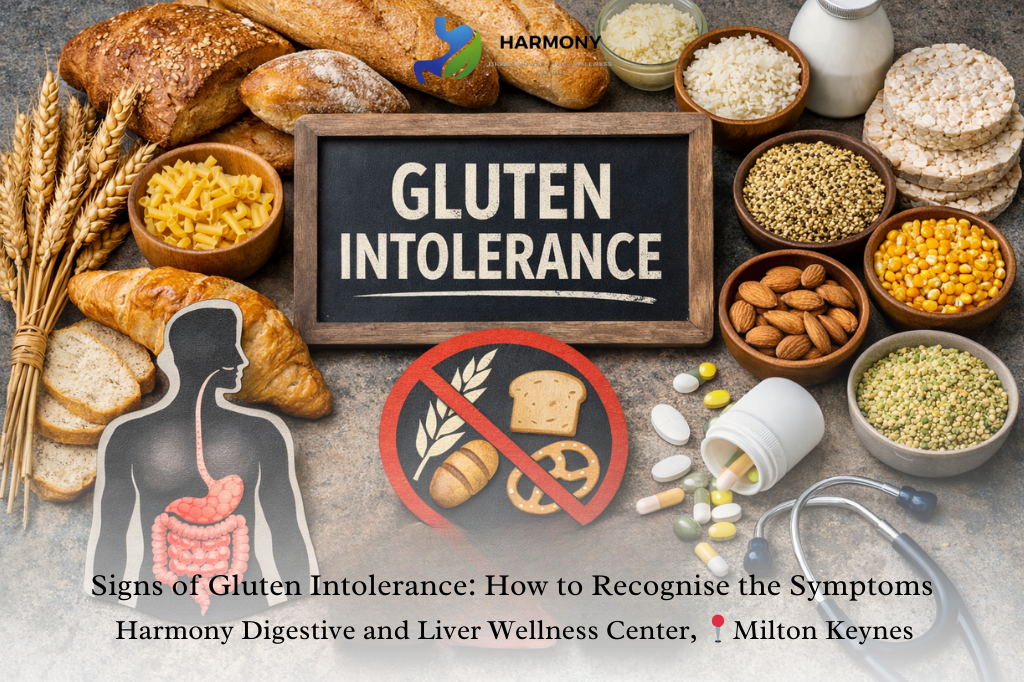
Many people feel bloated, uncomfortable, or “off” after meals, but they can’t figure out why. One possible reason could be gluten, a protein found in wheat, barley, and rye. Gluten intolerance can create real and frustrating symptoms. Understanding the signs of gluten intolerance can help you notice patterns and get the right support.
At Harmony Digestive and Liver Wellness Centre, we meet a lot of patients who think that gluten may be affecting their digestion but are unsure.
What is gluten intolerance?
Gluten intolerance is also known as non-coeliac gluten sensitivity. It happens when your body reacts poorly to gluten, even though tests for coeliac disease come back normal. In other words, you may feel unwell after eating gluten, but your immune system doesn’t attack your intestine the way it does in coeliac disease.
Because there is no single test for gluten intolerance, recognising the Signs of Gluten Intolerance often depends on tracking symptoms carefully.
Digestive symptoms to look out for
Digestive issues are the most common clue. Many people notice symptoms after eating foods like bread, pasta, biscuits, or baked items. Common digestive Signs of Gluten Intolerance include:
- bloating or excessive gas.
- stomach pain or cramps.
- diarrhoea or loose stools.
- constipation (in some cases).
- nausea or feeling heavy after meals.
These symptoms may appear within a few hours, or even the next day. Some people notice symptoms come and go, depending on how much gluten they eat.
Non-digestive symptoms that can happen too
Gluten intolerance doesn’t always stay in the stomach. Some people experience symptoms that seem unrelated, which can delay diagnosis. Non-digestive Signs of Gluten Intolerance may include:
- tiredness or low energy
- headaches or “brain fog”
- joint or muscle aches
- skin rashes or itching
- mood changes, such as irritability
Because these symptoms also occur in other conditions, people sometimes ignore gluten as a possible trigger.
How it differs from coeliac disease
Coeliac disease is an autoimmune condition. Gluten causes the body to attack the small intestine, which can lead to nutrient deficiencies, anaemia, weight loss, and long-term health problems.
Gluten intolerance does not damage the intestine, but symptoms can still feel very similar. That’s why doctors usually test for coeliac disease before making dietary changes. This step matters when exploring the Signs of Gluten Intolerance.
How doctors assess gluten intolerance
There is no quick test that confirms gluten intolerance. Doctors usually:
- rule out coeliac disease and wheat allergy through blood tests.
- recommend a supervised gluten-free trial (elimination diet).
- monitor symptom improvement and reactions when gluten returns.
At Harmony Digestive and Liver Wellness Centre, we carefully guide patients to avoid unnecessary restrictions and get balanced nutrition.
Managing gluten intolerance safely
When symptoms ease after cutting down gluten, the aim is lasting relief while maintaining balanced nutrition. Many people can handle gluten in small quantities.
Professional guidance helps you manage the Signs of Gluten Intolerance safely while still eating a healthy, varied diet.
Final word
Ongoing digestive discomfort along with fatigue or brain fog can feel overwhelming. Identifying the Signs of Gluten Intolerance gives you a clearer way forward. At Harmony Digestive and Liver Wellness Centre with proper testing, careful tracking, and customised care, many people experience real relief.
Book a consultation or screening today: Click Here.
To book a private liver consultation or second opinion, Get in touch with us.
Had a great experience with us? We’d love to hear your thoughts! Click here to leave a Google review.