

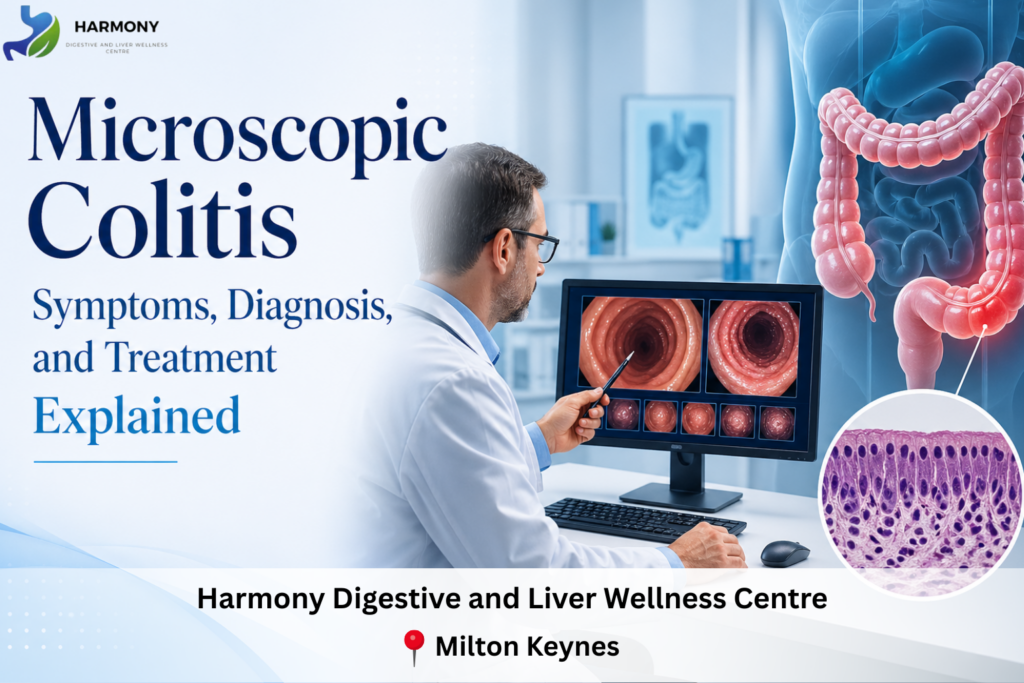
A treatable cause of persistent watery diarrhoea — diagnosed on colonoscopy biopsies
Microscopic colitis is a common reason for long-standing watery diarrhoea and urgency. It often takes time to diagnose because routine blood tests can be normal and, importantly, the bowel can look normal at colonoscopy unless the right biopsies are taken.
I’m Dr Arjun Prakash, Consultant Gastroenterologist and Endoscopist at Harmony Digestive and Liver Wellness Centre (central Milton Keynes). I see patients with persistent diarrhoea and, where appropriate, arrange colonoscopy with biopsies to confirm or exclude microscopic colitis and to guide treatment.
What is microscopic colitis?
Microscopic colitis is inflammation of the large bowel (colon) that is seen on biopsy under the microscope. The colon lining often appears normal during colonoscopy. The diagnosis relies on taking biopsies from the colon and having them reviewed by pathology.
There are two subtypes — lymphocytic and collagenous colitis — which tend to present similarly and are managed in much the same way.
Typical symptoms
Many patients describe watery diarrhoea (often several times a day), urgency and reduced ability to “hold on”, nocturnal diarrhoea in some cases, abdominal discomfort or cramping, bloating and fatigue.
Visible blood is not typical. If bleeding is present, it needs its own assessment.
Why colonoscopy is central to diagnosis
Microscopic colitis is a biopsy diagnosis. A colonoscopy that “looks normal” does not rule it out unless biopsies have been taken.
When the symptoms fit, a colonoscopy (or occasionally flexible sigmoidoscopy) is performed and biopsies are taken from the colon. Those samples confirm the diagnosis and help guide management.
If you have been told your colonoscopy was normal but biopsies were not taken, it may not have answered the question.
Who gets microscopic colitis?
It is more common in mid-life and older adults and is seen more often in women, though it can affect anyone. It is sometimes associated with other autoimmune conditions, and it can be linked with certain medications. Reviewing your medication list is therefore part of a sensible assessment.
How is it different from IBS?
Some people are initially told they have IBS-D. Microscopic colitis is worth considering when diarrhoea is persistently watery, urgency is prominent, or symptoms wake you at night. The reason it matters is that microscopic colitis has specific treatment options and people often improve significantly once it is recognised.
Treatment and outlook
Most patients do well once the diagnosis is made. Treatment is tailored to symptom severity and typically involves reviewing medications that may be contributing, measures to reduce stool frequency and urgency, targeted anti-inflammatory therapy where appropriate, and a follow-up plan, particularly if symptoms recur.
Microscopic colitis is not bowel cancer. The main impact is quality of life, and in many cases it is very treatable.
When to seek a specialist review
A gastroenterology assessment is sensible if you have watery diarrhoea for more than a few weeks, urgency that affects work, travel or confidence, diarrhoea waking you at night, weight loss, dehydration or persistent abdominal pain, or ongoing symptoms despite “normal” initial tests.
At Harmony Digestive and Liver Wellness Centre in Milton Keynes, I provide consultant-led assessment and arrange colonoscopy with biopsies when clinically appropriate to assess for microscopic colitis and other causes of persistent diarrhoea.
Conclusion - Gut Health Specialist
To request an appointment with Dr Arjun Prakash (face to face in Milton Keynes or virtual where appropriate),
For proper care and accurate diagnosis, Harmony Digestive and Liver Wellness Centre is a trusted choice. With the right treatment and healthy habits, you can enjoy your meals again without discomfort.
Book a consultation or screening today: Click Here.
To book a private liver or gut consultation or second opinion, Get in touch with us.
Had a great experience with us? We’d love to hear your thoughts! Click here to leave a Google review.