
Normal doesn’t mean healthy. In liver medicine, it sometimes just means we haven’t looked closely enough yet. The patient sitting across from me has done everything right. They got tested. The results looked fine. Their GP wasn’t concerned. And yet here they are – because something still doesn’t feel right, and it turns out their instinct was correct.
I’m Dr Prakash Gupta, a Consultant Gastroenterologist. The liver function blood test is one of the most ordered tests in medicine – and one of the most misread. Here’s what those results actually tell you, and what they quietly leave out.
What a Liver Function Blood Test Actually Measures
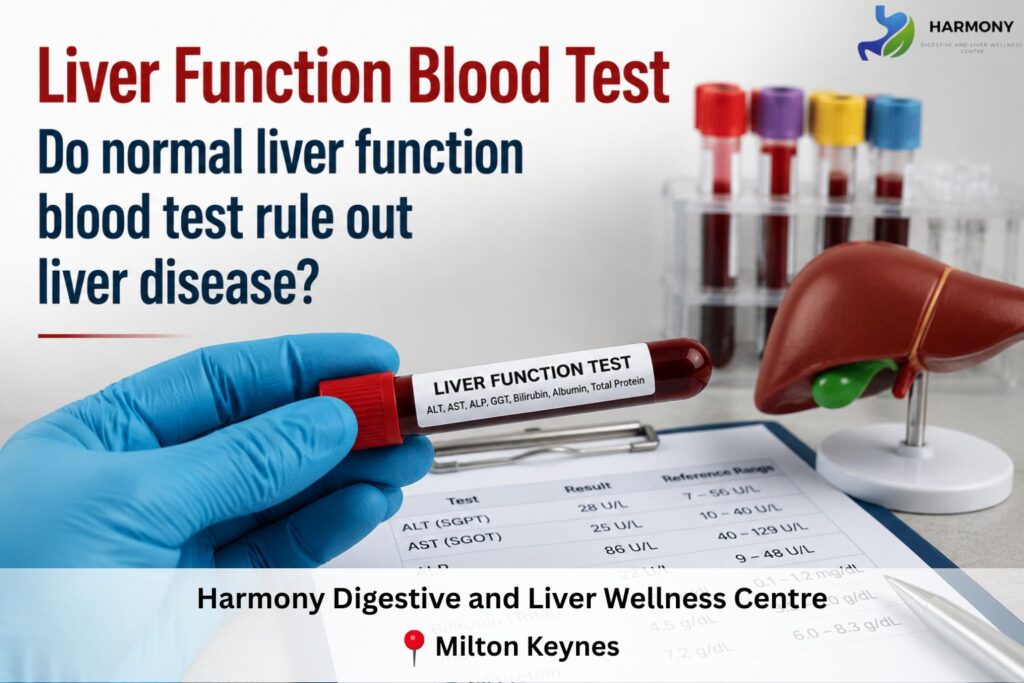
A standard liver function blood test checks a panel of enzymes and proteins: ALT, AST, ALP, GGT, bilirubin, albumin, and total protein. These markers tell us how the liver is performing certain jobs – processing waste, making proteins, and clearing bilirubin.
What they don’t tell us is the full story. Each marker reflects a narrow slice of liver health. And crucially, they reflect the liver right now – not the slow, silent damage that may have been accumulating for years.
The Problem With “Normal”
Here’s the part that surprises most patients: a liver function blood test can appear entirely normal even when significant liver disease is already present.
In conditions like early fatty liver (NAFLD/MASLD), liver enzymes often sit comfortably within the normal range – even when ultrasound or elastography reveals fat accumulation or early fibrosis. In hepatitis C, some patients carry the infection for decades with near-normal liver enzymes while the virus quietly scars the liver.
In cirrhosis, once the liver has already lost a significant portion of its functional tissue, enzyme levels can paradoxically normalise – because there are fewer healthy cells left to release them.
A normal result means the liver isn’t shouting. It doesn’t mean the liver isn’t struggling.
What “Raised” Enzymes Actually Mean
If your liver function blood test does show elevated enzymes, that’s worth taking seriously – but raised levels alone don’t tell you why. ALT and AST can be elevated in fatty liver, viral hepatitis, alcohol-related liver disease, medication effects, thyroid problems, and even vigorous exercise. Context matters enormously.
A mildly raised result brushed off as “nothing to worry about” without further investigation is a missed opportunity. A significantly elevated result that gets traced, investigated, and treated can genuinely change the outcome.
What Needs to Come Next
A liver function blood test is a starting point, not an endpoint. If your results are abnormal – or if you have risk factors even with normal results – the investigation needs to go further. That typically means:
- A liver ultrasound, which can detect fatty change, structural abnormalities, and lesions that blood tests simply cannot.
- Elastography (FibroScan), which measures both the amount of fat in the liver and the degree of scarring – two pieces of information that change clinical decisions entirely.
- Targeted blood tests, including viral hepatitis screens, autoimmune markers, and iron studies, depending on the clinical picture.
The liver function blood test opens the door. These tests tell you what’s actually behind it.
Who Should Go Further – Even With Normal Results
If any of the following apply to you, a normal liver function blood test is not sufficient reassurance on its own:
- You have type 2 diabetes or insulin resistance
- You carry excess weight, particularly around the abdomen
- You have high triglycerides or metabolic syndrome
- You drink alcohol regularly, even at moderate levels
- A family member has been diagnosed with liver disease
- You’ve had a fatty or enlarged liver noted on a previous scan
In these situations, I recommend a full liver assessment regardless of what the blood panel shows.
A Final Word
Early liver disease is treatable. Cirrhosis is not reversible. The liver function blood test is a valuable tool – but placing too much reassurance in a normal result can create a false sense of safety in exactly the patients who need further investigation most.
If you have risk factors, or if something about your health doesn’t add up, don’t stop at the blood test.
At Harmony Digestive and Liver Wellness, we offer a comprehensive liver assessment – blood panels, ultrasound, and FibroScan – interpreted together, in one visit. Book your consultation here.
Book a consultation or screening today: Click Here.
To book a private liver or gut consultation or second opinion, Get in touch with us.
Had a great experience with us? We’d love to hear your thoughts! Click here to leave a Google review.