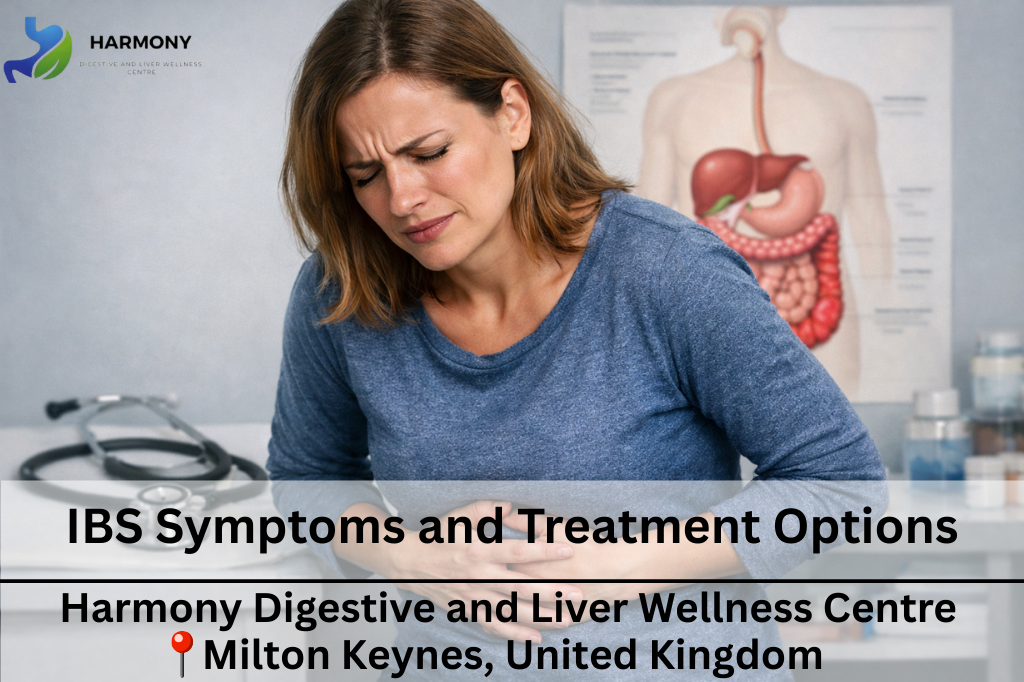
Irritable bowel syndrome, commonly known as IBS, is a long-term digestive condition that affects how the bowel functions. It is estimated that up to one in five people in the UK experience IBS at some point in their lives. Although it does not cause permanent damage to the bowel, the symptoms can be distressing and disruptive. Understanding IBS symptoms and treatment options helps people feel more in control of their digestive health.
At Harmony Digestive and Liver Wellness Centre, many patients are seen who have struggled with ongoing bowel symptoms without clear answers. This guide explains IBS in a clear and reassuring way.
What is irritable bowel syndrome (IBS)? IBS symptoms and treatment
IBS is described as a functional bowel disorder. This means that the bowel looks normal on tests, but it does not work as smoothly as it should. Problems with gut sensitivity, movement of the bowel, and communication between the gut and brain are believed to play a role.
IBS is often diagnosed after other conditions have been excluded. Clear knowledge of IBS symptoms and treatment allows unnecessary worry to be reduced.
Common IBS symptoms to be aware of
A wide range of symptoms may be experienced, and these often vary from person to person. The most common include:
- Abdominal pain or cramping.
- Bloating and excess gas.
- Diarrhoea, constipation, or a mix of both.
- Relief of pain after opening the bowels.
- Mucus in stools.
Symptoms are often triggered by stress, certain foods, or hormonal changes. While IBS does not lead to cancer or inflammatory bowel disease, the impact on daily life can be significant. Recognising IBS symptoms and treatment needs early support.
How IBS is diagnosed?
There is no single test for IBS. Diagnosis is usually made based on symptoms and medical history. Blood tests, stool tests, or scans may be arranged to rule out other digestive conditions.
At Harmony Digestive and Liver Wellness Centre, we carefully check for the presence of IBS with the help of the above mentioned tests.
IBS treatment options explained
There is no single cure for IBS, but symptoms need to be managed. IBS affects everyone, so personalised plans are made for every patient. Understanding IBS symptoms and treatment helps set realistic expectations.
Treatment may include:
- Dietary changes, such as adjusting fibre intake or following a low FODMAP diet.
- Medications to relieve diarrhoea, constipation, or abdominal pain.
- Stress management techniques, including relaxation or gut-directed therapies.
- Probiotics, in selected cases.
Treatment is often reviewed and adjusted over time to find what works best.
When specialist support is helpful
A specialist consultation is necessary if symptoms change suddenly, become worse, or include red flags such as weight loss, bleeding, or night-time symptoms. These features are not typical of IBS and require further investigation.
Taking expert guidance makes sure that IBS symptoms and treatment is done safely and appropriately.
Final word
IBS is a common but often misunderstood. With the right diagnosis, reassurance, and tailored care, symptoms can be decreased and confidence restored. At Harmony Digestive and Liver Wellness Centre, patients receive clear guidance and continuous support to manage IBS in a practical manner.
Book a consultation or screening today: Click Here.
To book a private liver consultation or second opinion, Get in touch with us.
Had a great experience with us? We’d love to hear your thoughts! Click here to leave a Google review.