Your liver works quietly in the background every day, but it does some of the most important jobs in your body. It filters toxins, processes food, stores nutrients, supports digestion, and helps control your energy levels. So when the liver doesn’t work well, your whole body can start to feel off—tiredness, poor appetite, digestive issues, and more.
That’s why many people want to know if vitamins really help. At Harmony Liver and Digestive Wellness Centre, patients often ask, “Do I need supplements for my liver?” The answer depends on your diet, lifestyle, and health condition. This guide explains the role of Vitamins for Liver Health in a simple and practical way.
Why vitamins matter for liver health
The liver uses vitamins to run hundreds of internal processes every day. These nutrients help the liver:
- break down fats, proteins, and carbs
- protect liver cells from damage
- support detoxification (removing harmful substances)
- manage inflammation and repair tissue
A person may develop vitamin deficiencies due to a poor diet, digestive disorders, alcohol intake, or chronic liver disease. In such cases, Vitamins for Liver Health become even more important.
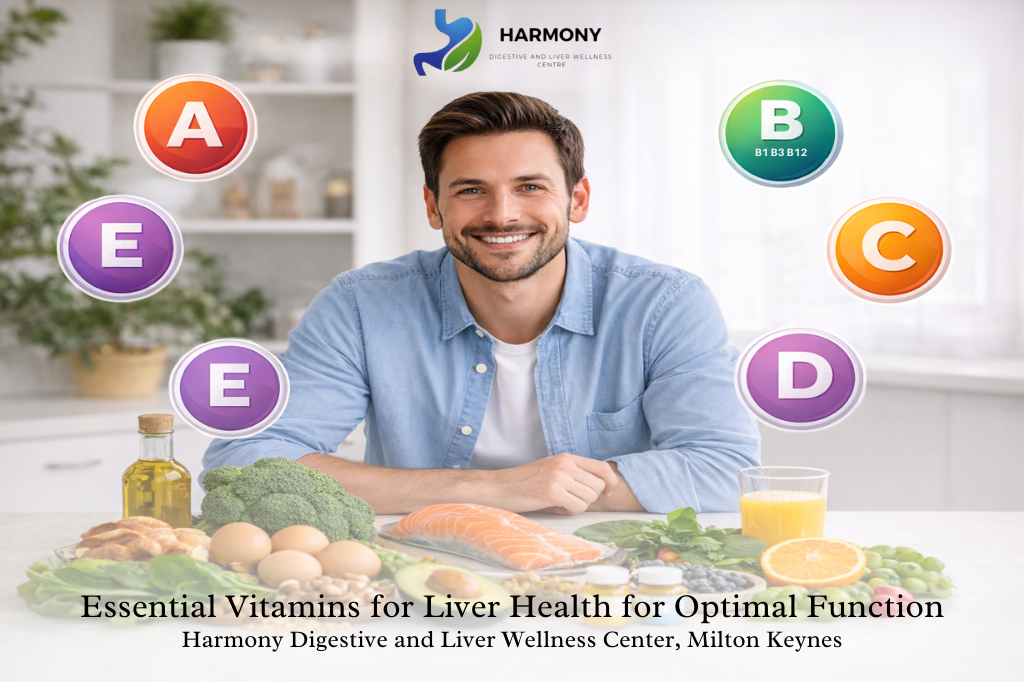
Vitamin A and liver function
Vitamin A supports your immune system and helps the body repair cells. The liver stores Vitamin A and releases it when the body needs it.
However, Vitamin A needs balance. Too little can weaken immunity, but too much can actually harm the liver. That’s why anyone with liver problems should not take Vitamin A supplements without medical guidance.
B vitamins and energy levels
B vitamins help the liver in many ways. They support:
- energy production
- liver enzyme activity
- fat and protein breakdown
- red blood cell health
B1, B6, B12, and folate are especially important. Many people with alcohol-related liver problems or poor nutrition show low B vitamin levels. Among Vitamins for Liver Health, B vitamins play a major role in reducing tiredness and improving daily energy.
Vitamin D and liver health
Vitamin D does more than support bones. It also helps regulate immunity and inflammation—both closely linked with liver health.
Doctors often notice low Vitamin D levels in people with liver disease. Some studies show that deficiency may relate to worse outcomes in long-term liver conditions. Correcting low Vitamin D is often part of a liver care plan, which highlights how important Vitamins for Liver Health can be beyond digestion.
Vitamin E for cell protection
Vitamin E works as a strong antioxidant. That means it protects liver cells from oxidative stress, which can worsen liver inflammation and scarring.
Some research suggests that Vitamin E may help selected people with non-alcoholic fatty liver disease. But it does not suit everyone, and high doses can cause side effects in some patients. A specialist should always guide Vitamin E use.
Should you take supplements for liver health?
Not always. Many people get enough Vitamins for Liver Health through food alone. A healthy diet usually gives the liver everything it needs.
Supplements can help in some cases. Blood tests can confirm which vitamins you actually need, and in what dose.
Conclusion
Vitamins support the liver in many ways and vitamins for liver health include nutrition, tests, and targeted supplements. At Harmony Digestive and Liver Wellness Centre, with expert care and right lifestyle choices, you can support your liver safety and improve overall well-being.
Book a consultation or screening today: Click Here.
To book a private liver consultation or second opinion, Get in touch with us.
Had a great experience with us? We’d love to hear your thoughts! Click here to leave a Google review.