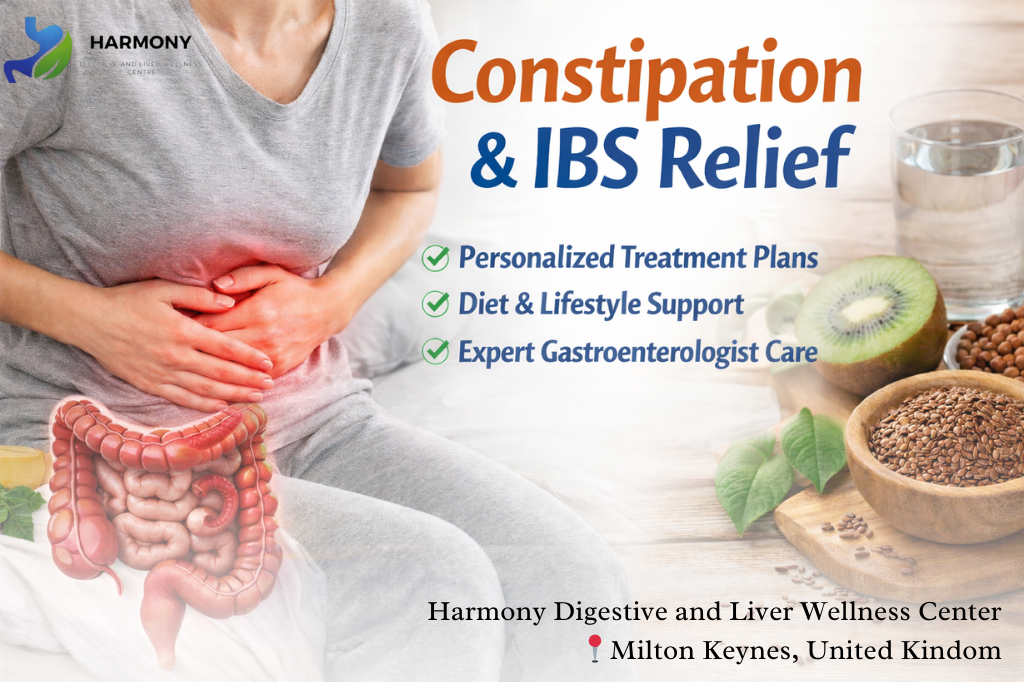
Constipation remains one of the most frequently reported digestive complaints in everyday clinical practice. When it occurs alongside irritable bowel syndrome (IBS), symptoms can feel unclear and challenging to manage properly. Many people are diagnosed with IBS yet continue to experience mainly infrequent or difficult bowel movements. Understanding the link between IBS and constipation helps clarify why symptoms occur and how they can be managed effectively.
At Harmony Digestive and Liver Wellness Centre, many patients are seen who feel frustrated by long-standing constipation that does not respond to simple remedies. This guide explains the connection in a clear and reassuring way.
What is IBS with constipation?
As a functional bowel disorder, IBS does not usually show abnormalities on tests, yet normal bowel function is impaired. When constipation is the dominant feature, this subtype is called IBS-C, and symptoms commonly include infrequent bowel movements, hard stools, and straining.
The connection between IBS and constipation involves altered bowel movement patterns, increased gut sensitivity, and disruptions in gut–brain interaction.
Common symptoms of IBS and constipation
People affected by IBS and constipation may experience:
- Fewer than three bowel movements per week.
- Hard or lumpy stools.
- Straining during bowel movements.
- Abdominal pain or cramping.
- Bloating and discomfort.
- A feeling of incomplete emptying.
Pain is often relieved after opening the bowels, which helps distinguish IBS-related constipation from other causes.
Why constipation occurs in IBS
In IBS, the muscles of the bowel may contract more slowly than usual. This allows stool to remain in the colon for longer, where more water is absorbed, leading to harder stools. Increased sensitivity of the gut can also make normal bowel activity feel painful.
Stress, hormonal changes, diet, dehydration, and reduced physical activity are known to worsen IBS and constipation symptoms.
How the condition is diagnosed
There is no single test for IBS. Diagnosis is usually made based on symptoms and by excluding other conditions. Blood tests, stool tests, or imaging may be recommended to exclude concerns such as inflammatory bowel disease, coeliac disease, or bowel cancer. At Harmony Digestive and Liver Wellness Centre, we follow a careful and structured assessment to make sure that IBS is diagnosed correctly. This helps to reduce unnecessary anxiety and uncertainty for the patients.
Treatment options for IBS and constipation
Treatment varies from person to person, but symptoms often improve with an individualised plan.
Management options may involve:
- Careful fibre modification
- Adequate hydration
- Stool-softening osmotic laxatives
- Medicines to regulate bowel activity
- Tailored diets, including a modified low FODMAP approach
Ongoing review helps fine-tune treatment over time.
Lifestyle changes that support bowel regularity
A steady routine that includes regular meals, light movement, and stress management is often recommended. Sudden or major dietary changes can lead to bloating and added discomfort.
Final word
Living with IBS and constipation can feel overwhelming, but effective help is available. Accurate evaluation and tailored treatment can reduce symptoms and restore daily comfort. At Harmony Digestive and Liver Wellness Centre, patients are supported with clear information and steady care throughout their treatment journey.
Book a consultation or screening today: Click Here.
To book a private liver consultation or second opinion, Get in touch with us.
Had a great experience with us? We’d love to hear your thoughts! Click here to leave a Google review.