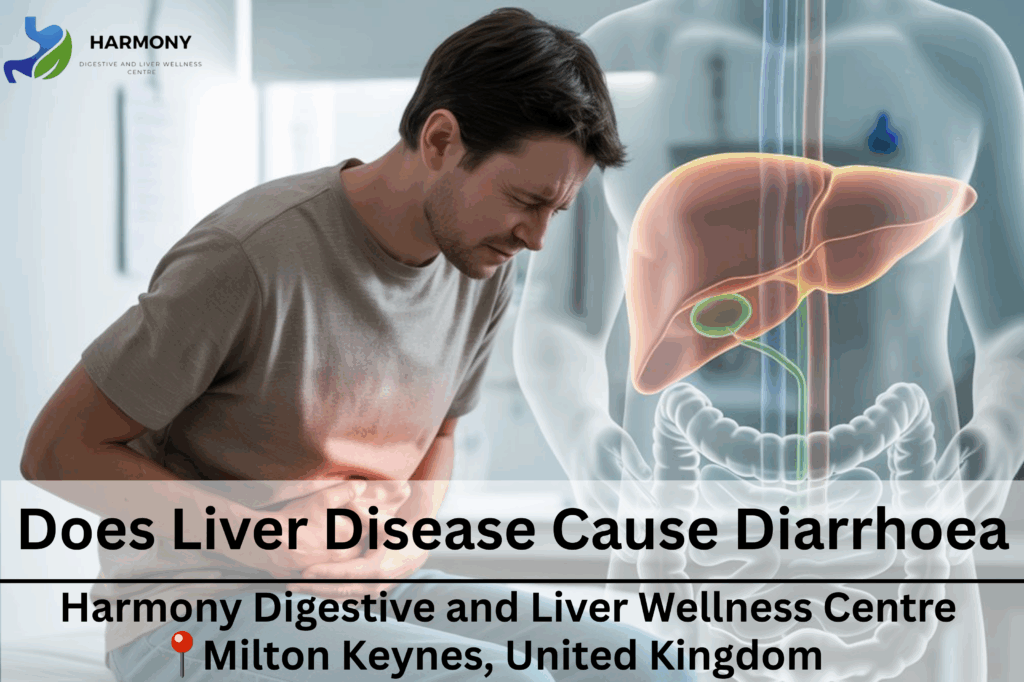
Most of us associate liver problems with tiredness, yellowing of the skin, or discomfort in the abdomen. But a common question—what’s the connection between liver and diarrhoea—often gets overlooked. The liver supports digestion and filters toxins, so any disturbance in its function can show up in the gut. Understanding this connection helps you take timely consultations and begin treatment if necessary. At Harmony Liver and Digestive Wellness Centre, we regularly check patients who have unexplained digestive changes and want clarity.
How the Liver Affects Digestion
Before understanding the connection between liver and diarrhoea, lets know what the liver does during digestion. It makes bile to break down fats and absorb vitamins that dissolve in fat. It also filters toxins and supports healthy gut bacteria. If the liver isn’t working well, these duties decline, resulting in altered stools, weaker nutrient absorption, and changes in how the gut moves.
Connection between liver and diarrhoea
Sometimes liver problems may lead to diarrhoea. Understanding these mechanisms can help you identify when digestive symptoms are more than just a dietary issue.
1. Reduced Bile Production or Flow
In conditions like fatty liver disease, hepatitis, or cirrhosis, bile production can get affected. This disturbs fat digestion, leading to loose, greasy stools and diarrhoea. This is one of the most common ways where liver disease can cause diarrhoea.
2. Bacterial Overgrowth
When the liver becomes weak, it struggles to manage gut bacteria properly. This allows harmful bacteria to grow in the small intestine, leading to bloating, discomfort, and diarrhoea.
3. Portal Hypertension
When the liver is damaged, the pressure in the veins near the stomach and intestines increases. This results in frequent watery stools.
4. Medications Used in Liver Conditions
Some individuals with liver disease use lactulose to help control high ammonia levels in the body. Lactulose works by increasing bowel movements, which can lead to diarrhoea.
When Diarrhoea Should Concern You
Occasional loose stools happen to everyone. The key question is whether liver disease is involved. If you regularly wonder what’s the connection between liver and diarrhoea is because your symptoms persist for weeks, it may be time to investigate further.
- Seek an assessment if you experience:
- Persistent or unexplained diarrhoea.
- Diarrhoea with fatigue, jaundice, or abdominal swelling.
- Sudden digestive changes with known liver issues.
- Weight loss or poor appetite.
- Pale, greasy, or unusually foul-smelling stools.
How a Specialist Can Help
If your symptoms seem connected to your liver, consulting a specialist is a good next step. At Harmony Liver and Digestive Wellness Centre, we offer:
- Liver blood tests.
- Ultrasound and FibroScan.
- Gut checks for bacterial overgrowth, malabsorption, and food intolerances.
- Personalised treatment plans.
Final Word
So, does liver and diarrhoea are connected ? Yes — it can, and the connection is stronger than many people realise. Diarrhoea may be an early sign of liver dysfunction, a complication of advanced disease, or a result of treatment. Understanding the link helps you recognise when something is wrong and get the right care at the right time. With proper diagnosis and guidance, many digestive symptoms improve significantly, supporting better long-term liver health.
Book a consultation or screening today: Click Here.
To book a private liver consultation or second opinion, Get in touch with us.
Had a great experience with us? We’d love to hear your thoughts! Click here to leave a Google review.