
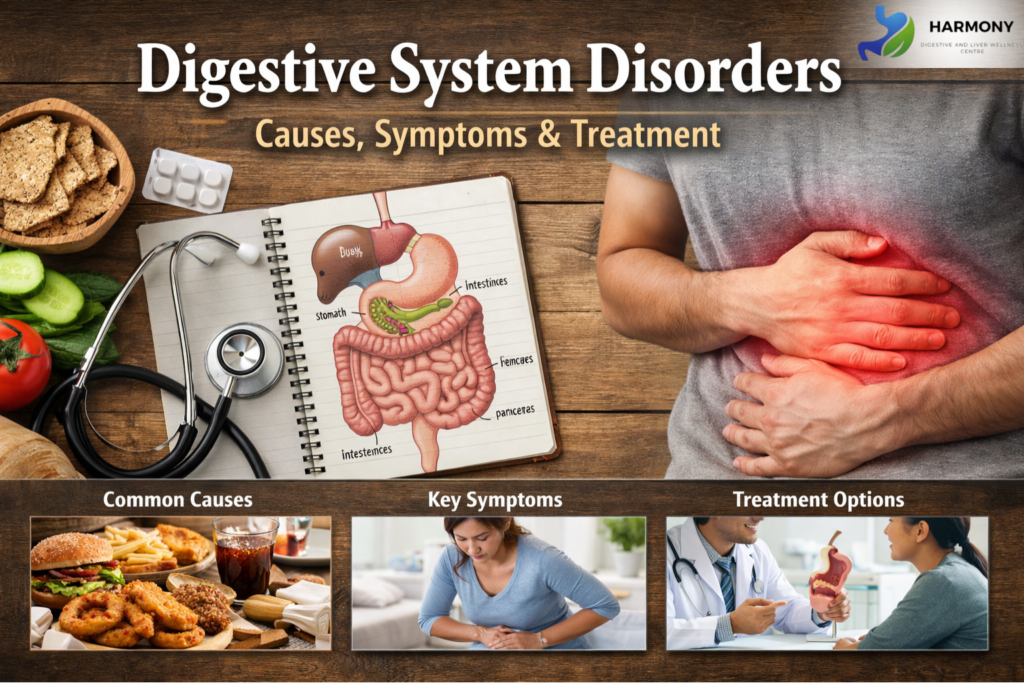
Digestive problems are very common nowadays. Many people experience stomach pain, bloating or irregular bowel movements, If you ignore these issues then it can lead to serious complications. Understanding digestive system disorders helps in early detection and proper treatment.
The digestive system includes the stomach, intestines, liver, pancreas and other organs. These work together to break down food, absorb nutrients and remove waste. When something goes wrong it affects the overall health. Digestive health should not be ignored as it can lead to serious problems later. Knowing what causes digestive system disorders and how can you prevent it from happening is also very important.
Common Causes of Digestive System Disorders
There are many reasons due to which digestive issues occur. One of the major cause is poor diet. Eating too much processed food, oily food or sugary items can harm digestion.
Having stress and lack of sleep also affects digestion. The gut reacts to mental and physical stress, which can worsen symptoms. So, individuals should also focus on their sleep and mental health.
Other causes include infections, food intolerance and chronic conditions like acid reflux or irritable bowel syndrome (IBS). Genetics and age problems also play a role.
Symptoms to Look For
Symptoms of digestive system disorders may be different for each person. Some common signs include stomach pain, bloating and gas, nausea or vomiting, heartburn or acid reflux, constipation or diarrhea and unexplained weight loss.
If you are having these symptoms more than few days, it is important to consult a doctor. Early diagnosis helps in better results.
Treatment options
Treatment depend on the type and severity of the disorder. Mild cases can improve by changing the lifestyle. Eating a balanced diet, drinking enough water and exercising on regular basis can help.
Doctors may prescribe medicines for ulcers, acid reflux or infections. If the case is severe, procedures or surgeries may be needed.
Managing stress and getting enough sleep is also part of treatment. Mental health and digestive health are closely linked.
Preventive Measures
Everyone known prevention is always better than cure. Avoid overeating and eat smaller, frequent meals. Limit spicy, oily and processed foods. Try to include more fibre rich foods like vegetables, fruits and whole grains. Changing your diet helps a lot in treating the issue, with proper diet the symptoms starts to decrease.
Probiotics and digestive enzymes can also support gut health. Regular medical checkups help to detect the problem in the beginning.
When to Seek Professional Help
Persistent digestive issues be taken seriously and never be ignored. Timely consultation prevents complications like chronic inflammation, ulcers or liver problems. With consultation, issue gets solved in time and reduces the risk of developing some serious problem later.
Getting specialised care is very important for correct diagnosis and effective treatment. Professionals provide guidance on diet, lifestyle and medications to treat each patient.
Final word
Digestive health is very important for overall well-being. You should be aware of digestive system disorders, what causes them and what are their symptoms to take action on time. Changing lifestyle, proper diet and medical treatment can improve digestion and reduce discomfort. For expert diagnosis and personalized treatment plans, patients can consult Harmony Digestive and Liver Wellness Centre. Here, specialists provide customised care for all digestive issues.
Book a consultation or screening today: Click Here.
To book a private liver or gut consultation or second opinion, Get in touch with us.
Had a great experience with us? We’d love to hear your thoughts! Click here to leave a Google review.