
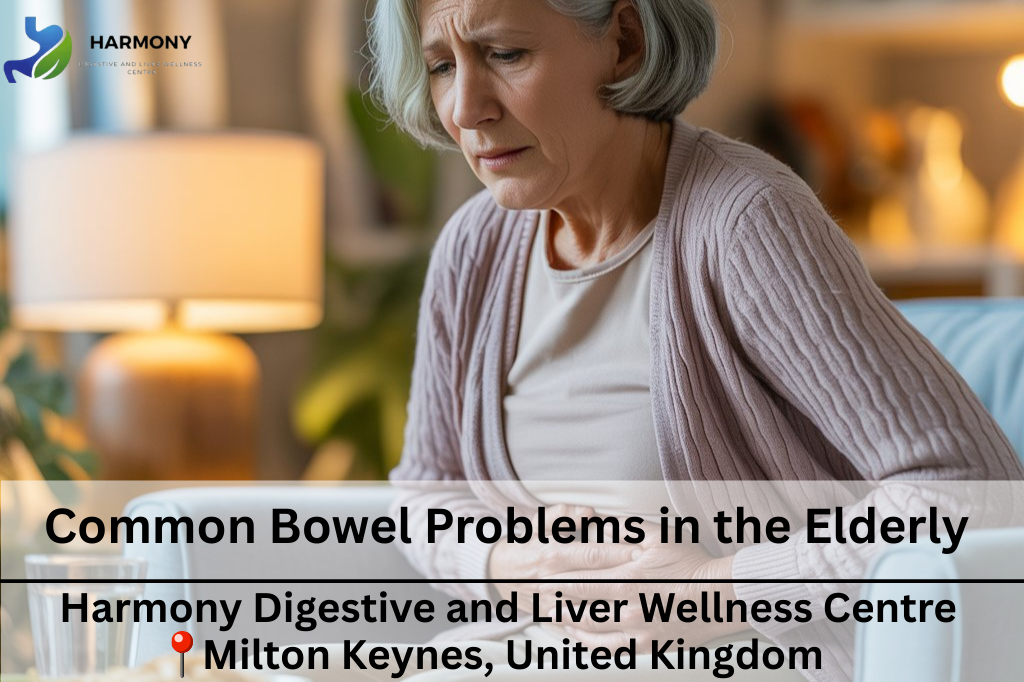
Bowel health often changes with age. Many older adults experience digestive symptoms that affect comfort, confidence, and quality of life. While some changes feel like a normal part of ageing, others signal treatable conditions. Understanding common bowel problems in the elderly helps families and patients recognise what deserves attention and how effective management can improve daily wellbeing.
At Harmony Liver and Digestive Wellness Centre, we regularly support older patients who want clear, practical guidance about bowel symptoms without alarm or confusion.
Why bowel problems become more common with age
As people age, digestion may change due to slower gut movement, weaker muscles, long-term medicines, less exercise, and dehydration. These factors explain why common bowel problems in the elderly appear more frequently after the age of 60.
Constipation
Constipation remains the most frequent issue among common bowel problems in the elderly. People may pass stools less often, strain, or feel incomplete emptying.
Common causes of constipation are:
- Low fibre intake.
- Reduced fluid intake.
- Limited mobility.
- Painkillers, iron tablets, or blood pressure medicines.
Management focuses on regular meals, adequate hydration, gentle daily movement, and fibre-rich foods. Doctors may suggest laxatives when lifestyle changes do not help.
Diarrhoea and loose stools
Loose stools often surprise older adults, especially when they appear suddenly. Persistent diarrhoea needs medical review, as dehydration and weight loss can develop quickly in older people.
Among common bowel problems in the elderly, unexplained diarrhoea should never be ignored.
Faecal incontinence
Loss of bowel control can feel embarrassing, so many people stay silent. It may result from weak pelvic muscles, nerve issues, or bowel conditions. Symptoms improve with the right treatment and specialist support.
Irritable bowel syndrome (IBS)
IBS does not affect only younger adults. Many older people experience abdominal pain, bloating, and alternating bowel habits. Stress, food triggers, and gut sensitivity play a role. IBS does not damage the bowel but can affect the daily routine.
IBS forms an important part of common bowel problems in the elderly, especially when other causes have been excluded.
Bowel cancer and inflammatory conditions
The risk of bowel cancer increases with age. Symptoms such as ongoing bowel habit changes, blood in stools, unexplained weight loss, or persistent abdominal pain need urgent assessment. Inflammatory bowel conditions can also appear later in life, although they are less common.
Early investigation improves outcomes and provides reassurance when serious disease is excluded.
How bowel problems get assessed
To evaluate common bowel problems in the elderly, doctors may recommend:
- Blood tests
- Stool tests
- Imaging such as ultrasound or CT
- Colonoscopy or flexible sigmoidoscopy
At Harmony Liver and Digestive Wellness Centre, assessments focus on clarity, comfort, and age-appropriate care.
Managing bowel health in later life
Simple steps often make a meaningful difference:
- Eat regular, balanced meals
- Increase fibre gradually
- Drink fluids consistently
- Stay physically active
Review long-term medications
Final word
Bowel symptoms do not belong to “just getting older.” Many common bowel problems in the elderly respond well to early evaluation and tailored management. With the right support, older adults can maintain comfort, dignity, and digestive health well into later life.
Book a consultation or screening today: Click Here.
To book a private liver consultation or second opinion, Get in touch with us.
Had a great experience with us? We’d love to hear your thoughts! Click here to leave a Google review.