 Skip to main content

Top Intestinal Health Supplements for Better Gut Function

Your stomach works all day without any rest. It breaks food and gives energy to your body. When it is not working well, you may start to feel bloating, heaviness or gas. This is why people use intestinal health supplements to support digestion and gut health. These supplements are not magic. They just help your gut work in a better way when used with healthy habits. Why Gut Support is Needed Your intestines manage all the food digestion on daily basis. If they become weak or unbalanced, your digestion slows down. This can cause various discomforts like pain, gas or irregular bowel habits. Healthy intestines help your whole body feel active and light. Intestinal Health Supplements There are different types of intestinal health supplements and each one works in its own way. Probiotics Probiotics are live bacteria which support your gut health. They help balance digestion and improve stomach health. They reduce your bloating and supports smooth digestion. They also help to restore gut bacteria balance. They are useful after antibiotic use. They are often found in capsules or powders. Prebiotics Prebiotics are natural fibers that feed good bacteria in your gut. It helps in improving digestion. It also supports healthy bowel movement by reducing constipation issues. It also promotes good gut balance. They work like food for probiotics. Digestive Enzymes Digestive enzymes help break down food properly. They help your stomach in digesting heavy meals. They also reduce gas formation and improve nutrient absorption. They support smoother digestion. They are helpful if you feel heavy after eating. Fiber Supplements Fiber is important for gut movement and cleaning. They are useful in supporting regular bowel movement. They also helps reduce constipation and improves the speed of your digestion. It also supports gut cleansing. Fibre keeps the digestive system active. Synbiotics Synbiotics are made of combined probiotics and prebiotics together. They provide better gut balance. They are stronger digestive support. They make the good bacteria grow faster and improves the gut health. This combination is often more effective for many people. How These Supplements Help Your Body These intestinal health supplements support digestion in different ways. They are helpful in reducing bloating and discomfort They help food break down better They support healthy gut bacteria They also improve nutrient absorption So, together they help your stomach feel lighter and more balanced. Daily Habits That Improve Gut Health You can take as many supplements you want but they only work well if you have a healthy lifestyle. Make sure to eat simple home cooked food Drink plenty of water daily Avoid eating oily and junk food Eat slowly and chew your food well Sleep properly every night These small changes make a big difference with time. When You Need Expert Help If your stomach problems continue, it is better to get checked. Long-term symptoms should not be ignored. Harmony Digestive and Liver Wellness Centre gives expert care for digestive issues. They work on finding the real cause of symptoms and giving proper treatment based on individual needs. Conclusion – Gut Health Specialist Intestinal Health Supplements like probiotics, prebiotics, digestive enzymes, fiber and synbiotics can help support better gut function. They are most effective when used with a healthy lifestyle. Harmony Digestive and Liver Wellness Centre can help you understand your gut health and take the right steps for improvement. Book a consultation or screening today: Click Here. To book a private liver or gut consultation or second opinion, Get in touch with us. Had a great experience with us? We’d love to hear your thoughts! Click here to leave a Google review.
Gastric Ulcer Symptoms: Early Detection & Care Tips
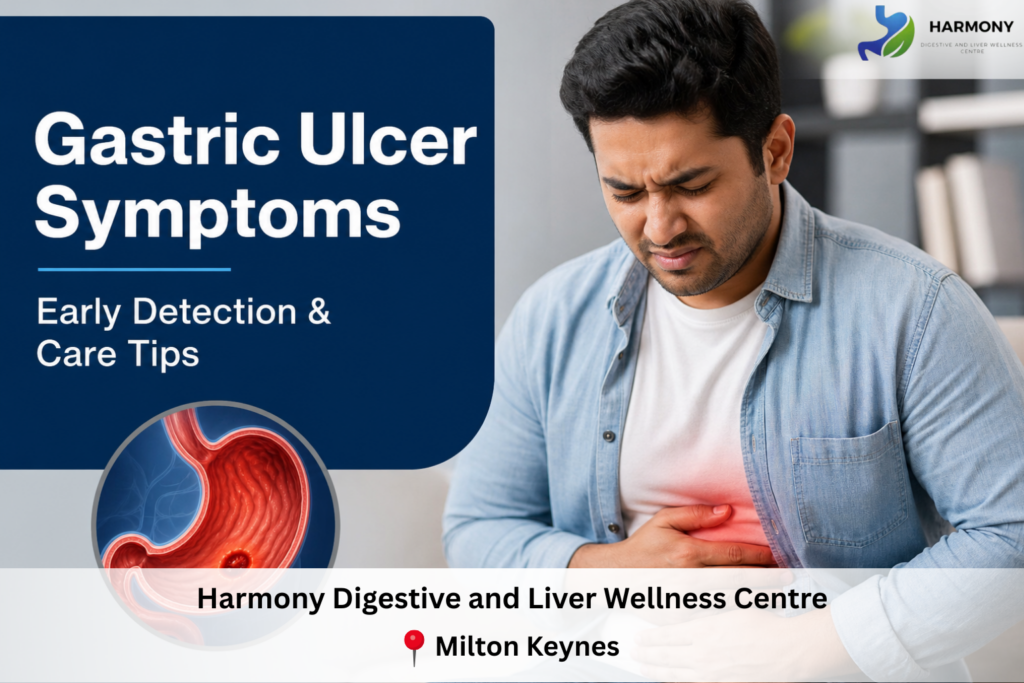
Gastric Ulcer Symptoms: Early Detection & Care Tips Home > Blogs > Gastric Ulcer Symptoms: Early Detection & Care Tips The presence of gastric ulcers, which produce erosions in your stomach lining, requires medical attention. It is important for medical professionals to identify the most frequent gastric ulcer symptoms, since early diagnosis ensures that treatment is received by patients with few complications. Medical professionals should identify patients with this symptom at the earliest opportunity so they can receive treatment. What is a Gastric Ulcer? A gastric ulcer is damage in the lining of the stomach, caused by your stomach acid. They are actually very common, but treatable if identified in the early stages. The symptoms of gastric ulcers vary in intensity throughout the stage of the condition; so it is important for us to be aware of them all. Most Common Gastric Ulcer Symptoms Burning Stomach Pain- By far the most common gastric ulcer symptom is Burning Stomach Pain. When patients develop these symptoms, they say they have a hole like acid burning a crater in their stomach. Usually, the burning occurs between the navel and the breastbone. There are different experiences in some patients; some will get it when they have eaten, others when their stomachs are empty. Some patients may call this a mild complaint, some an extreme. Indigestion and Fullness- Indigestion is a common symptom a patient complains of when they are complaining of Burning Stomach Pain. When a patient has indigestion and fullness, you often feel full from a very small amount of food you are eating. Since you will feel full early on, there will not be much of an appetite for you, so your body will not consume much food. Along with the indigestion and fullness, patients also report that they will feel belching and bloating. Nausea and Vomiting Post-meal nausea is another significant gastric ulcer symptom. Some suffer mild nausea, while others have severe nausea. Some patients may also vomit, especially after meals. This can cause dehydration and malnutrition. This condition requires immediate medical care. Acid Reflux and Heartburn Acid reflux and heartburn are common symptoms of gastric ulcers. You may feel a burning in your chest. This can be particularly bad when reclining or leaning over. Silent Ulcers: The Hidden Danger Gastric ulcers can be asymptomatic. These “silent ulcers” are symptomless. They may be discovered when they’re complicated. This highlights the need for screening in some people. Those with risk factors should see specialists. Severe Warning Signs Need to be Investigated You should call your doctor if you have: The medication does not provide relief for my severe abdominal pain. The presence of black or tarry stools indicates a medical condition that requires attention. The presence of blood in vomit shows two conditions: either blood appears in its natural state, or it resembles coffee grounds. The person experiences weakness and dizziness because they might have lost blood. The person experiences paleness and fainting because they have lost blood. What Causes Gastric Ulcers? Knowing the causes helps to avoid them. The most common are H. pylori infection and NSAID use. Both disrupt stomach defences. Bacterial infection can be detected with H. pylori breath tests. This permits early antibiotic use. Cigarette smoking, alcohol, and stress aggravate gastric ulcers. Acidic and spicy foods worsen the ulcer. Controlling these factors helps the ulcer to heal. Importance of Early Diagnosis Don’t ignore persistent gastric ulcer symptoms. Gastric ulcers can cause severe digestive issues. Perforations and bleeding are rare but potentially fatal. Doctors can view ulcers using an upper endoscopy. This procedure allows for a diagnosis and treatment. Treatment Options Available Drugs neutralise stomach acids and help protect the lining. Some ulcers can be identified and treated during a gastroscopy. Dietary changes help the healing process. Medical advice helps you get the right care. Gastroenterologists tailor treatment plans to your needs. NSAID use promotes stomach health. Reduce stress by relaxing. Promptly treat H. pylori infections. Conclusion – Gut Health Specialist Gastric ulcer symptoms need to be assessed and treated by a doctor. Timely diagnosis avoids complications and promotes healing. If you have persistent symptoms, seek medical treatment. Harmony Digestive and Liver Wellness Centre offers accurate diagnosis and effective treatment for gastric ulcers. Our experts perform diagnostic tools such as endoscopy and gastroscopy. Contact us for a consultation and to achieve relief. Your digestive health is our priority. Book a consultation or screening today: Click Here. To book a private liver or gut consultation or second opinion, Get in touch with us. Had a great experience with us? We’d love to hear your thoughts! Click here to leave a Google review. Latest Post Gut Specialist UK | Advanced Digestive Health Services Private Digestive Clinic Near Me in Milton Keynes Food Intolerance Testing | Expert Diagnosis & Care in Milton Keynes Want to consult about health? contact us We have specialist docter team is feugiat lectus lacus. Contact Us Get in Touch They are Donec mollis dictum sagittis. In tincidunt egestas tellus quis ultrices. Nunc id rhoncus tortor, at feugiat mi. Emergency Contact Free Call 24/7 +123-234-1234 Hospital Location Open In 24 Hours 99 Roving St., Big City Phone Contact Within Working Hours 123-234-1234 Gastric Ulcer Symptoms: Early Detection & Care Tips Home > Blogs > Gastric Ulcer Symptoms: Early Detection & Care Tips The presence of gastric ulcers, which produce erosions in your stomach lining, requires medical attention. It is important for medical professionals to identify the most frequent gastric ulcer symptoms, since early diagnosis ensures that treatment is received by patients with few complications. Medical professionals should identify patients with this symptom at the earliest opportunity so they can receive treatment. What is a Gastric Ulcer? A gastric ulcer is damage in the lining of the stomach, caused by your stomach acid. They are actually very common, but treatable if identified in the early stages. The symptoms of gastric ulcers vary in intensity throughout the stage of the condition; so it is important for us to be aware of them all. Most Common Gastric Ulcer Symptoms Burning Stomach Pain- By far the most common gastric
Gut Inflammation Symptoms: Causes, Signs & Treatment
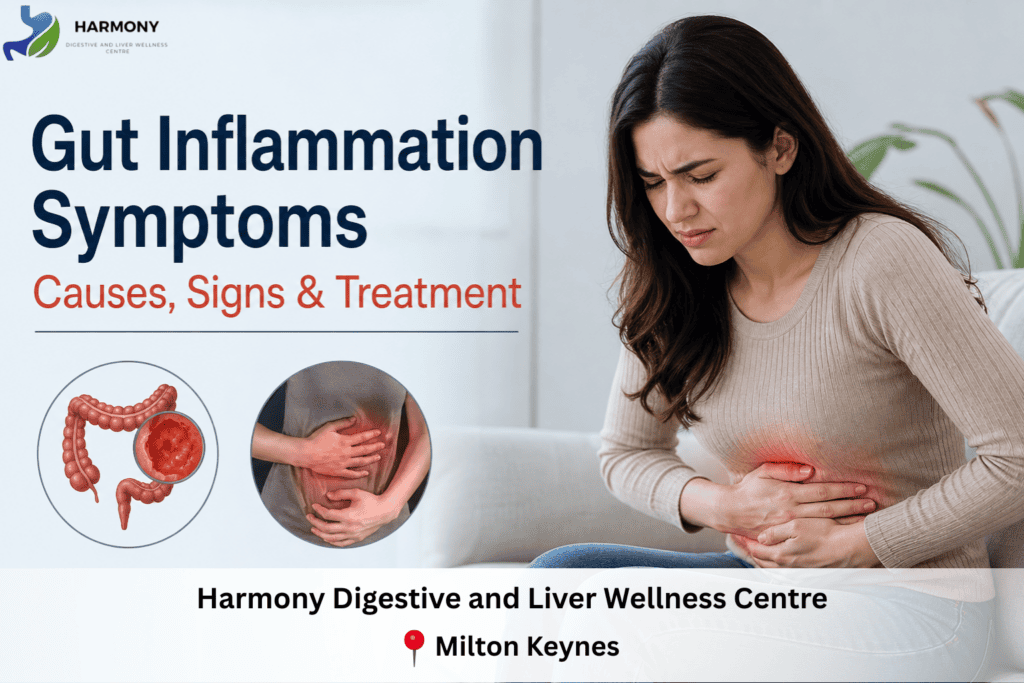
Sometimes your stomach feels heavy even after a small meal. You may feel gas, pain or uneasiness again and again. This can be a sign of gut inflammation. It is important to understand gut inflammation symptoms help you take care of your body in time. Your digestive system works every day. When it is not healthy, your whole routine gets disturbed. What is Gut Inflammation? Gut inflammation means the inner lining of your stomach or intestines is irritated. This irritation can make digestion slow and uncomfortable. It can start as a small problem. But if ignored, it can become serious. That is why early care is important. Signs Your Gut is Not Healthy There are many Gut Inflammation Symptoms that you may notice in daily life. If you feel full very quickly after eating If you have stomach pain after eating Bloating and gas Change in bowel habits Feeling tired most of the time Nausea or discomfort These signs may not seem serious at the start. But if they repeat often, you should pay attention. Common Reasons Behind It Gut inflammation can happen due to different reasons. If you eat at irregular times then it can disturb digestion. Eating too much junk food or oily meals can also irritate the stomach. Not drinking enough water can also cause problems. Stress is another big reason. When your mind is not relaxed your digestion also gets affected. In some cases, infections or conditions like IBS can cause long-term issues. How It Changes Your Daily Routine When your gut is not healthy, you do not feel comfortable. You may avoid eating because of pain. You may feel weak or low in energy. This can affect your work and mood. You may start to feel irritated or tired without any reason. This is why knowing gut inflammation symptoms is very important. Easy Ways to Improve Your Gut You can improve your gut health with small daily changes. Eat fresh and simple food Do not eat too much spicy and fried items Drink plenty of water daily Eat meals at fixed times Take proper rest Stay calm and avoid stress Foods to Avoid Certain foods can make your symptoms worse. Heavy meals, street food and processed snacks can irritate your gut. Too much tea, coffee or cold drinks can also cause discomfort. Eat home cooked meals and fresh fruits. They are easier to digest. When You Should See a Doctor If gut inflammation symptoms do not improve, you should not ignore them. Visit a doctor if: When your pain becomes strong Your symptoms last for many days You feel weak or dizzy You lose weight without trying Proper tests can help find the real cause. Recovery Getting the right treatment is important. Harmony Digestive and Liver Wellness Centre provides expert care for gut and digestive problems. They focus on finding the exact cause of your symptoms. They give treatment that suits your condition. Their aim is to give long-lasting relief. Why Early Care is Important Early treatment helps control the problem quickly. It also prevents bigger health issues. Ignoring Gut Inflammation Symptoms can make things worse over time. Conclusion – Gut Health Specialist Your gut health affects your whole body. Gut Inflammation Symptoms should not be ignored. Simple changes can help but expert care may be needed. With support from Harmony Digestive and Liver Wellness Centre, you can understand your problem and get the right treatment. A healthy gut helps you feel active, comfortable, and stress-free every day. Book a consultation or screening today: Click Here. To book a private liver or gut consultation or second opinion, Get in touch with us. Had a great experience with us? We’d love to hear your thoughts! Click here to leave a Google review.
Microscopic Colitis Symptoms, Diagnosis, and Treatment Explained
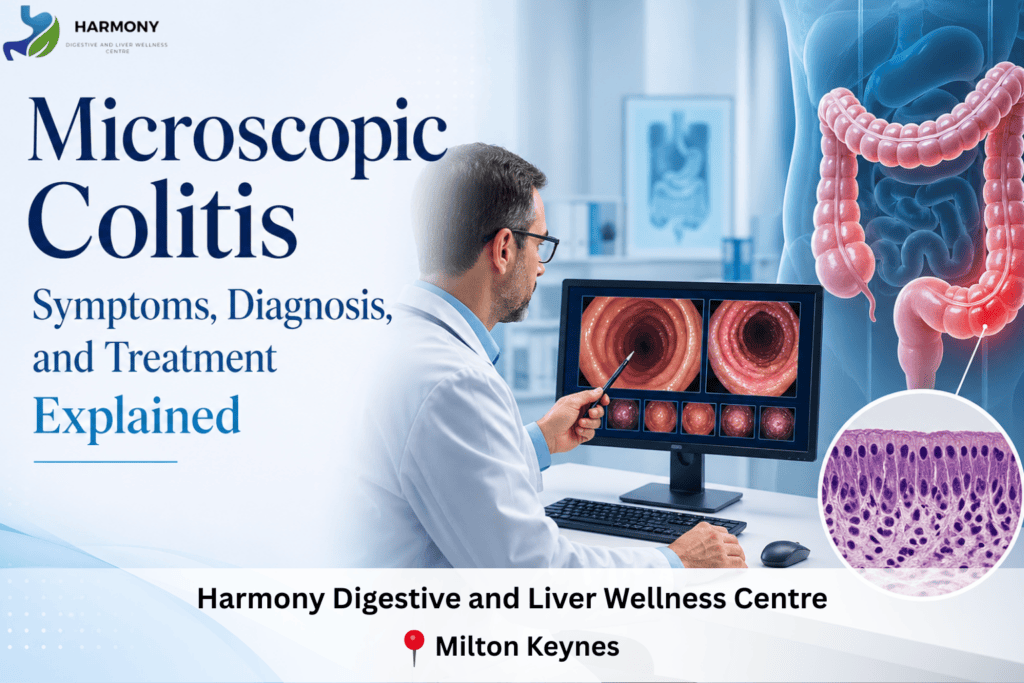
A treatable cause of persistent watery diarrhoea — diagnosed on colonoscopy biopsies Microscopic colitis is a common reason for long-standing watery diarrhoea and urgency. It often takes time to diagnose because routine blood tests can be normal and, importantly, the bowel can look normal at colonoscopy unless the right biopsies are taken. I’m Dr Arjun Prakash, Consultant Gastroenterologist and Endoscopist at Harmony Digestive and Liver Wellness Centre (central Milton Keynes). I see patients with persistent diarrhoea and, where appropriate, arrange colonoscopy with biopsies to confirm or exclude microscopic colitis and to guide treatment. What is microscopic colitis? Microscopic colitis is inflammation of the large bowel (colon) that is seen on biopsy under the microscope. The colon lining often appears normal during colonoscopy. The diagnosis relies on taking biopsies from the colon and having them reviewed by pathology. There are two subtypes — lymphocytic and collagenous colitis — which tend to present similarly and are managed in much the same way. Typical symptoms Many patients describe watery diarrhoea (often several times a day), urgency and reduced ability to “hold on”, nocturnal diarrhoea in some cases, abdominal discomfort or cramping, bloating and fatigue. Visible blood is not typical. If bleeding is present, it needs its own assessment. Why colonoscopy is central to diagnosis Microscopic colitis is a biopsy diagnosis. A colonoscopy that “looks normal” does not rule it out unless biopsies have been taken. When the symptoms fit, a colonoscopy (or occasionally flexible sigmoidoscopy) is performed and biopsies are taken from the colon. Those samples confirm the diagnosis and help guide management. If you have been told your colonoscopy was normal but biopsies were not taken, it may not have answered the question. Who gets microscopic colitis? It is more common in mid-life and older adults and is seen more often in women, though it can affect anyone. It is sometimes associated with other autoimmune conditions, and it can be linked with certain medications. Reviewing your medication list is therefore part of a sensible assessment. How is it different from IBS? Some people are initially told they have IBS-D. Microscopic colitis is worth considering when diarrhoea is persistently watery, urgency is prominent, or symptoms wake you at night. The reason it matters is that microscopic colitis has specific treatment options and people often improve significantly once it is recognised. Treatment and outlook Most patients do well once the diagnosis is made. Treatment is tailored to symptom severity and typically involves reviewing medications that may be contributing, measures to reduce stool frequency and urgency, targeted anti-inflammatory therapy where appropriate, and a follow-up plan, particularly if symptoms recur. Microscopic colitis is not bowel cancer. The main impact is quality of life, and in many cases it is very treatable. When to seek a specialist review A gastroenterology assessment is sensible if you have watery diarrhoea for more than a few weeks, urgency that affects work, travel or confidence, diarrhoea waking you at night, weight loss, dehydration or persistent abdominal pain, or ongoing symptoms despite “normal” initial tests. At Harmony Digestive and Liver Wellness Centre in Milton Keynes, I provide consultant-led assessment and arrange colonoscopy with biopsies when clinically appropriate to assess for microscopic colitis and other causes of persistent diarrhoea. Conclusion – Gut Health Specialist To request an appointment with Dr Arjun Prakash (face to face in Milton Keynes or virtual where appropriate), For proper care and accurate diagnosis, Harmony Digestive and Liver Wellness Centre is a trusted choice. With the right treatment and healthy habits, you can enjoy your meals again without discomfort. Book a consultation or screening today: Click Here. To book a private liver or gut consultation or second opinion, Get in touch with us. Had a great experience with us? We’d love to hear your thoughts! Click here to leave a Google review.
Why Do You Feel Nausea After Meals? Causes & Solutions
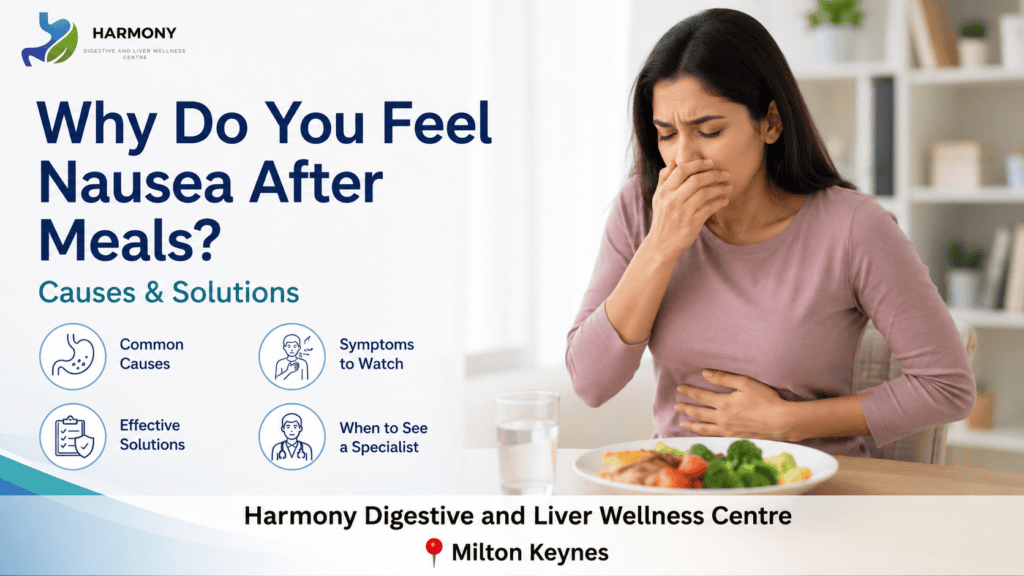
After eating a meal, most people expect to feel satisfied and relaxed. But sometimes, you may feel uncomfortable instead. You may feel like vomiting, feel heavy or lose interest in food. This is called nausea after meals. It can disturb your daily routine and make eating stressful. Anyone can face this problem. It can happen occasionally or regularly. It is important to understand the reason behind it and take the right steps. What is Nausea After Meals? Nausea After Meals means feeling uneasy in the stomach after eating. You may feel fullness, discomfort or a strong urge to vomit. Sometimes the feeling starts immediately after eating. Other times, it may begin after some time. The intensity can also vary from mild to severe. Common Causes You Should Know There are many different reasons behind nausea after meals. These are often related to eating habits. It could be due to eating too quickly without chewing properly Overeating or eating large portions Eating very oily, spicy or heavy food Drinking too much tea or coffee Lying down right after the meals All these habits can disturb digestion and lead to discomfort. Digestive Problems In some cases, the cause is more than just eating habits. Digestive conditions can also lead to nausea after meals. If you have problems like acid reflux, gastritis or food intolerance, these can affect how your stomach processes food. This can result in nausea and discomfort. Sometimes, infections or stomach inflammation can also be responsible. Role of Stress and Lifestyle Your mental health also affects your digestion. Stress and anxiety can slow down digestion. This can cause symptoms like nausea after eating. Irregular eating times and lack of sleep can also make the problem worse. A healthy routine plays an important role in digestion. Solutions That Can Help You can reduce nausea after meals by making these small changes in your daily habits. Chew your food slowly and properly Eat small and frequent meals Do not very eat spicy or fried meals Stay upright after eating Drink enough water during the day Foods That May Trigger Nausea Some foods are harder to digest and can trigger nausea. Heavy, oily and spicy foods can irritate the stomach. Carbonated drinks and too much caffeine can also increase discomfort. It is important to choose light and balanced meals to make your stomach feel better. When You Should Be Concerned? If nausea after meals happens once in a while, it may not be serious. But if it happens regularly, you should not ignore it. You should seek medical advice if: Nausea continues for many days You have severe stomach pain You feel weak or tired often You lose weight without trying Expert Diagnosis and Care Proper diagnosis is important for effective treatment. Tests may be needed to find the exact cause. Harmony Digestive and Liver Wellness Centre provides expert care for digestive problems. They work on identifying the root cause and giving the right treatment. Their team makes sure of patient comfort and long-term relief. Importance of Early Treatment Starting treatment early can prevent complications. It helps manage symptoms better and improves your daily life. You should not ignore the problem as it may lead to more serious digestive issues over time. Early care always gives better results. Conclusion – Gut Health Specialist Nausea After Meals can make eating uncomfortable but it is manageable. Simple lifestyle changes can help in many cases. For proper care and accurate diagnosis, Harmony Digestive and Liver Wellness Centre is a trusted choice. With the right treatment and healthy habits, you can enjoy your meals again without discomfort. Book a consultation or screening today: Click Here. To book a private liver or gut consultation or second opinion, Get in touch with us. Had a great experience with us? We’d love to hear your thoughts! Click here to leave a Google review.
Best GERD Treatment for Acid Reflux Relief
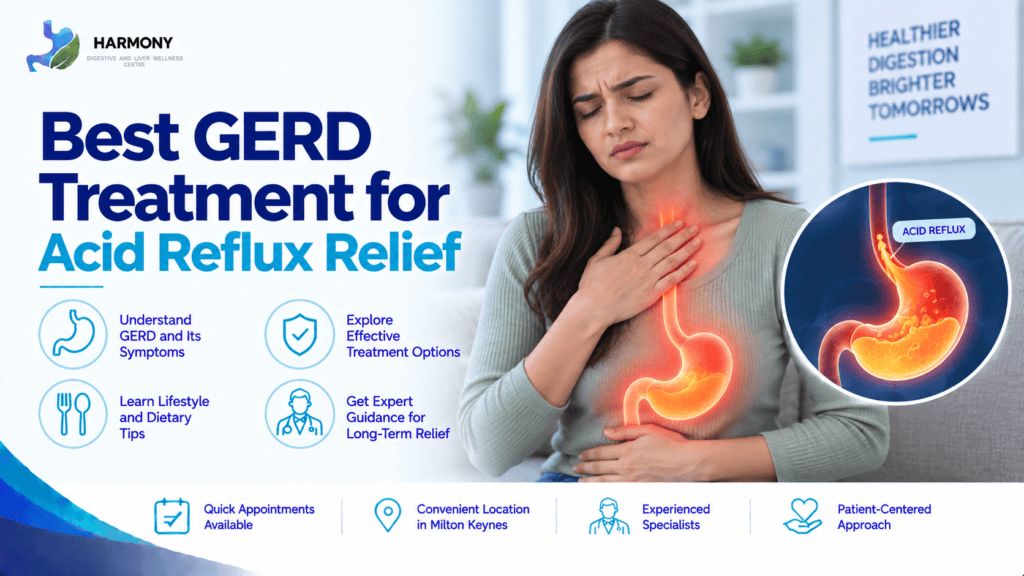
Many people feel a burning sensation in the chest after eating. Some feel a sour liquid coming back into the mouth. This is not always simple acidity. It can be GERD. It is important to find the right GERD treatment to stop this problem and feel normal again. GERD can affect your daily life. It can disturb your sleep and make eating uncomfortable. But with the right care, it can be managed well. Understanding GERD GERD happens when the stomach acid moves upward into the food pipe. This should not happen normally. When it happens again and again, it can cause irritation. This leads to pain and discomfort. That is why proper GERD treatment is needed. Signs You Should Not Ignore GERD symptoms may look small at first. But they can increase over time. It causes burning feeling after meals Sour taste in the throat You will also feel discomfort in your chest Frequent burping Feeling heavy after eating If you are facing any of these symptoms, pay attention to it. What Makes GERD Worse Certain habits can increase GERD symptoms. When you eat large meals then it can put pressure on the stomach. Lying down just after eating can also cause acid to move up. Spicy food, oily food and too much tea or coffee can make it worse. Stress and irregular eating habits also trigger the problem. GERD Treatment The good thing is that GERD treatment can be simple if you start it early. Start with small changes like eating smaller meals and chewing your food properly. Avoid lying down for at least two hours after eating. Try to sleep with your head slightly raised. Doctors may also give some medicines. These help reduce acid and protect your food pipe. Always follow the advice given by your doctor. Habits That Support Treatment What you do everyday also affects your health. Make sure to follow these simple habits to improve your health. Eat on time everyday Do not eat too much spicy and fried food Drink plenty of water everyday Keep your weight in control Stay relaxed and manage stress When You Need Medical Help If your symptoms do not get better, you should visit a specialist. Proper tests can help find the exact cause. Tests like endoscopy may be suggested. These tests are safe and help in correct diagnosis. This makes GERD treatment more effective. Expert Support You should get treatment from the right place. Harmony Digestive and Liver Wellness Centre provides expert care for digestive issues. They provide proper testing and personalised treatment plans. Their goal is to give long-term relief, not just short-term comfort. Why Early Treatment is Important If GERD is ignored, it can lead to more serious problems. It can damage the food pipe and cause long-term discomfort. When you start GERD treatment on time, it helps to avoid these risks. It also helps you return to a normal life. Conclusion – Gut Health Specialist GERD may seem like a small issue, but it should not be ignored. With the right GERD Treatment, you can control symptoms and feel better. Make certain changes and het expert care from Harmony Digestive and Liver Wellness Centre. By doing these things, you will be able to manage your acid reflux and improve the quality of your life. Book a consultation or screening today: Click Here. To book a private liver or gut consultation or second opinion, Get in touch with us. Had a great experience with us? We’d love to hear your thoughts! Click here to leave a Google review.
Endoscopy Procedure Guide: Preparation, Process & Benefits
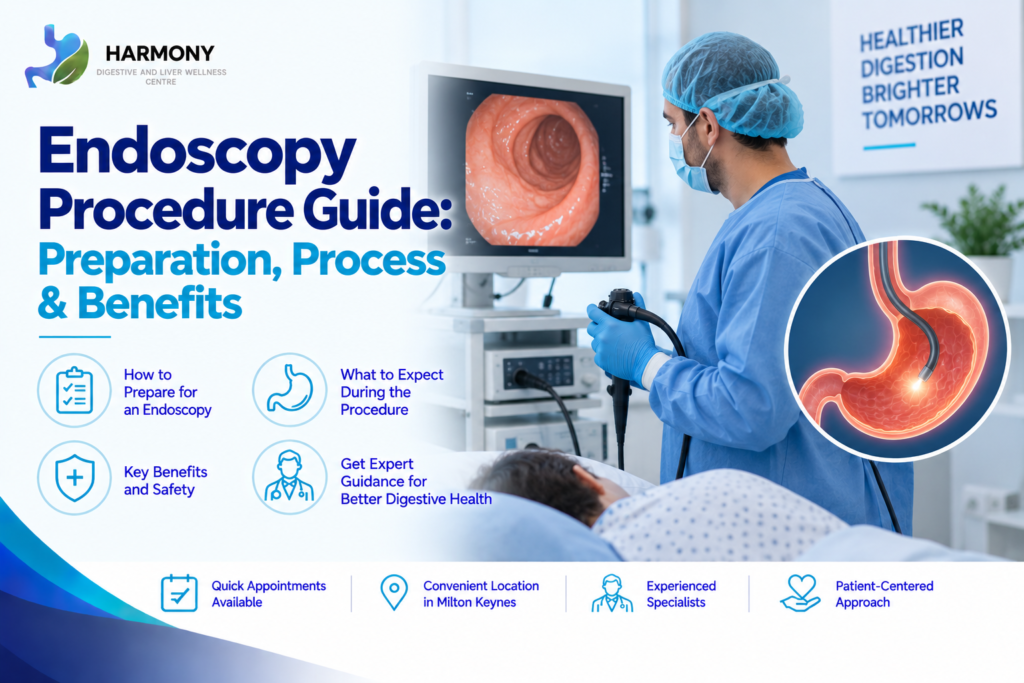
If you are facing stomach pain, acidity or digestion problems, your doctor may suggest an endoscopy procedure. Many people feel worried when they hear about this test. But it is a simple and safe test. It helps doctors see what is happening inside your body. This test is very useful in finding the cause of many digestive problems. It helps in early diagnosis and proper treatment. What is an Endoscopy Procedure? An endoscopy procedure is a medical test. This test is basically done by passing a tube gentle through your mouth. This thin tube has a small camera attached to it. The camera shows clear images of the food pipe, stomach and upper intestine. This helps the doctor check for any problem inside. The test is quick and does not take much time. It is done under expert care. When Do You Need It? Doctors suggest an endoscopy procedure when your symptoms do not improve. It helps to find the exact cause behind the problem. You may need it if: You face continuous acidity or heartburn Your stomach pain You find difficulty in swallowing You have frequent vomiting Unexplained weight loss All these signs should not be ignored. Early testing can help in faster treatment. How to Prepare for the Test Preparation is simple but important. It helps the doctor get clear results. You may be asked to avoid food for a few hours before the test. This keeps the stomach empty. You should also inform your doctor about any medicines you are taking. Follow the instructions given by your doctor. This makes the process safe. What Happens During the Process The endoscopy procedure is done in a clinic or hospital. First, you need to lie down comfortably. A mild medicine may be given to help you relax. The doctor then passed the thin tube through your mouth. The camera then sends images to a screen. The doctor looks for swelling, infection or other issues. The process usually takes a short time. It is not very painful. Most people feel only slight discomfort. After the Process After the test is done, you may feel a little sleepy or have a mild throat discomfort. This is normal and goes away soon. You can usually go home the same day. Your doctor will explain the results and guide you about further treatment if needed. Benefits of Endoscopy Procedure The endoscopy procedure has many benefits. It helps in finding the root cause of your problem. It finds the exact cause of symptoms It helps in early detection of problems It guides proper treatment It helps reduce guesswork in diagnosis Choose the Right Care Getting the test done at a trusted place is very important. Skilled doctors and proper equipment give better results. Harmony Digestive and Liver Wellness Centre offers expert care for digestive problems. They provide advanced testing and personalised treatment. Their team focuses on patient comfort and accurate diagnosis. Conclusion – Gut Health Specialist Digestive problems should not be ignored. An Endoscopy Procedure is a safe and helpful test to find the cause of your symptoms. It gives clear results and helps in proper treatment. For expert care, Harmony Digestive and Liver Wellness Centre is a reliable choice. With the right guidance and timely diagnosis, you can improve your digestive health and feel better in daily life. Book a consultation or screening today: Click Here. To book a private liver or gut consultation or second opinion, Get in touch with us. Had a great experience with us? We’d love to hear your thoughts! Click here to leave a Google review.
Gastroscopy vs Endoscopy: Uses, Benefits & Key Differences
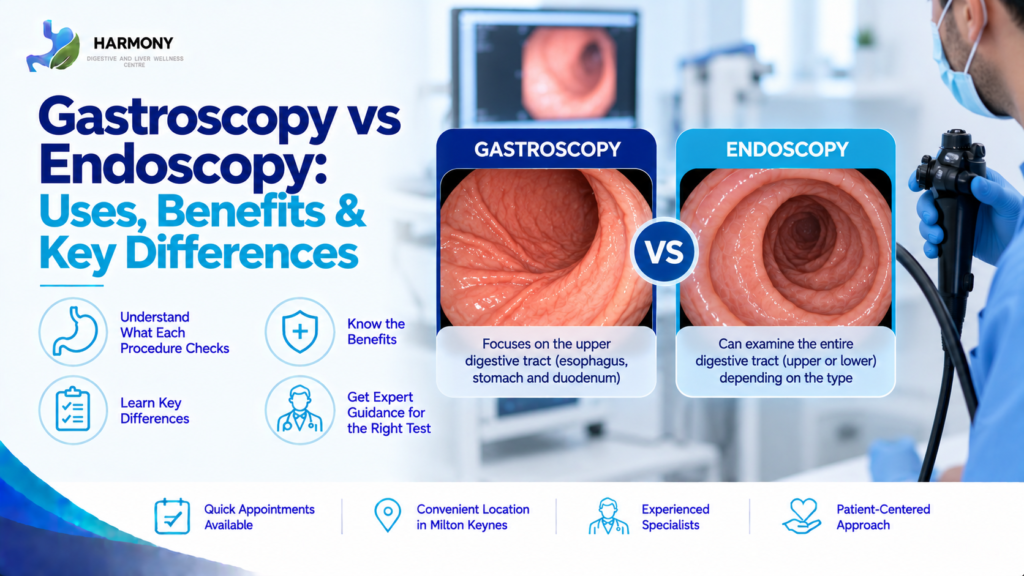
When people have stomach pain or digestion problems, doctors may suggest tests. Two common tests are Gastroscopy vs Endoscopy. Many people do not know about these two properly and get confused. They sound similar but they are not the same. When you understand the difference, it helps you feel less worried and more prepared. These tests are safe and useful for finding the real problem. Gastroscopy vs Endoscopy What is Endoscopy? Endoscopy is a general term. It means using a thin tube with a camera to look inside your body. The tube is flexible and has a light and camera at the end of it. It gives a clear image of your inside on a screen. This helps doctors check for any issue. Endoscopy can be used to check different parts of the body, not only the stomach. What is Gastroscopy? Gastroscopy is a type of endoscopy. It mainly focuses on the upper digestive system. In this test, the doctor checks the food pipe, stomach and the first part of the small intestine. So, when we talk about Gastroscopy vs Endoscopy, gastroscopy is a specific kind of endoscopy. Key Difference Between Gastroscopy and Endoscopy The difference between these two are very simple. Basically, endoscopy is a broad term. It includes many types of tests whereas gastroscopy is one of those types. Gastroscopy is done for the upper digestive tract only and endoscopy can be used for many body parts like colon or lungs. So, every gastroscopy is an endoscopy, but not every endoscopy is a gastroscopy. When Are These Tests Needed? Doctors suggest these tests when symptoms do not improve. They help find the exact cause of the problem. You may need them if: You are facing continuous acidity You have stomach pain You find difficulty in swallowing Vomiting or nausea Unexplained weight loss These symptoms should not be ignored. Early testing helps in better treatment. How the Process is Done The process of doing both tests are similar. A thin tube is passed through the mouth. You may be given a mild medicine to relax. Then doctor gently inserts the tube. The camera shows images of the inside area. The test does not take much time. It is not very painful. But you may feel slight discomfort but it is manageable. Benefits of These Tests The tests have many benefits. They help doctors understand your condition clearly. It gives accurate results It helps to detect problems early Guide proper treatment Reduce guesswork This makes them very important for digestive health. After the Test After the test is done, the patient may feel a bit tired or have a little throat discomfort. But there is nothing to worry about as it is normal and goes away soon. You can usually go home the same day. The doctor will explain the results. Choose Expert Care It is important to get these tests done at a trusted place. Skilled doctors and proper equipment make the process safe and smooth . Harmony Digestive and Liver Wellness Centre offers expert care for digestive issues. They provide right testing treatment. Their team focuses on comfort and accurate diagnosis. Conclusion – Gut Health Specialist Understanding Gastroscopy vs Endoscopy helps you know what to expect. Both tests are safe and useful. They help find the exact cause of your problem and guide the right treatment. For proper care and expert guidance, Harmony Digestive and Liver Wellness Centre is a reliable choice. Early diagnosis and the right treatment can help you feel better and improve your digestive health. Book a consultation or screening today: Click Here. To book a private liver or gut consultation or second opinion, Get in touch with us. Had a great experience with us? We’d love to hear your thoughts! Click here to leave a Google review.
Expert Gastroenterologist for Gut, Liver & Pancreas Care

Your digestive health is important for keeping yourself healthy. It helps the body to break down food and absorb nutrients. If your gut is not healthy, your whole body may suffer. This is why visiting a Gastroenterologist is important when you face digestive issues. A gastroenterologist is a doctor who treats problems of the stomach, intestines, liver and pancreas. They help find the cause of your symptoms and give the right treatment. What Does a Gastroenterologist Do? A Gastroenterologist checks and treats many digestive problems. They study your symptoms and suggest tests if needed. They help manage both simple and serious conditions. They want to improve your digestion and overall health. Common Problems Treated Many people suffer from digestive issues in daily life. Some problems are mild, while others need proper care. Common conditions include: Acidity and heartburn Bloating and gas Constipation or loose motion Stomach pain Liver disorders Pancreas related issues Importance of Early Diagnosis You should not ignore the symptoms. It can result in serious problems over time. A Gastroenterologist uses tests like blood work, scans and endoscopy to find the exact problem. Accurate diagnosis helps in giving the right treatment. Early care also helps in faster and better results. Care for Gut Health Your gut needs proper care to stay healthy. Food habits and lifestyle play an important role. A gastroenterologist may ask you to change your lifestyle such as eating healthy food, drinking enough water and avoiding junk food. Liver and Pancreas Care The liver and pancreas are important organs. They help in digestion and metabolism. If you have any problem in these organs, it can affect your whole body. A Gastroenterologist provides proper care and treatment for liver and pancreas conditions. They guide you with the right diet and medicines to support recovery. Personalized Treatment Every patient is different. The same problem may need different treatment for different people. A good gastroenterologist provides you treatment as per your condition. They consider your symptoms, lifestyle and medical history. This method helps in better and long-lasting results. You learn to manage your condition with a healthy lifestyle. Choosing the Right Clinic It is important to choose the right clinic for proper care. Look for experienced doctors and modern facilities. Harmony Digestive and Liver Wellness Centre is a well-known centre that provides expert care in digestive health. They provide advanced diagnosis and personalized treatment. Their team focuses on patient comfort and accurate results. Benefits of Consulting a Gastroenterologist Getting treated by a specialist is very important. It helps you understand your condition better and get the right care. You get the correct diagnosis Proper treatment plan Better digestion Healthy body Conclusion – Gut Health Specialist Digestive health should never be ignored. Problems related to the gut, liver, and pancreas need expert attention. A Gastroenterologist helps you get the right diagnosis and treatment on time. For trusted care, Harmony Digestive and Liver Wellness Centre is a great choice. They provide expert guidance and personalized treatment for better health. With the right care, you can improve your digestion and enjoy a healthier life. Book a consultation or screening today: Click Here. To book a private liver or gut consultation or second opinion, Get in touch with us. Had a great experience with us? We’d love to hear your thoughts! Click here to leave a Google review.
Chronic Cough and Acid Reflux: What You Need to Know
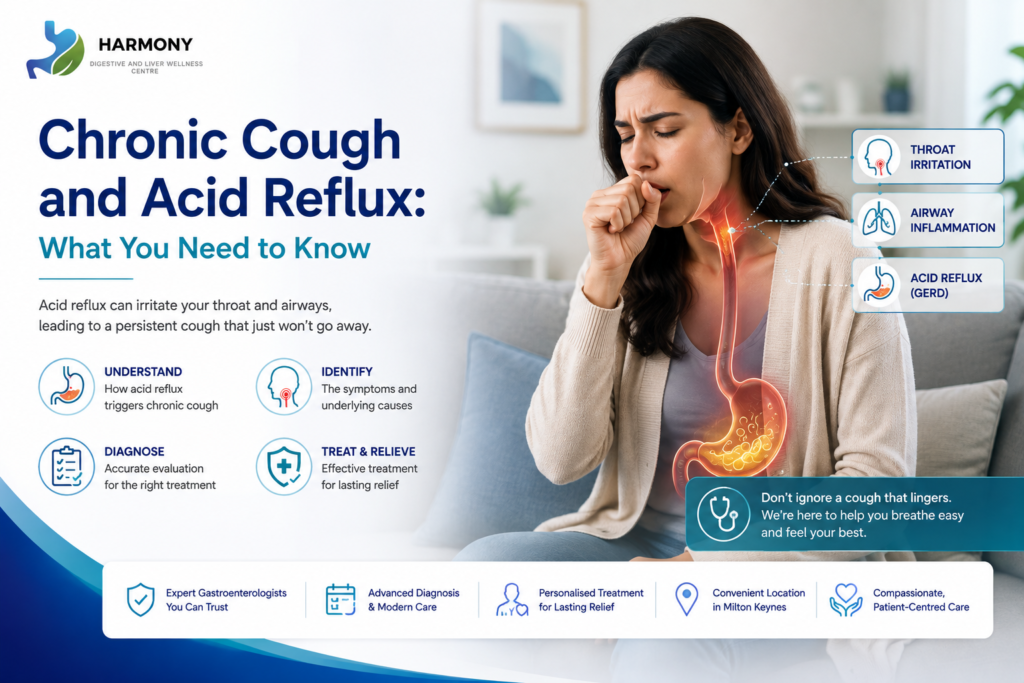
A cough that won’t shift is draining. It affects sleep, work, exercise and confidence — and it becomes frustrating when you’ve tried inhalers, antibiotics or antihistamines and nothing really changes. Reflux is a common hidden contributor to chronic cough. Sometimes there is obvious heartburn. Sometimes there isn’t. I’m Dr Arjun Prakash, Consultant Gastroenterologist and Endoscopist. I see patients with reflux-related symptoms, including chronic cough, at Harmony Digestive and Liver Wellness Centre in central Milton Keynes, and via virtual appointments for patients across the UK and abroad. The questions I get asked most often “Can acid reflux really cause a chronic cough?” Yes. In clinic, reflux is one of the recognised causes of chronic cough. It can trigger coughing in a few ways: small amounts of reflux can irritate the throat and voice box area; reflux can inflame sensitive tissue higher up without obvious heartburn; and acid in the lower oesophagus can set off a cough reflex even when nothing reaches the mouth. The result is a cough that can feel respiratory, even when the driver is the upper digestive tract. “How would I know if my cough is reflux-related?” There isn’t a single tell-tale sign, so I look for patterns. Features that often sit alongside reflux cough include coughing after meals; coughing when lying flat or on waking; throat clearing, a hoarse voice, or a “lump in the throat” feeling; sour taste, burping, or fluid coming up; and symptoms that flare with alcohol, late meals, or richer foods. None of these prove reflux on their own, but together they often point the right way. “I don’t get heartburn. Can it still be reflux?” Absolutely. A proportion of patients with reflux-related cough don’t describe classic burning in the chest. Instead, they experience upper-airway symptoms such as throat irritation, hoarseness, excess mucus sensation, or a persistent tickle that sets off coughing. From a gastroenterology point of view, the job is to decide whether reflux is truly the driver in your case, rather than assuming it is. “Should I have an endoscopy because of a chronic cough?” Not everyone needs one. An upper endoscopy (gastroscopy) is more likely to be appropriate if you have reflux symptoms that are frequent or longstanding; symptoms starting after the age of 50; swallowing difficulty, food sticking, or pain on swallowing; weight loss, anaemia, vomiting or other warning symptoms; persistent symptoms despite a sensible treatment trial; or concern about complications such as oesophagitis or Barrett’s. A gastroscopy doesn’t diagnose cough, but it can be important to assess the oesophagus and rule out problems that need different management. “Does a cough mean I might have Barrett’s oesophagus?” No. A cough alone doesn’t suggest Barrett’s. Barrett’s is associated with longstanding reflux in some patients and is diagnosed on endoscopy and biopsy. I think about it more in people with established reflux symptoms over years and common risk factors such as age over 50, male sex, central obesity and smoking history. If it’s found, it’s managed with the right acid suppression strategy and surveillance where appropriate. “I tried reflux medication and the cough didn’t improve. Does that rule reflux out?” Not automatically. There are two common reasons this happens. First, throat irritation can take time to settle even when reflux is controlled. Second, not every cough that co-exists with reflux is caused by reflux — there can be overlap with post-nasal drip, asthma-type conditions, medication side effects, and airway sensitivity. The other practical issue is how treatment is taken. Timing and consistency matter. When someone tells me a PPI didn’t work, I often find it was taken intermittently, for too short a course, or at times that don’t maximise effect. When the cough persists, that’s usually the point to reassess rather than simply escalating indefinitely. “What tests can actually confirm reflux as the cause?” If the story remains unclear, or symptoms persist despite a good-quality trial of treatment, objective testing can help. Reflux monitoring (pH testing or pH-impedance) measures reflux episodes over 24 hours and can correlate them with symptoms. It’s particularly useful when symptoms are atypical, cough persists despite treatment, surgery is being considered, or we want to distinguish acid reflux from non-acid reflux. Oesophageal manometry measures oesophageal muscle function. It’s most relevant when there is swallowing difficulty, surgery is being considered, or a motility disorder is suspected. Gastroscopy (endoscopy) is useful to assess inflammation, ulceration, hiatus hernia and Barrett’s, and to exclude other upper GI pathology. Most patients don’t need every test — the choice depends on the pattern and the question we’re trying to answer. “Could it be something else entirely?” Yes. Chronic cough is common and often multifactorial. Common non-GI contributors include post-nasal drip/chronic rhinitis, asthma-spectrum conditions, smoking/vaping irritation, and certain medications. When I suspect another primary driver, I usually advise parallel review rather than treating reflux as the only explanation. “What lifestyle changes make the biggest difference?” The changes that consistently help reflux-related symptoms are not glamorous, but they work: leave a 2–3 hour gap between your last meal and bed; reduce large evening meals; limit alcohol, especially in the evening; consider weight reduction if central weight is a factor; elevate the head of the bed if night symptoms dominate; and identify clear personal triggers (often fatty foods, chocolate, peppermint, coffee, fizzy drinks). A few well-chosen changes tend to outperform a long, unrealistic list. “Do I need long-term treatment? Should I be worried about taking it?” Some people need short courses; others need longer-term therapy, particularly if there is proven oesophagitis or Barrett’s. The sensible approach is to use the lowest effective dose, review periodically, step down where appropriate, and avoid years of repeat prescriptions without reassessing the diagnosis. If reflux has caused clear complications, longer-term acid suppression is often protective and appropriate. “When should I see a gastroenterologist for reflux and cough?” If a cough has lasted more than eight weeks, it’s reasonable to seek a structured assessment, particularly if reflux symptoms sit alongside the cough; symptoms are worse after meals or when lying