
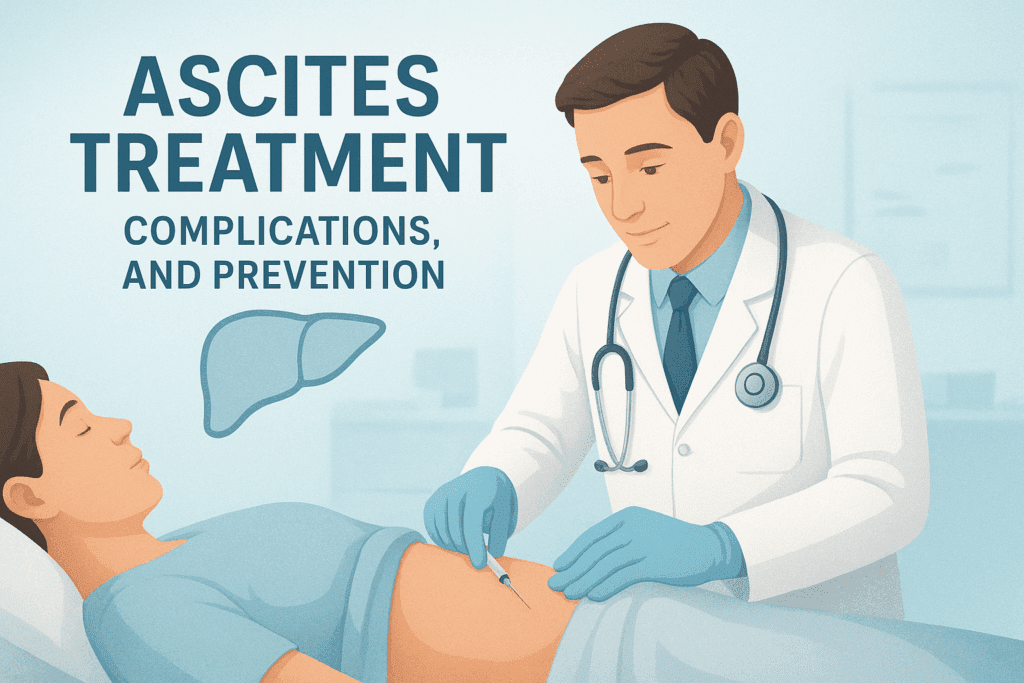
In our earlier blog we understood what ascites is, its causes, and how it is diagnosed. Now we will focus on what happens after diagnosis, what are the treatment options, any complications that can arise, and the steps that can be taken to manage the condition. Without proper ascites treatment, the condition may worsen over time, making early medical care essential.
Why Ascites Treatment Is Important
Ascites in itself is not a disease. It mostly points out to another health problem i.e. liver cirrhosis. When fluid builds up in the abdomen, it starts to cause discomfort, make breathing difficult, and increase the risk of infection.
Without proper care, the condition can worsen over time. That is why discussing the treatment options of ascites with a liver specialist is very important.
Ascites Treatment Options
The treatment of ascites depends upon how severe the condition is and what is the underlying cause. The ascites treatment helps to reduce the symptoms, prevent complications, and manage the root cause.
Managing ascites usually includes:
- Dietary modifications – Limiting salt in meals is an effective way to manage fluid buildup.
- Diuretics (water tablets) – These medicines help to remove the extra fluid from the body through urine.
- Paracentesis – A procedure where a doctor drains the fluid from the abdomen using a thin needle. This is especially helpful when fluid buildup is large.
- Treating the underlying condition – For example, managing liver cirrhosis ascites with lifestyle changes, antiviral medicines (in case of hepatitis), or stopping alcohol use.
- Surgery or liver transplant – In severe cases a transplant may be the only choice.
The treatment plan is always made according to the individual’s health and should be guided by a liver specialist.
Possible Complications of Ascites
Untreated ascites may cause several complications such as:
- Spontaneous Bacterial Peritonitis (SBP) – A dangerous infection in the abdominal fluid.
- Kidney damage – Excess fluid retention may harm the functioning of the kidneys.
- Breathing problems – Fluid pressure makes normal breathing more difficult.
- Hernias – High abdominal pressure may trigger hernia development.
These issues can become severe quickly, which is why early treatment is essential.
Can Ascites Be Prevented?
If liver disease has already developed, it may not be possible to prevent ascites. But its risk and progression can be reduced by making healthy lifestyle choices.
Some steps to protect your liver are as follows:
- Avoid alcohol or drink moderately.
- Eat a balanced diet low in salt.
- Manage your weight.
- Get vaccinated against hepatitis B.
- Management of long-term health conditions such as diabetes and high cholesterol.
- If you have liver disease, routine check-ups become even more important.
These steps can improve liver health and lower the risk of developing ascites.
Conclusion
Ascites can sound alarming, but ascites treatment is available to keep it under control. Starting treatment on time not only reduces risks but also improves day-to-day comfort. Regular check-ups are especially important if you live with liver disease.
At Harmony Digestive and Liver Wellness Centre, we provide dedicated liver cirrhosis ascites management to enhance quality of life. If you have concerns about abdominal swelling or fluid buildup, a liver specialist can guide you in the right direction.
Book a consultation or screening today: Click Here
Had a great experience with us? We’d love to hear your thoughts! Click here to leave a Google Review and share your feedback
Get in touch with us if have any further queries.