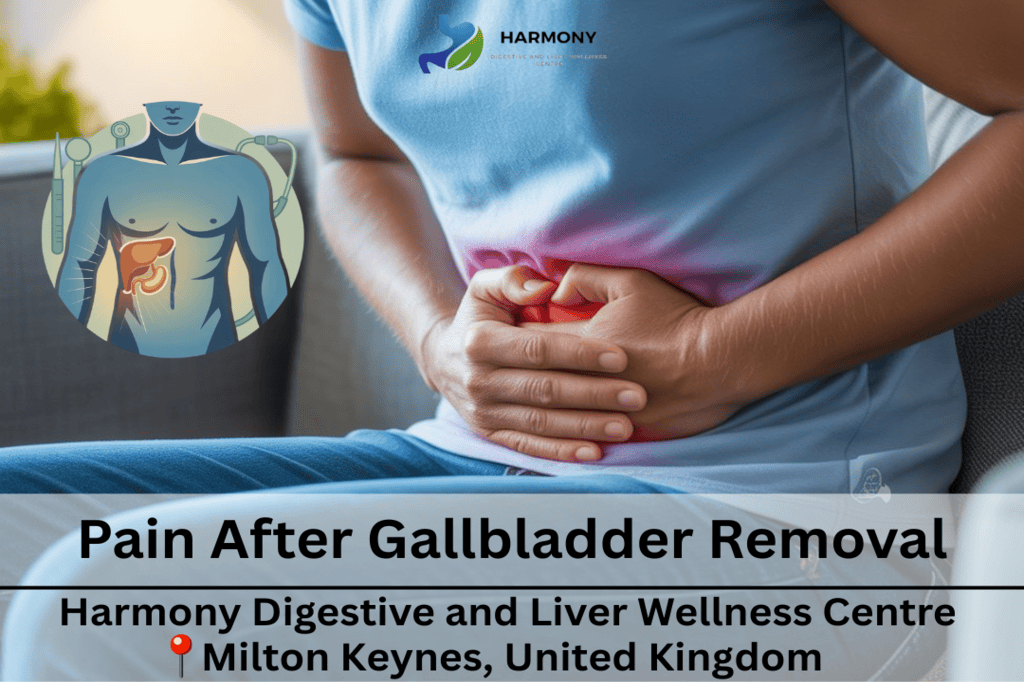
“Is it normal to have pain after gallbladder removal?”
Dr Arjun Prakash says:
“Yes – some discomfort is completely normal in the first few days and weeks after surgery. What I worry about is pain that is severe, persistent, worsening, or comes back months later.”
Early after surgery (days to a few weeks)
It’s common to have:
- Aching around the keyhole wounds
- Shoulder-tip pain (from gas used during keyhole surgery)
- General soreness when moving, coughing, or taking a deep breath
- Mild bloating or temporary bowel habit changes
This usually improves steadily over 2–6 weeks.
Later on (weeks to months)
Ongoing or new upper abdominal pain is not always “just post-op pain”. It can be:
- A minor, self-limiting issue (e.g. indigestion, acid reflux)
- A bile duct or pancreas problem
- A completely separate gut condition that wasn’t picked up earlier
If you’re still getting significant pain more than 6–8 weeks after surgery, it deserves a proper review.
“What is post-cholecystectomy syndrome?”
You might see the term “post-cholecystectomy syndrome” (PCS) if you search online. It simply means:
Symptoms such as abdominal pain, indigestion, nausea or diarrhoea that occur after the gallbladder has been removed.
Dr Arjun Prakash says:
“I don’t like the term because it sounds like a diagnosis, but it isn’t. It’s really a label that says:
‘You’ve had your gallbladder out and you still have symptoms. We now need to work out why.’”
PCS can be due to:
- A problem in the biliary system (bile ducts, sphincter, retained stones)
- A pancreas issue
- Reflux / gastritis / ulcer disease
- IBS-type bowel sensitivity
- Something completely unrelated to the gallbladder
So the key is not to stop at the label – but to investigate appropriately.
“What are the common causes of abdominal pain after gallbladder removal?”
1. Bile duct stones or sludge (retained or recurrent stones)
Even after the gallbladder is removed, stones or thick bile sludge may:
- Remain in the common bile duct from before the operation
- Form again later on (less common but possible)
Typical features:
- Upper right or central abdominal pain, sometimes severe or colicky
- Pain may radiate to the back or right shoulder
- Nausea and vomiting
- Possible jaundice (yellowing of eyes or skin)
- Dark urine, pale stools
These can lead to bile duct obstruction or pancreatitis, so they mustn’t be ignored.
2. Sphincter of Oddi dysfunction (biliary pain without obvious stones)
The sphincter of Oddi is a muscular valve where the bile duct and pancreatic duct empty into the small bowel. If it goes into spasm or doesn’t relax properly, pressure can build up in the ducts.
Dr Arjun Prakash says:
“This is a more specialist diagnosis – it can cause very gallstone-like attacks even when scans don’t show stones. Careful assessment is vital, because not everyone with this type of pain needs or benefits from invasive procedures.”
Symptoms can mimic classic biliary colic:
- Episodic severe upper abdominal pain
- Often triggered by food, especially fatty meals
- Sometimes with nausea, vomiting, or mild blood test abnormalities
3. Acid reflux, gastritis or peptic ulcers
Sometimes the original pain gets blamed on gallstones when the true culprit is:
- GORD (acid reflux)
- Gastritis (inflammation of the stomach lining)
- Duodenal or gastric ulcers
These can cause:
- Burning pain in the upper abdomen or chest
- Pain worse when lying flat, bending, or after certain foods
- Acid taste in the mouth, regurgitation, or chronic cough
A gastroscopy (endoscopy) is often the most direct way to check for these problems.
4. Bile reflux gastritis
After the gallbladder is removed, bile flows more continuously into the intestine. In some people, bile can reflux back into the stomach and oesophagus.
Features can include:
- Burning or gnawing pain in the upper abdomen
- Nausea, bitter taste, or bile in vomit
- Symptoms not fully controlled by standard acid-reducing medication
This often needs a combination of dietary changes, medication, and sometimes tailored endoscopic assessment.
5. Functional abdominal pain / IBS-type symptoms
Some patients have a sensitive gut even before surgery. Once the obvious gallstones are treated, the underlying sensitivity remains:
- Cramping pain
- Bloating
- Loose stools or constipation
- Pain linked to stress, rushing, or certain foods
Dr Arjun Prakash says:
“People often feel dismissed when they’re told they have IBS or a ‘functional’ problem. But these conditions are real, and we can usually improve them significantly with the right plan – diet, medication and lifestyle changes.”
6. Other causes unrelated to the gallbladder
Just because you’ve had gallbladder surgery doesn’t mean every future pain is from the biliary system.
Serious conditions that must always be considered include:
- Pancreatitis
- Liver disease
- Stomach or bowel cancer (particularly if you have weight loss, anaemia, or are over 55)
- Heart problems (upper abdominal pain can sometimes be cardiac)
- Lung / pleural issues
This is why a careful, holistic assessment is more useful than just focusing on the old gallbladder area.
“When should I worry about abdominal pain after gallbladder surgery?”
Seek urgent medical help (A&E / 999) if you have:
- Sudden, severe abdominal pain that is worsening or unbearable
- Fever, shivers, feeling very unwell
- Yellowing of the eyes or skin (jaundice)
- Chest pain, shortness of breath, or pain going into the arm / jaw
- Persistent vomiting or inability to keep fluids down
Arrange a prompt specialist review if you notice:
- Pain persisting beyond 6–8 weeks after surgery
- Pain that is coming back in “attacks”
- New pain after a period of feeling well post-op
- Unexplained weight loss, poor appetite, or ongoing nausea
- Changes in bowel habits (new diarrhoea or constipation)
- Anaemia, low iron, or abnormal liver / pancreas blood tests
“What tests might I need for ongoing pain after gallbladder removal?”
The exact tests depend on your story, examination and bloods, but may include:
- Blood tests – liver function, pancreas enzymes, inflammatory markers, iron, coeliac screen
- Abdominal ultrasound – to check bile ducts, liver and pancreas
- MRCP (specialised MRI of bile ducts) – for detailed bile duct and pancreatic duct imaging
- Gastroscopy (endoscopy) – to look for reflux, gastritis, ulcers or bile reflux
- CT scan – if we’re concerned about pancreas, bowel or other abdominal organs
- In very selected cases, EUS (endoscopic ultrasound) or ERCP if stones or sphincter issues are strongly suspected
Dr Arjun Prakash says:
“I’m not a fan of ‘firing off’ every possible test. A focused, stepwise plan based on your symptoms and examination is safer and more effective.”
“What can I do myself to help the pain?”
While you’re waiting to see your doctor or specialist (and assuming no red flags), some measures may help:
Food & lifestyle
- Eat smaller, more frequent meals
- Reduce very fatty, fried or greasy foods
- Limit alcohol and avoid smoking
- Avoid large late-night meals
- Keep a simple food and symptom diary – it can reveal patterns
Weight, exercise and posture
- Gradual weight loss if overweight
- Gentle, regular exercise (walking is fine)
- Avoid heavy lifting or straining in the early post-op phase
- Trial raising the head of the bed slightly if reflux is a problem
Medication (only under medical advice)
Your GP or specialist may suggest:
- Acid-reducing medications (PPIs, H2 blockers)
- Bile acid binders for bile-related diarrhoea
- Antispasmodics for cramping pain
- Targeted IBS medications if indicated
Do not self-start or stop prescription medications without advice.
“Is abdominal pain after gallbladder removal always fixable?”
Not every case is simple, and not every patient becomes 100% symptom-free. But:
- Many people have a clear, treatable cause (stones, reflux, ulcers, bile duct issues)
- Others benefit from structured IBS/functional pain management
- The worst situation is no proper assessment and being told it’s just in your head
Dr Arjun Prakash says:
“The key is not to accept ongoing pain as your ‘new normal’ without at least a thorough, sensible work-up. Sometimes reassurance is enough; sometimes we need targeted treatment or procedures.”
“When should I see a gastroenterologist?”
You should consider a specialist review if:
- You still have significant pain more than 6–8 weeks after surgery
- Your pain feels very similar to your old gallstone attacks
- You have unexplained nausea, weight loss, or abnormal blood tests
- You’ve had multiple GP or A&E visits without a clear plan
- You want a comprehensive look at the upper gut, bile ducts and pancreas, not just basic tests
A gastroenterologist with an interest in biliary, pancreatic and upper GI disorders can help decide:
- Which tests are genuinely needed
- Whether your pain is likely biliary, upper gut, IBS or something else
- What treatment and follow-up strategy makes sense for you
Final word from Dr Arjun Prakash
“If you’re still getting abdominal pain after gallbladder removal, you are not being ‘difficult’ or ‘anxious’. There is usually a reason – or at the very least, a way to improve things.
What matters most is a careful history, targeted investigations, and an honest discussion about what we find and what we can realistically do.”
Book a consultation or screening today: Click Here.
To book a private liver consultation or second opinion, Get in touch with us.
Had a great experience with us? We’d love to hear your thoughts! Click here to leave a Google review.